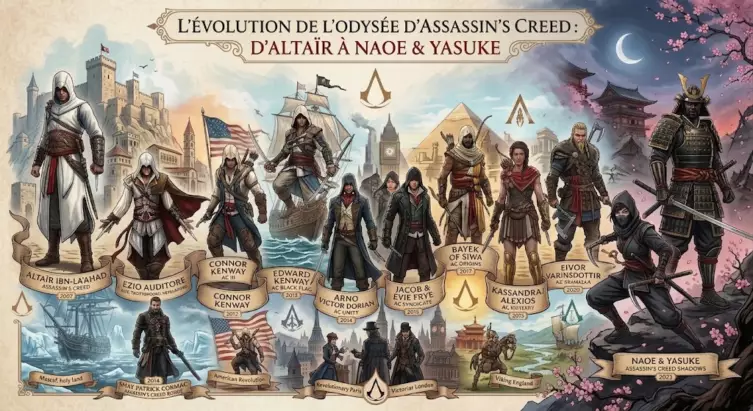
It is difficult to discuss Assassin’s Creed with complete neutrality when you have followed the series since its beginnings. To draw up this assessment in 2026, I compared my experience of the series with the available Steam reviews and Ubisoft’s official information. The financial data, meanwhile, helps put the franchise’s future into its current context.
Which is the best Assassin’s Creed in 2026?
From Patrice Désilets to the Tencent era, the series also tells the story of a shift from an auteur-driven formula to a much more industrialized franchise.
Key takeaways
- The Assassin’s Creed community is not unanimous: it is divided between fans nostalgic for urban stealth and those who enjoy the major historical RPGs (Origins, Odyssey, Valhalla).
- The available Steam ratings for several games confirm players’ attachment to very different titles: AC II and Black Flag remain highly rated, while Origins and Odyssey also retain an excellent reception on the platform.
- Ubisoft has begun a major restructuring: approximately 1,200 positions were eliminated during fiscal 2025–2026 and net bookings fell by 17.4%. Ubisoft’s annual results detail this restructuring. Assassin’s Creed is now part of Vantage Studios, a structure controlled and consolidated by Ubisoft, in which Tencent holds a 26.32% economic interest.
- Black Flag Resynced, released on July 9, 2026, earned 85% on OpenCritic and 84% on Metacritic at launch, with Ubisoft presenting it as the highest-rated Assassin’s Creed game since Black Flag (2013).
Ranking the best Assassin’s Creed games in 2026
This ranking reflects Game.fr’s editorial opinion. The Steam ratings presented below serve as a point of community comparison but do not determine the order of the games on their own.
| Rank | Game | Why it ranks here |
|---|---|---|
| 1 | Assassin’s Creed II | Best balance between Ezio, story and the franchise’s identity |
| 2 | Assassin’s Creed IV: Black Flag | Edward Kenway, naval exploration and a highly memorable adventure |
| 3 | Assassin’s Creed Brotherhood | The classic Assassin’s Creed formula at its peak |
| 4 | Assassin’s Creed Origins | A successful RPG transition and an excellent Bayek |
| 5 | Assassin’s Creed Odyssey | A very complete RPG and an especially rich world |
| 6 | Assassin’s Creed Unity | Parkour, Paris and a classic formula now better appreciated |
| 7 | Assassin’s Creed IV: Black Flag Resynced | A very good modern gateway to Black Flag |
| 8 | Assassin’s Creed Mirage | A more compact return to stealth and the fundamentals |
| 9 | Assassin’s Creed Shadows | An ambitious modern entry, but historically less emblematic |
| 10 | Assassin’s Creed Valhalla | Very generous, but too far removed from the traditional Assassin formula |
How this analysis was conducted
[caption id="attachment_11306" align="aligncenter" width="753"]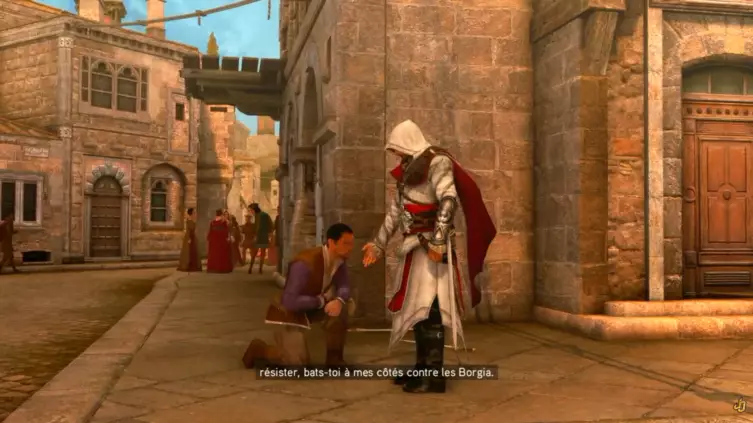 The series’ games are known as much for their powerful story moments as for their memorable gameplay sequences.[/caption]
The comments concerning the games’ reception are based in particular on Steam pages consulted on September 5, 2026. The financial figures and the structure of Vantage Studios were verified through Ubisoft. The launch data for Black Flag Resynced also comes from Ubisoft. Steam reviews are an indicator of community reception, not a representative survey of all players.
Which Assassin’s Creed has aged best?
Steam’s reception provides a useful indicator of how several games are currently perceived. The percentages for historical games correspond to the English-language ratings displayed by Steam on September 5, 2026. The line for Black Flag Resynced was checked on September 21, 2026. These figures may change.| Game | Year | Identity | Steam reception | What remains memorable |
|---|---|---|---|---|
| Assassin’s Creed II | 2009 | Action-adventure / stealth | 86% positive reviews | Ezio, the Renaissance, storytelling |
| Assassin’s Creed IV Black Flag (original) | 2013 | Action-adventure / naval | 85% positive reviews | Edward, the sea, exploration |
| Assassin’s Creed Black Flag Resynced | 2026 | Remake / naval action-adventure | 84% positive reviews | Modern conveniences, technical overhaul, new content |
| Assassin’s Creed Unity | 2014 | Stealth / parkour | 74% positive reviews | Paris, parkour, co-op |
| Assassin’s Creed Origins | 2017 | Historical RPG | 84% positive reviews | Egypt, Bayek, revival |
| Assassin’s Creed Odyssey | 2018 | RPG / exploration | 89% positive reviews | Greece, freedom, Kassandra |
| Assassin’s Creed Valhalla | 2020 | RPG / open world | 68% positive reviews | England, alliances, excess |
In summary: the 2013 original remains the historical benchmark for its story and naval exploration. Resynced preserves that foundation while modernizing the graphics, quality of life and certain systems. As of September 21, 2026, its English-language Steam reception is “Very Positive,” with 84% positive reviews: its main appeal lies in the chance to discover or rediscover Black Flag in a version designed for current hardware.
Steam — Assassin’s Creed II · Steam — Black Flag · Steam — Black Flag Resynced · Steam — Unity · Steam — Origins · Steam — Odyssey · Steam — Valhalla
Patrice Désilets’ vision: when every assassination had meaning
Altaïr (2007): a unique atmosphere, a repetitive structure
When Assassin’s Creed was released in 2007, it was as fascinating as it was frustrating. Its atmosphere remains probably the darkest and strangest in the entire franchise. Jerusalem, Acre and Damascus are not simply playgrounds: they feel watched, oppressive and dangerous. Altaïr is not yet the warm hero Ezio would become. He is arrogant, cold and completely convinced that he is serving a just cause. The first game embodies an idea the series would later abandon: assassination is a process. Altaïr must gather information, observe his target, prepare his approach through two or three objectives, then report to the agent in charge of the cell before finding a way out once the murder is complete. The player is not merely following a marker before fighting an enemy with a health bar; they must understand the space. That approach remains highly valued in discussions of the first game, which still mention its unsettling atmosphere and the central role given to Altaïr’s profession. Yet those same players generally acknowledge its main flaw: a repetitive structure of eavesdropping, interrogations, pickpocketing and towers to climb before every murder. On Steam, the title retains broadly favorable reviews without reaching the enthusiasm generated by Ezio’s adventures. This repetition is not a modern player invention: it was already visible at the time. But the first Assassin’s Creed possessed such strong conviction that its limitations could almost pass for an artistic choice. [caption id="attachment_11311" align="aligncenter" width="753"]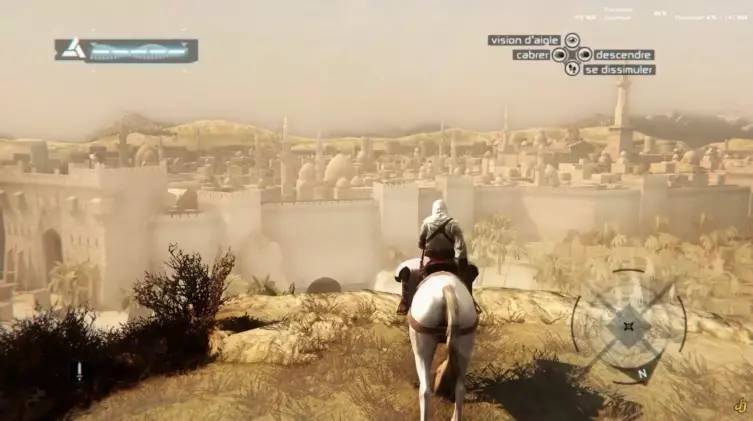 The impressive view over Damascus in the 2007 game.[/caption]
Ezio Auditore (2009–2011): the trilogy that fixed almost everything
With Assassin’s Creed II, Patrice Désilets and his teams corrected almost everything that had held back the first game. Ezio immediately brings what Altaïr lacked: a life, a family, humor and visible growth. We meet him from birth—a rare cinematic choice for the time—before seeing him confronted with the execution of his father and brothers, a chilling moment made even more powerful by the presence of his youngest brother, aged 13, on the scaffold. Ezio’s strength lies in the time the series is willing to give him: his transformation accompanies the entire adventure, while the Italian Renaissance becomes the setting for his passage into adulthood. Reviews of Assassin’s Creed II remain largely enthusiastic today; Florence and Venice are still enjoyable to explore, even if the side quests involving feather collecting—necessary to unlock the Auditore cape—left their mark on players more because of their difficulty than their enjoyment. The game retains Very Positive ratings on Steam, often accompanied by testimonies describing it as the franchise’s emotional high point, although this is not unanimous. Criticism focuses mainly on occasionally erratic parkour and combat that has become too simple.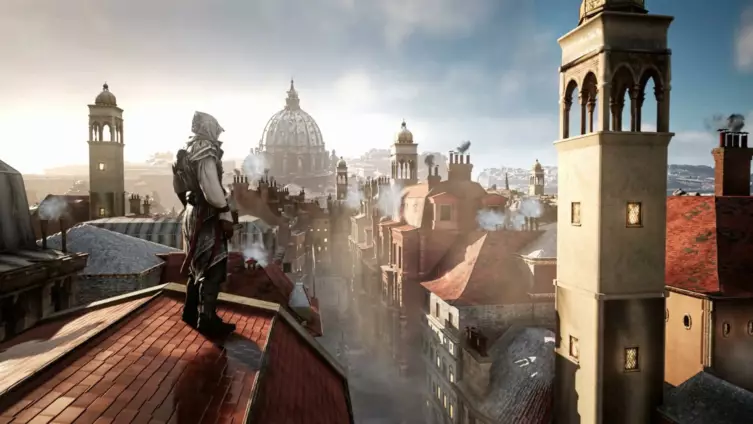 Brotherhood (2010) then turns Rome into territory to reconquer and gives players their own brotherhood to build, with genuine mentor gameplay: recruiting Assassins and sending them on missions across Europe. Reviews remain very positive, with Brotherhood often presented as the mechanical peak of the Ezio era—at the cost of chain executions so powerful that they reduce the tension of stealth. This is where a contradiction that would follow the entire franchise appears: players say they want stealth, but appreciate power and fluidity just as much.
[caption id="attachment_11378" align="aligncenter" width="753"]
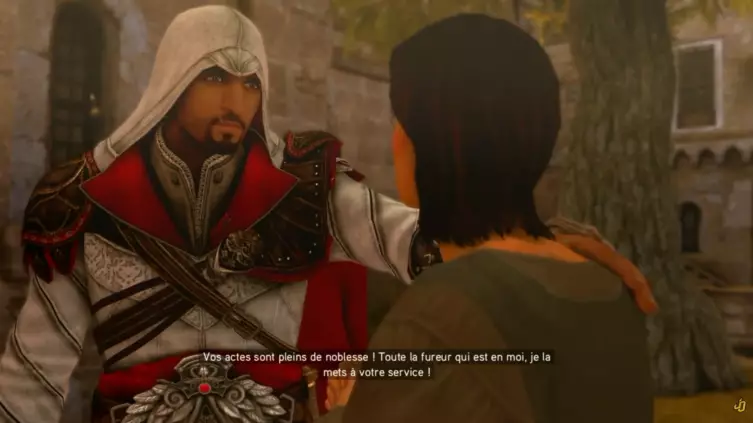 In Brotherhood, Ezio becomes a true Master Assassin.[/caption]
Why Assassin’s Creed changed after Patrice Désilets
Revelations (2011): a conclusion more than an innovation
Revelations largely reuses Brotherhood’s systems and adds a lair-defense mode that never truly convinced players. It remains one of the most beloved games, however, for one simple reason: it knows how to finish a story. Ezio grows old, realizes that he has devoted his life to a conflict he will never see end, and Altaïr’s memories finally connect the saga’s first two heroes. (Note: an animated short film, Assassin’s Creed: Embers, produced by UbiWorkshop, shows Ezio’s final days as he passes the Creed on to a young Chinese Assassin.) Steam reviews remain Very Positive, but clearly distinguish a successful story from new features considered insufficient to justify another annual release. [caption id="attachment_11380" align="aligncenter" width="753"]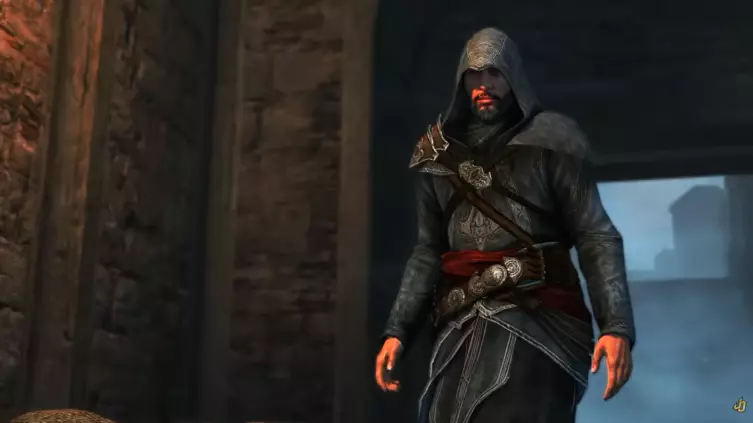 This time, we play Ezio, mentor of the Assassins, in his final major quest.[/caption]
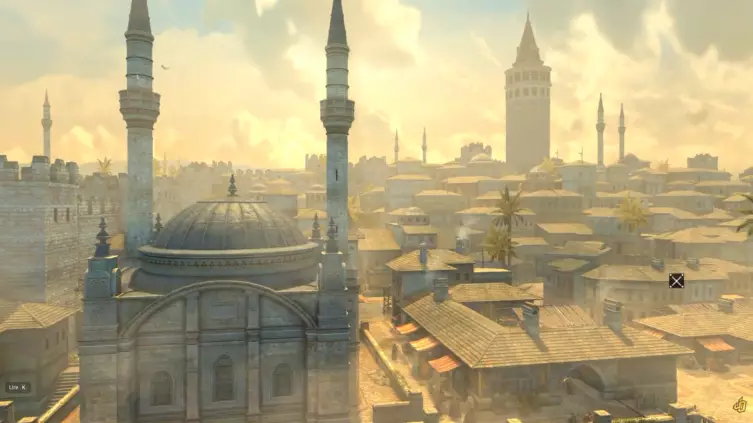 Discovering Constantinople, now Istanbul.[/caption]
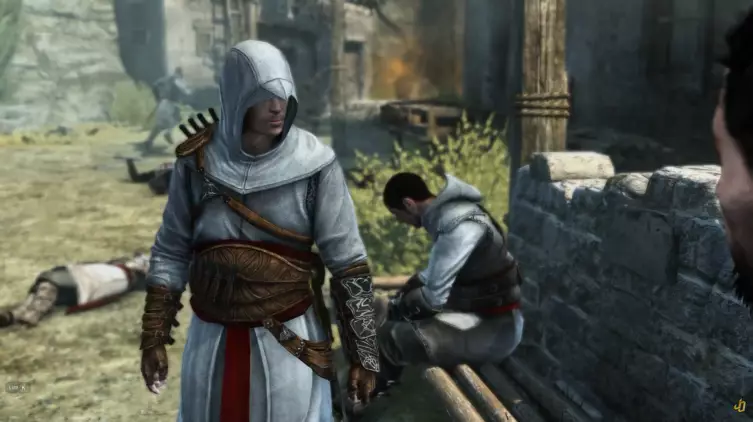 Altaïr returns in several sequences tracing his life through to its conclusion.[/caption]
Assassin’s Creed III (2012): Connor, the series’ least-loved character
With Connor, the community truly became divided. Following Ezio was probably the most thankless task in the franchise’s history: where Ezio immediately charms players, Connor is reserved and rigid. Many players saw him as emotionless, whereas he is primarily a man caught between his Templar father, his people and a revolution that proclaims freedom without granting it to everyone. The remaster’s Steam reviews remain mixed, and the conclusion of Desmond Miles’ storyline is also a recurring source of frustration—it closes the first major modern-day arc without preparing a genuine replacement. (An interesting note: Desmond’s English voice actor, Nolan North, also voices Nathan Drake in the Uncharted franchise.) [caption id="attachment_11309" align="aligncenter" width="753"]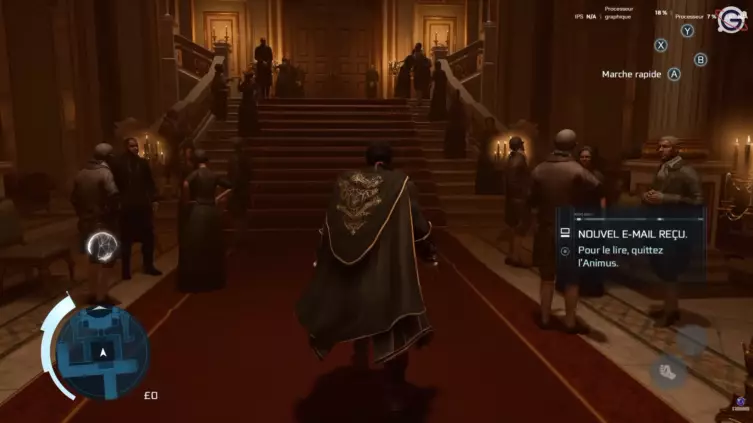 At first, you play Haytham Kenway, Connor’s father.[/caption]
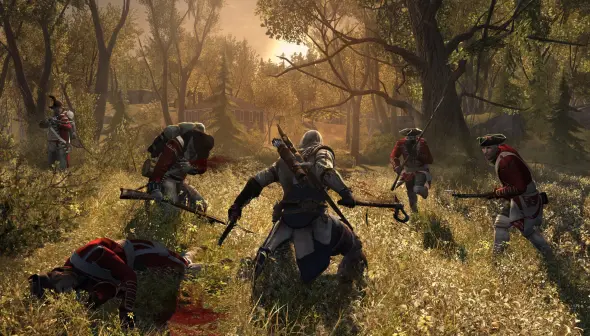 Connor Kenway fights the English.[/caption]
Is Black Flag still the best Assassin’s Creed?
Then comes Black Flag, the ultimate paradox. Players continue to rank it among the series’ best games, even though it is often accused of not being a true Assassin’s Creed—a criticism that is not entirely unfair, given that Edward Kenway spends much of the game pursuing his own interests. But reducing Black Flag to an excellent pirate game overlooks its story: Edward begins as a man who does not understand the Creed, steals an identity and believes freedom means the absence of all responsibility. Only after losing his friends does he understand the difference between living freely and living for oneself. [caption id="attachment_10914" align="aligncenter" width="753"]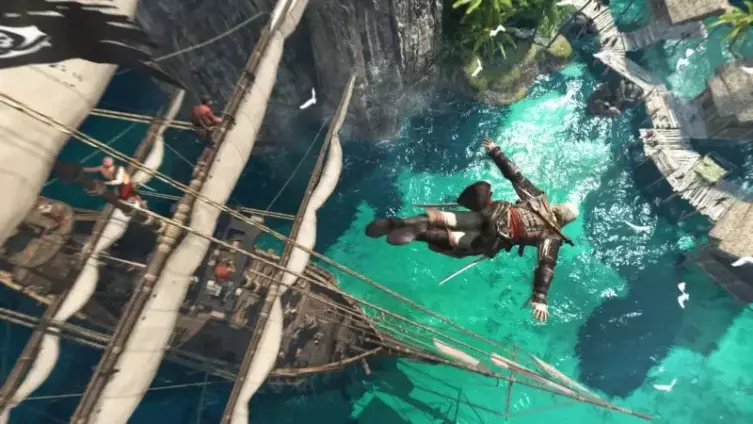 Edward Kenway performs a Leap of Faith from his ship’s mast.[/caption]
Steam ratings are Very Positive, almost unanimously praising the naval battles, sea shanties and Edward’s journey. Criticism focuses on tailing missions and modern-day sequences considered weaker than Desmond’s. Ultimately, Black Flag remains a very good Assassin’s Creed not because Edward is already an Assassin, but because his story explains why such a selfish man eventually comes to believe in the cause.
2026 update: the game’s remake, Black Flag Resynced, developed by Ubisoft Singapore and released on July 9, 2026, sold two million copies on its first day and earned 85% on OpenCritic and 84% on Metacritic—making it the franchise’s highest-rated entry since the 2013 original. This is a strong signal of players’ enduring attachment to this period of the saga.
Rogue (2014): the good idea Ubisoft never had time to explore
Rogue almost directly reuses Black Flag’s systems and reverses the perspective by making Shay Cormac a Templar—an excellent idea that the story sometimes simplifies to make his change of allegiance easier to accept. Its Steam reviews are Very Positive, with players appreciating its icy setting and the experience of being hunted by Assassins, but complaints about its short length and conspicuous reuse of Black Flag’s animations recur constantly. Shay deserved a longer game in which his conversion would have been morally more uncomfortable. [caption id="attachment_11383" align="aligncenter" width="753"]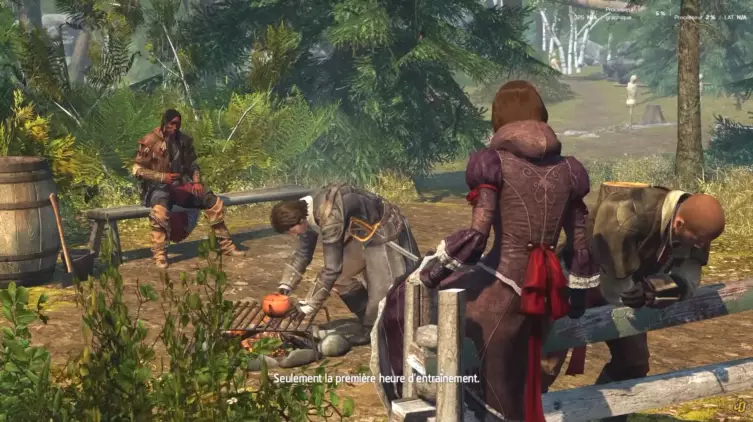 Shay was an Assassin before joining the Templars.[/caption]
[caption id="attachment_11384" align="aligncenter" width="753"]
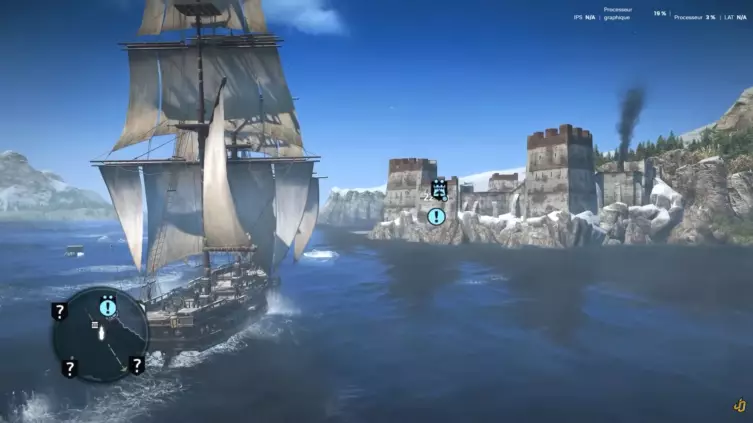 Sailing is given much greater emphasis in Rogue, but many existing mechanics are reused.[/caption]
Unity (2014): from symbol of a disastrous launch to cult classic
Unity is the most revealing example of the relationship between the series and its fans. At launch, the game became a symbol of rushed releases: bugs, performance problems and distorted faces largely eclipsed its qualities. Over the years, part of the community nevertheless turned it into a cult classic—Paris remains one of the franchise’s most impressive cities, and Steam reviews are now mostly positive, far removed from the disastrous launch image. But recent nostalgia sometimes exaggerates its strengths: the parkour, magnificent when it works, can also make Arno catch on the wrong spot or produce an absurdly long jump. Unity is therefore neither 2014’s absolute disaster nor the secret masterpiece sometimes celebrated today, but an ambitious, incomplete game released too early. Our 2026 retrospective on Assassin’s Creed Unity looks in detail at its rehabilitation. [caption id="attachment_11376" align="aligncenter" width="753"]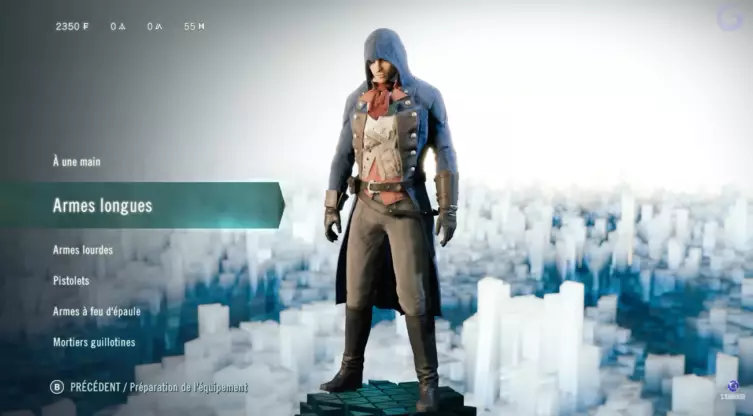 The Franco-Austrian Assassin Arno Victor Dorian.[/caption]
Syndicate (2015): the end of a formula with nothing left to prove
Syndicate attempts to make the formula more accessible and lighter. London is beautiful, Evie Frye brings a genuine focus on stealth, and Jacob’s humor makes the adventure enjoyable—at the cost of a tone that sometimes turns the Assassins–Templars conflict into a sightseeing tour. Reviews remain favorable but less passionate than those of the major entries, with criticism aimed at repetition and a grappling hook that makes traversal so easy that some of the parkour becomes pointless. [caption id="attachment_11373" align="aligncenter" width="753"]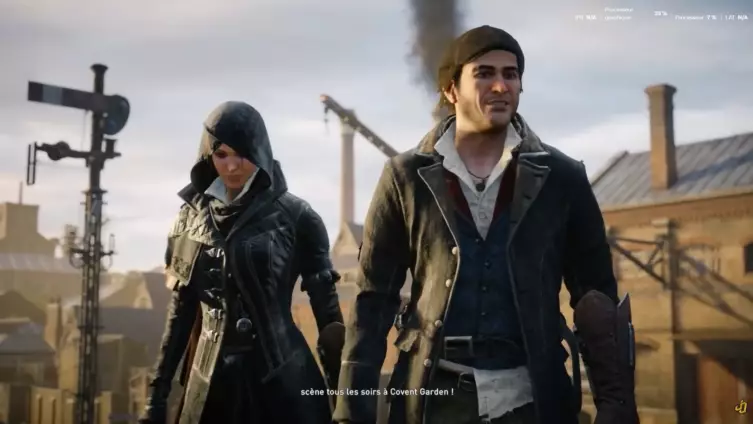 For the first time, a game in the series lets players control two characters in the same adventure: the Frye twins.[/caption]
Origins, Odyssey, Valhalla: the revival that eventually replaced the old identity
Origins (2017): the necessary renewal
[caption id="attachment_11305" align="aligncenter" width="753"]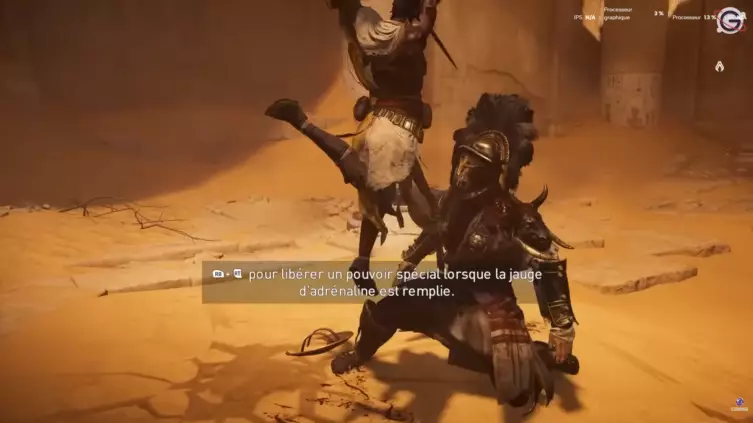 Bayek trains against a boss. The finishing-move animation is impressive.[/caption]
Origins is probably the hardest game for a fan of the old formula to criticize, because it profoundly transforms the series while giving it renewed energy. Combat, equipment, levels and a huge Egyptian map: everything borrows from the RPG genre. Yet Bayek retains the humanity that made Ezio and Edward so compelling. Steam reviews remain Very Positive, and even players who miss the old formula often acknowledge that Origins was a necessary renewal. The main criticism concerns levels: when the hidden blade is no longer enough to eliminate a target because of an excessively high number, something breaks in the logic of being an Assassin.
[caption id="attachment_11377" align="aligncenter" width="753"]
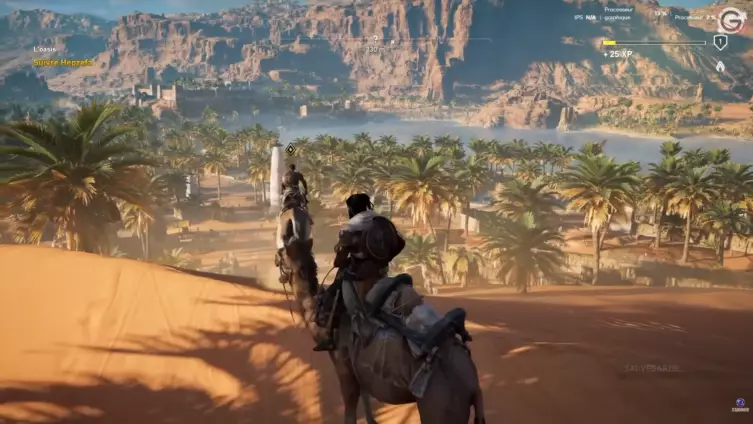 A fine example of the graphical evolution of Assassin’s Creed games in 2017.[/caption]
Odyssey (2018): “excellent RPG, bad Assassin’s Creed”
Odyssey pushes every slider further: Greece is magnificent, Kassandra is charismatic, and naval exploration recaptures some of Black Flag’s appeal. Steam reviews are extremely favorable. The debate is often summed up by a formula that has become almost too easy—“excellent RPG, bad Assassin’s Creed”—but it reflects a genuine unease: the game takes place before the Brotherhood was created and turns its character into an almost mythological warrior. Some players consider it their favorite entry precisely because of its freedom; others eventually tire of its repeated camps and contracts. Its main criticism is not that it is different—Black Flag was different too—but that it sometimes feels as though the series’ name and the Isu were added to connect a grand Greek adventure to an existing brand. [caption id="attachment_11302" align="aligncenter" width="753"]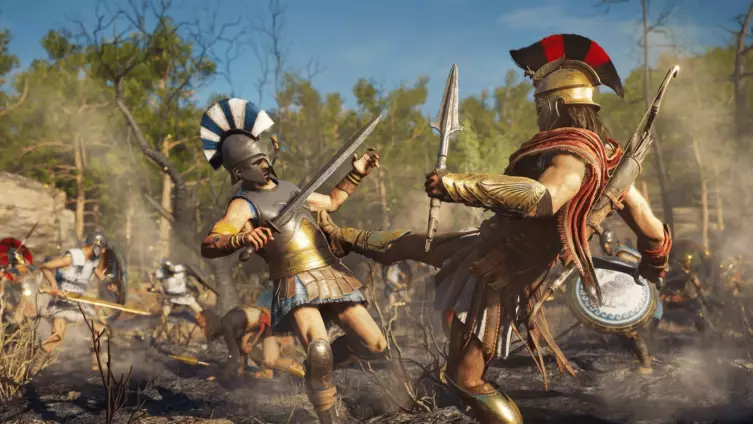 Odyssey is known for its intense combat and its gradually increasing difficulty throughout the adventure.[/caption]
Valhalla (2020): when excess becomes difficult to defend
Valhalla attempts to address this issue by bringing back the Hidden Ones, Basim, the hidden blade and several direct references to the franchise’s mythology. Saxon England has a magnificent atmosphere and some story arcs are remarkable. But this is the game in which excess becomes hardest to defend: Steam reviews are considerably more divided than those for Origins and Odyssey, with criticism focused mainly on excessive length and the repetition of regional alliances. The problem is not the length itself, but the way the main plot regularly disappears behind regional stories of uneven quality. [caption id="attachment_11304" align="aligncenter" width="753"]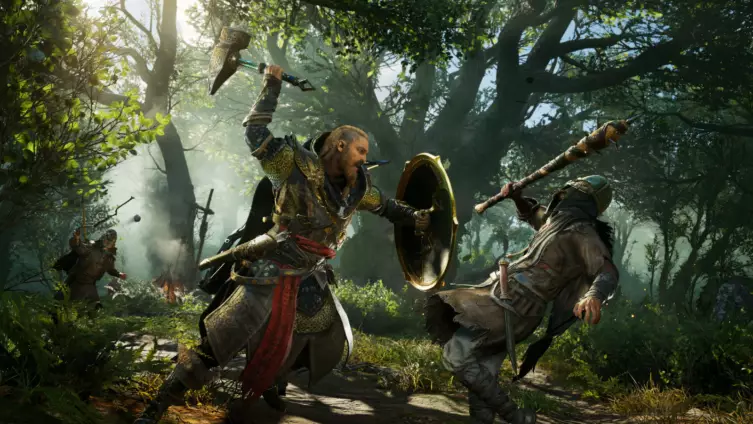 Eivor’s adventure combines Viking life with Norse mythology, particularly in the DLC.[/caption]
The RPG trilogy saved the franchise commercially and creatively, but it also created a new form of fatigue: maps covered in small icons were replaced by gigantic territories filled with content, without eliminating the temptation to confuse quantity with richness.
Interesting note: Ubisoft attempted to revive the modern-day sequences with Layla Hassan in Origins, Odyssey and Valhalla. Despite this, she never managed to stand apart from Desmond, to whom the first trilogy had given strong sentimental value. Following this logic, Basim should have become the new protagonist of the modern era, accompanied by Rebecca and Shaun, former companions of Desmond whom we have seen again since Valhalla. But Shadows does not pursue this idea and follows a path similar to Unity: an ordinary person simply explores the Animus.
Mirage and Shadows: two attempts to reconcile players
Mirage (2023): a good intention more than a finished achievement
Mirage was presented as a return to the roots: Baghdad, investigations, stealth and a more reasonable length seemed to answer longtime fans’ requests. Its Steam reception is broadly favorable, but more measured. The game succeeds through its scale—Baghdad is a city players can learn to know, and rooftops become routes again—but it remains built on the technical foundations of the RPG era: Basim has neither Arno’s precision nor Ezio’s control. The question frequently returns: is this a genuine return to the roots, or a modern game dressed up as an older entry? [caption id="attachment_11301" align="aligncenter" width="753"]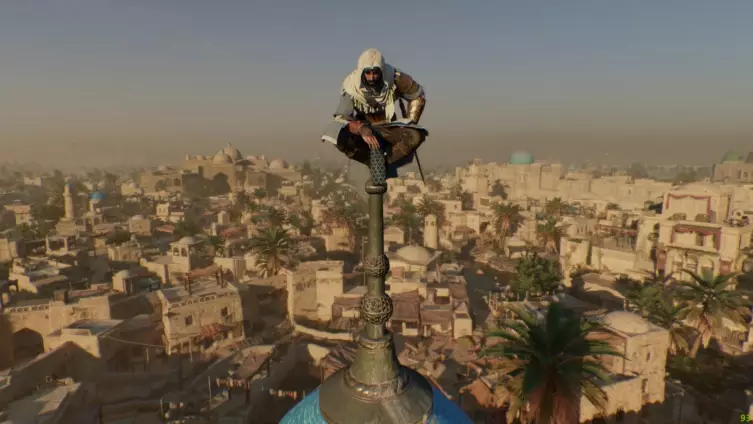 Basim could have been an interesting Assassin to follow if his story had not ended after this game.[/caption]
Shadows (2025): Ubisoft’s best recent compromise
Shadows takes the large-scale RPG model and combines it with two very different characters: Naoe for stealth and vulnerability, and Yasuke for strength and direct combat. This contrast allows players to switch between two styles, but also gives the impression that Ubisoft still refuses to choose between the two identities of its franchise. Steam reviews are mostly positive, praising the beauty of Japan and Naoe’s stealth gameplay; criticism focuses on the writing and the imbalance between the protagonists. Negative comments tied solely to controversies before release should be distinguished from those genuinely concerning the game: once that agitation is set aside, the most interesting criticisms concern the familiar open-world structure and an initially unsatisfying conclusion. Shadows is probably one of Ubisoft’s best compromises in a long time—it improves the RPG formula without truly reinventing it. [caption id="attachment_11308" align="aligncenter" width="753"]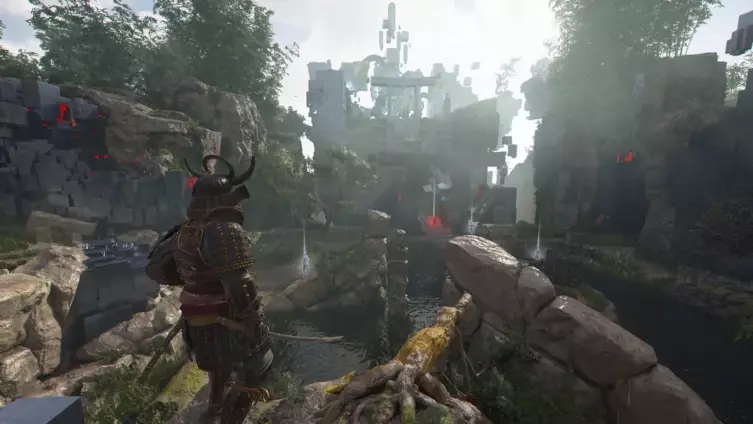 Yasuke’s gameplay follows the path of the samurai more closely.[/caption]
Which Assassin’s Creed should you start with in 2026?
The best choice depends mainly on what you expect from the series. This summary brings together the qualities highlighted in the ranking without replacing the detailed analysis of each game.| If you’re looking for… | Recommended Assassin’s Creed |
|---|---|
| A great story | Assassin’s Creed II |
| The most complete classic experience | Assassin’s Creed Brotherhood |
| Naval exploration | Assassin’s Creed IV Black Flag (original) |
| A major RPG | Assassin’s Creed Odyssey |
| A shorter experience | Assassin’s Creed Mirage |
| The best entry point in 2026 | Assassin’s Creed Black Flag Resynced |
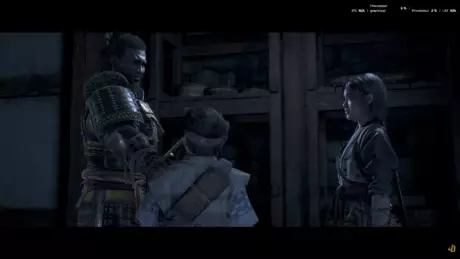 Protagonists Yasuke and Naoe join forces by setting aside their differences.[/caption]
The series’ future at a weakened Ubisoft
The most promising project on the horizon remains Codename Hexe, presented by Ubisoft as a darker experience with a greater focus on storytelling. For a fan, this direction is more exciting than an even larger map—the series needs an entry with clear conviction, even if it does not appeal to every audience. The future will nevertheless depend as much on economics as on creativity. During fiscal 2025–2026, Ubisoft recorded an IFRS operating loss of €1.322 billion and saw annual net bookings fall by 17.4% to €1.525 billion. The company also began a restructuring that led to approximately 1,200 job cuts, while its new portfolio plan resulted in seven projects being cancelled and six others postponed. At the same time, the franchise remains a vital pillar for the publisher: Assassin’s Creed has surpassed 220 million copies sold over its history, making it by far Ubisoft’s best-selling franchise. Tencent invested €1.16 billion in Vantage Studios, the structure bringing together Assassin’s Creed, Far Cry and Rainbow Six. It is led by Charlie Guillemot and Christophe Derennes. Since the deal was finalized, Tencent has held a 26.32% economic interest in Vantage Studios, which remains exclusively controlled and consolidated by Ubisoft. It would therefore be an exaggeration to portray Tencent as the franchise’s new creative director: the available official information does not attribute creative control of Assassin’s Creed to Tencent. Its most likely influence is more indirect—Ubisoft and Tencent describe these franchises as “durable platforms” intended to become vast ecosystems, which may provide strong budgets but could also push the series toward more permanent content, multiplayer and monetization. China’s presence should therefore not be used as an easy explanation for all of Ubisoft’s problems. The pitfalls of annualization, oversized worlds and the loss of the modern-day narrative existed well before Vantage Studios. Tencent did not create Assassin’s Creed’s identity crisis; it is investing in a franchise that was already experiencing it.Assassin’s Creed does not need to become old again, but sincere again
After comparing player comments across various specialist websites and social networks, one conclusion becomes clear: there is no single Assassin’s Creed community. Some players want a huge RPG; others want an urban stealth adventure. Some love Odyssey and struggle with the first game; others still consider Altaïr the most authentic form of the series. Ubisoft will never completely satisfy all these audiences with one entry. The best solution is probably to embrace several formats: large RPGs can continue to exist, released farther apart and stripped of filler; shorter adventures can focus on one city and a series of assassinations; more narrative projects such as Hexe can explore different atmospheres without reproducing every previous system. But they should all share one principle: every element must serve the franchise’s identity. Assassination must not become a simple attack that deals damage. Parkour must not merely allow players to cross the scenery. The present day must not appear for a few minutes simply to remind us that the Animus exists. Player comments also show that the most beloved entries are not necessarily the largest. They are the ones with an easily identifiable soul: Assassin’s Creed II is Ezio’s story, Black Flag is Edward’s story and the end of his old world, while Origins is the story of a father whose grief gives birth to a cause. Even Unity, despite its flaws, remains associated with a precise vision of Paris and parkour. Assassin’s Creed’s greatest threat is therefore not the failure of one game, or even Ubisoft’s financial weakness. It is the possibility that the series becomes an eternal platform producing content continuously without knowing what it wants to say. A great Assassin’s Creed is not measured by the number of square miles on its map. You recognize it when you reach the top of a monument and the music fades; in the tension before a carefully prepared execution; in a character whose wounds you understand. That is what fans are truly asking for, even when they disagree about the formula: not for everyone to receive the same game, but for Ubisoft to start creating each entry with a strong enough vision to justify the name Assassin’s Creed.FAQ
- Which Assassin’s Creed game is considered the best according to player reviews?
- There is no consensus: Assassin’s Creed II and Black Flag most often appear as all-generation favorites, while Origins and Odyssey lead among players who joined during the RPG era.
- Why is Black Flag considered a good game while being criticized as “not a real Assassin’s Creed”?
- Because stealth and assassination play a secondary role compared with sailing and naval combat—but its story remains faithful to the series’ central theme: the tension between individual freedom and collective responsibility.
- Does Tencent now control Assassin’s Creed?
- No. Tencent holds a 26.32% economic interest in Vantage Studios, but Ubisoft retains exclusive control and consolidation of the company.
- Is Assassin’s Creed in financial trouble?
- Ubisoft as a whole is going through a difficult period: 2025–26 net bookings fell by 17.4% to €1.525 billion and approximately 1,200 job cuts were announced, while Assassin’s Creed remains one of its major franchises, with more than 220 million copies sold according to published figures.
Sources and verification
- Ubisoft — Investor Relations: fiscal 2025–26 results and 2026 publications.
- Ubisoft — fiscal 2025–26 results: net bookings, restructuring and portfolio.
- Ubisoft — completion of Tencent’s investment in Vantage Studios: €1.16 billion and a 26.32% economic interest.
- Ubisoft — Black Flag Resynced: 2 million copies sold at launch: day-one sales, 99,451 Steam players, OpenCritic and Metacritic.
- Ubisoft — Black Flag Resynced: more than 3 million copies sold in one week.
- Steam — Assassin’s Creed II, Black Flag, Unity, Origins, Odyssey, Valhalla: community ratings consulted on September 5, 2026.
- Steam — Black Flag Resynced: English-language reception checked on September 21, 2026.
- Game.fr — Assassin’s Creed Unity in 2026: internal retrospective used for editorial interlinking.