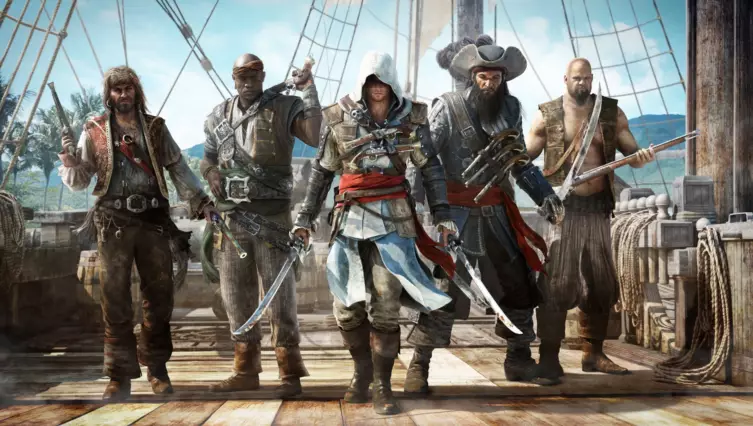
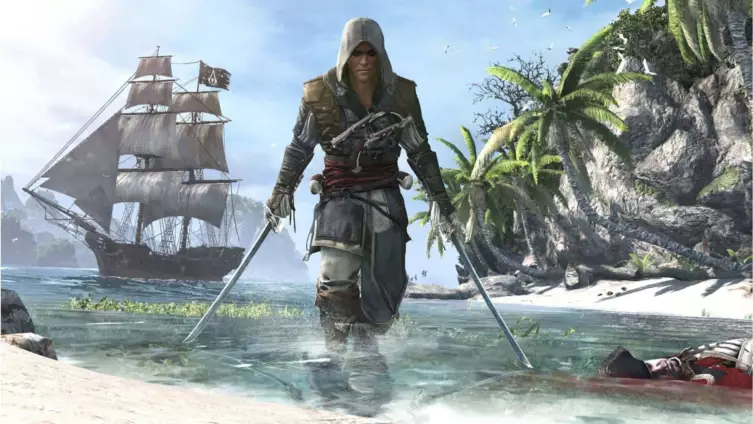
Assassin's Creed Black Flag Remake, officially titled Black Flag Resynced, launched on July 9, 2026. With revamped visuals, redesigned combat and stealth, and new content, here's what this return to the Caribbean is really worth.
Our score: ⭐⭐⭐⭐ 8/10
Strengths
Weaknesses
Stunning visual and audio overhaul (Anvil engine, reorchestrated sea shanties)
Combat becomes repetitive after around ten hours
The series' most accomplished stealth in a long time
Enemy AI is still too forgiving
~6 hours of new content and a narrative link to Assassin's Creed Shadows
Freedom Cry DLC is missing and fleet management remains superficial
Key takeaways
The game runs on a recent version of the Anvil engine—the one used for Shadows—with ray tracing and a 60 fps target on consoles.
According to the press, the stealth is the best the series has offered in a long time, although enemy AI remains forgiving.
About six hours of new content bring back Blackbeard and Stede Bonnet in new storylines—but Freedom Cry DLC is not included.
Single-player only, unavailable on Switch at launch, and released on PC, PS5, and Xbox Series.
After 19 years without a remake in a series that already boasts fourteen main entries, Ubisoft had plenty of possible subjects, and choosing Black Flag was no coincidence: it was the entry that brought together 34 million players in 2013, and the only one—or almost the only one—whose story takes place almost entirely in the past. That made it possible to remove the modern-day meta-story without cutting anything essential from the narrative. On paper, the gamble was therefore safer than it was risky.
In practice, Black Flag Resynced delivers on its most important promise: restoring the Caribbean of 2013 to the splendor it deserved. The visual overhaul, audio atmosphere, and modernized stealth are enough to convince anyone who never touched the original. The problems lie elsewhere: Ubisoft Singapore chose to polish the 2013 structure rather than reinvent it, and that caution comes at the cost of combat that grows repetitive, overly lenient AI, and fleet management that has not progressed an inch in thirteen years.
The result feels less like a remake in the strict sense than what several reviewers have dubbed a “remakster”: a comfortable middle ground that modernizes without ever truly shaking things up. For newcomers, it is an unequivocal yes. For veterans of the 2013 game, the question is no longer “is this remake successful?” but “did you really need it remade?”—and the answer will depend mainly on each player's nostalgic attachment, rather than on what the game brings to the table.
Assassin's Creed Black Flag Remake
Remake or remaster? A category-by-category comparison
The distinction matters: Ubisoft did not simply increase the resolution. The studio rebuilt the 2013 structure to run on an entirely new engine and added new content—the very definition of a remake. But a category-by-category comparison clearly shows where the ambition ends:
Aspect
2013 (original)
Resynced (2026)
Verdict
Engine
AnvilNext, limited by PS3/Xbox 360
Anvil (Shadows version), ray tracing, 60 fps on consoles
A genuine technical leap
Combat
Classic AC system
Posture gauge, chained executions, no RPG/loot
Refreshed, but ultimately repetitive
Stealth
Immediate failure if detected
More freedom after detection, AI still forgiving
Clear improvement, lagging AI
Narrative
Modern-day sequences (Abstergo)
Sequences removed, ~6 hours of new content, link to Shadows
A genuine addition, not just a cosmetic change
Fleet management
Basic
Still basic, reduced to farming
No evolution
Additional content
Freedom Cry included (DLC)
Freedom Cry absent
A clear step backward
Multiplayer
Multiplayer mode available
Single-player only
Feature removed
Of the seven criteria, three improve significantly, two stagnate, and two regress. This precarious balance explains why the press more often describes Resynced as a “cautious” remake than an “ambitious” one.
Assassin's Creed 4 Black Flag
What really changes in the gameplay
A setting: the Caribbean, 1715–1722
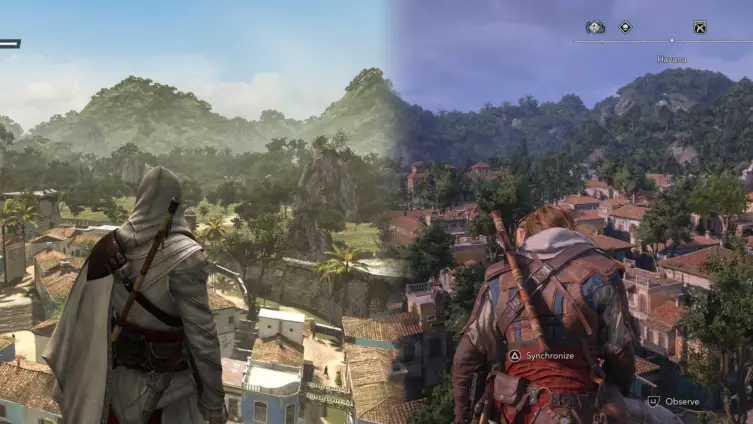
The game takes place during the Golden Age of Piracy, between 1715 and 1722. Havana is under the Templars' control, Kingston serves as a trade hub, and Nassau is a pirate stronghold—three cities that have been extensively reworked visually, with streets packed with more detail than in 2013.
Assassin's Creed IV Black Flag Remake ship
A modernized Anvil engine
The game was rebuilt on a recent version of the Anvil engine, the same one already used for Assassin's Creed Shadows. Features include upscaling, frame generation, ray tracing with global illumination and reflections—including a software ray-tracing option for incompatible graphics cards—and a target of 60 fps on consoles. On PS5, three graphics modes are available: Performance (60 fps), Balanced (40 fps, requiring a 120 Hz display), and Fidelity (30 fps). A photo mode is also included.
Enhanced naval battles, without reinvention
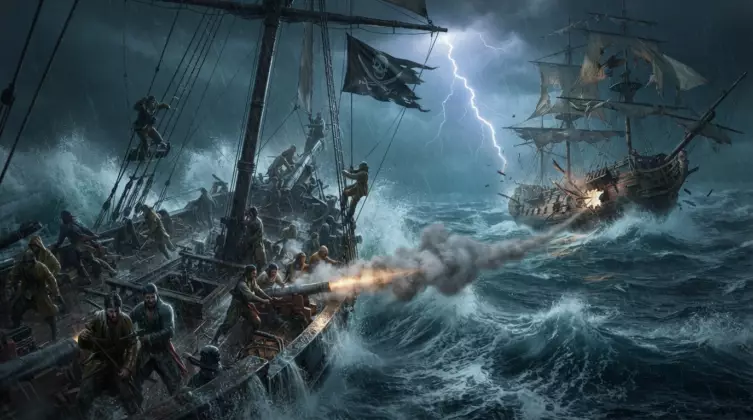
Naval battle in Black Flag: a pirate ship fires its cannon in a storm.
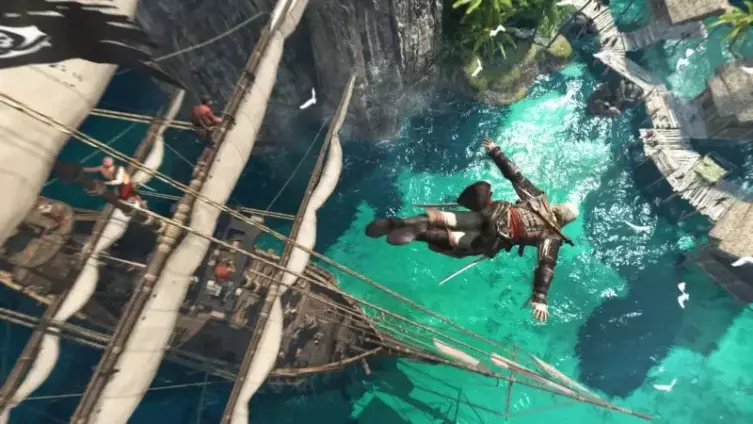
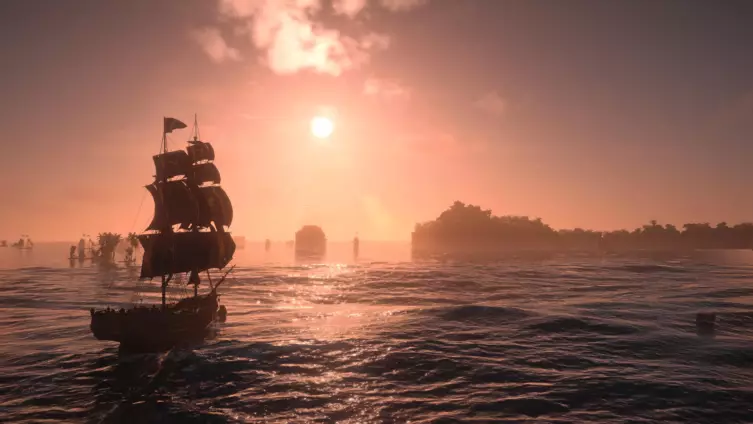
The Jackdaw offers more customization, and the spyglass can now identify a ship's cargo type, level, and strength before engaging it. Boarding pauses time: you can repair your ship and recover the entire cargo instead of watching it sink. This is the point most unanimously praised by reviewers. The downside is that fleet management remains superficial, with several reviews describing it as little more than simple farming.
Stealth: the series' best, with overly forgiving AI
A character in stealth observing guards in Black Flag Remake.
Edward can now crouch anywhere—not just in tall grass—visibility changes with the day/night cycle, and, most importantly, missions no longer end abruptly at the first detection, unlike in 2013. Several reviewers consider it the best stealth the series has offered in a long time. The recurring caveat is that enemy AI remains easy to fool, even at higher difficulty.
The parkour borrows elements from Shadows, such as the backward swing, but some of the series' old habits remain: grabbing the wrong wall, misinterpreted jumps, and a camera that gets in the way in confined spaces.
Assassin's Creed IV Black Flag Remake
Combat: a posture gauge and the removal of RPG elements
The combat system now revolves around a posture gauge linked to the enemy's health bar, with new moves—including a kick, a trip, and a grappling-hook attack—and up to four chained executions after a perfect parry. Ubisoft deliberately abandoned all RPG elements—no skill tree and no loot—in favor of a more tactical model, contrary to pre-announcement rumors. Several reviews note that fights become repetitive after around ten hours.
New content: Blackbeard and Stede Bonnet return, but not Freedom Cry
The remake adds approximately six hours of new narrative content, with new storylines involving iconic characters such as Blackbeard and Stede Bonnet. The modern-day sequences in Abstergo offices have been removed and replaced with alternative sequences integrated into the historical story. However, Freedom Cry DLC is not included—a decision several reviewers have regretted.
One notable and very recent addition is an endgame quest called “Black Waves,” which now connects the story of Black Flag Resynced to Assassin's Creed Shadows, alongside crossover cosmetic content—Japan-inspired outfits for Edward and pirate-themed rewards for Naoe and Yasuke—through the Animus Hub.
The legacy of a classic: why Black Flag is so beloved
This modernization carried particular weight: preserving a formula in which every component supports the others, without turning the adventure into a simple pirate game.
Understanding the players' attachment
Black Flag combines the identity of Assassin's Creed with a genuine captain's fantasy. Stealth, exploration, and naval battles coexist with a fluidity that gives the entry its personality.
Edward Kenway, an imperfect and likable hero
Edward Kenway does not fit the classic profile of the disciplined assassin. His ambition, temperament, and contradictions shape an immediately recognizable protagonist. His journey naturally guides the player between piracy and the Assassins' legacy.
A maritime freedom that became iconic
The sea is not merely scenery between missions. It creates a rhythm built around exploration, combat, stopovers, and impromptu discoveries. The crew's reorchestrated songs transform long voyages into instantly recognizable moments—one of the aspects of immersion most praised by the press.
Assassin's Creed Black Flag Remake will be more than a remaster
Our testing experience
[⚠️ Generic paragraph to validate or replace with your tester's actual experience before publication—see the note at the end of the article]
On PS5 in Performance mode, the first few hours confirm what specialized outlets unanimously report: the visual impact is immediate, driven by dynamic weather that meaningfully changes how a naval battle plays out in a storm. The gameplay is also more comfortable in one specific respect: no longer seeing a stealth mission end abruptly at the first detection genuinely changes how you approach each fort, encouraging more improvisation. In return, the series' historical rough edges resurface over time—imprecise parkour in dense urban environments, a camera that occasionally loses track of itself during a three-ship boarding action, and a sense of repetition in land combat after the twenty-hour mark. Nothing that ruins the experience, but nothing that makes it stand out once the visual novelty has worn off.
Practical information: platforms, length, and requirements
Item
Confirmed details
Title
Assassin's Creed Black Flag Resynced
Studio
Ubisoft Singapore (the studio behind Skull and Bones)
Platforms
PC, PlayStation 5, Xbox Series X/S—no Nintendo Switch at launch
Release date
July 9, 2026
Price
€59.99
Multiplayer
None, exclusively single-player
Length
Main story: 15–25 hours. 100% completion: 60–70 hours
Internet connection
Required once for the download; the campaign can then be played offline (Animus Hub and the store require a connection)