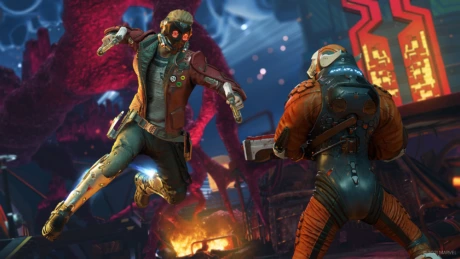
In Modern Warfare 4, the K9 robots, drone swarms and artificial intelligence announced for DMZ could change how players read danger and divide tasks. This analysis examines their possible effects on gameplay, what the announcements establish and what their appearance alone does not prove.
To find the broader context — release, DMZ and new features — also see our complete Call of Duty: Modern Warfare 4 guide.A mechanical dog or a drone does not reinvent an FPS on its own. The interest appears when its presence forces players to watch the sky, reread a route or delegate a task. This effect on player decisions guides the analysis.
Modern Warfare 4 offers a useful setting for examining this question. Its general release is announced for October 23, 2026. The campaign has been available early since October 16 for eligible digital purchases, but this analysis of DMZ's robotic systems is based on official documentation rather than a complete test of the mode. The DMZ guide mentions K9 quadrupeds and autonomous combat drones in the fictional Hajin area. [1] [2]
K9 Robots, Drones and AI in MW4: Summary of the Announcements
This table summarizes the announced functions and the questions that remain open. It does not present test results.
| System | Announced function | What remains to be verified |
|---|---|---|
| K9 quadrupeds | Robotic threats, often underground | Navigation and reactions to obstacles |
| Drone swarm | Multiple aerial threats | Coordination that can actually be observed |
| Combat Drone | Remote-controlled equipment | Handling and effectiveness |
| Wheelson | Target searching or automated protection | Behavior in different situations |
| DMZ threat level | Escalation linked to combat activity | Clarity and consequences for the player |
K9 Robots in MW4: A Different Way to Read the Terrain
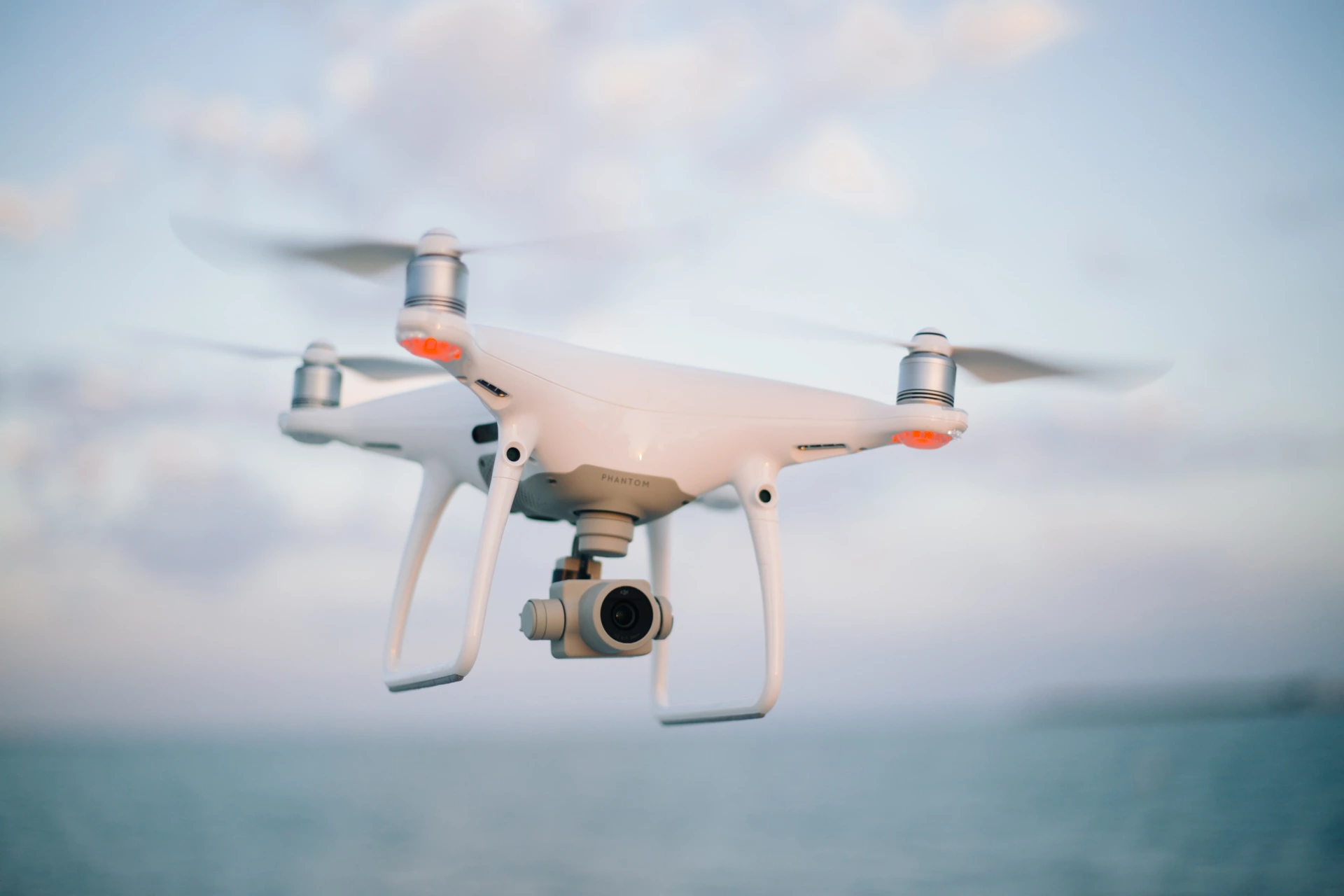
The official guide notably associates K9 quadrupeds with underground spaces. Their silhouette evokes a family of real robots whose four points of support enable other possibilities for mobility. For players, it also suggests a presence different from that of a soldier: a height, rhythm and way of occupying space that could change how danger is perceived. [2]
Useful tests will focus on concrete reactions: does the K9 go around an obstacle, stop before a difficult passage, or recover its route when the player suddenly changes direction? These behaviors will matter more to the encounter's credibility than the detail of its mechanical appearance alone.
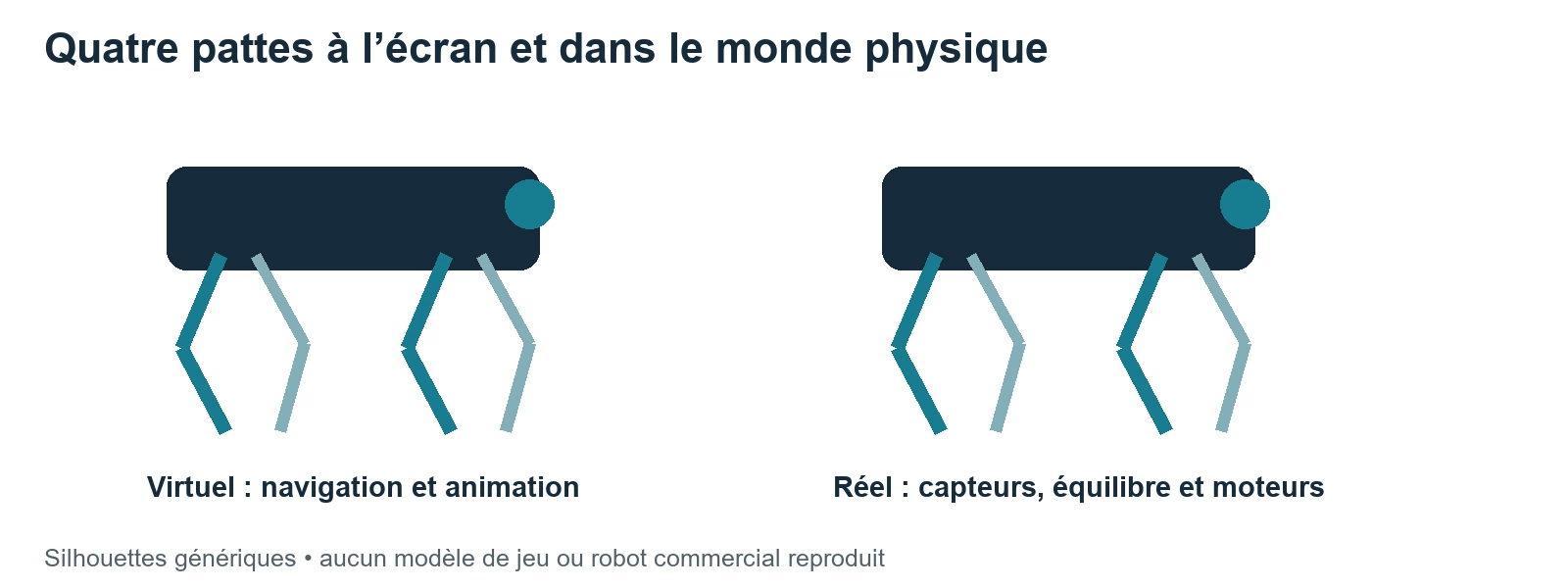
In the physical world, walking requires maintaining balance, distributing weight across supports, estimating position and controlling motors. A game can depict this mobility through navigation, physics and animation without solving the same dynamic-control problem. The criterion will be the K9's visible consistency; that alone will not make it possible to deduce its internal architecture.
Drone Swarms in MW4: Coordination or Staging?
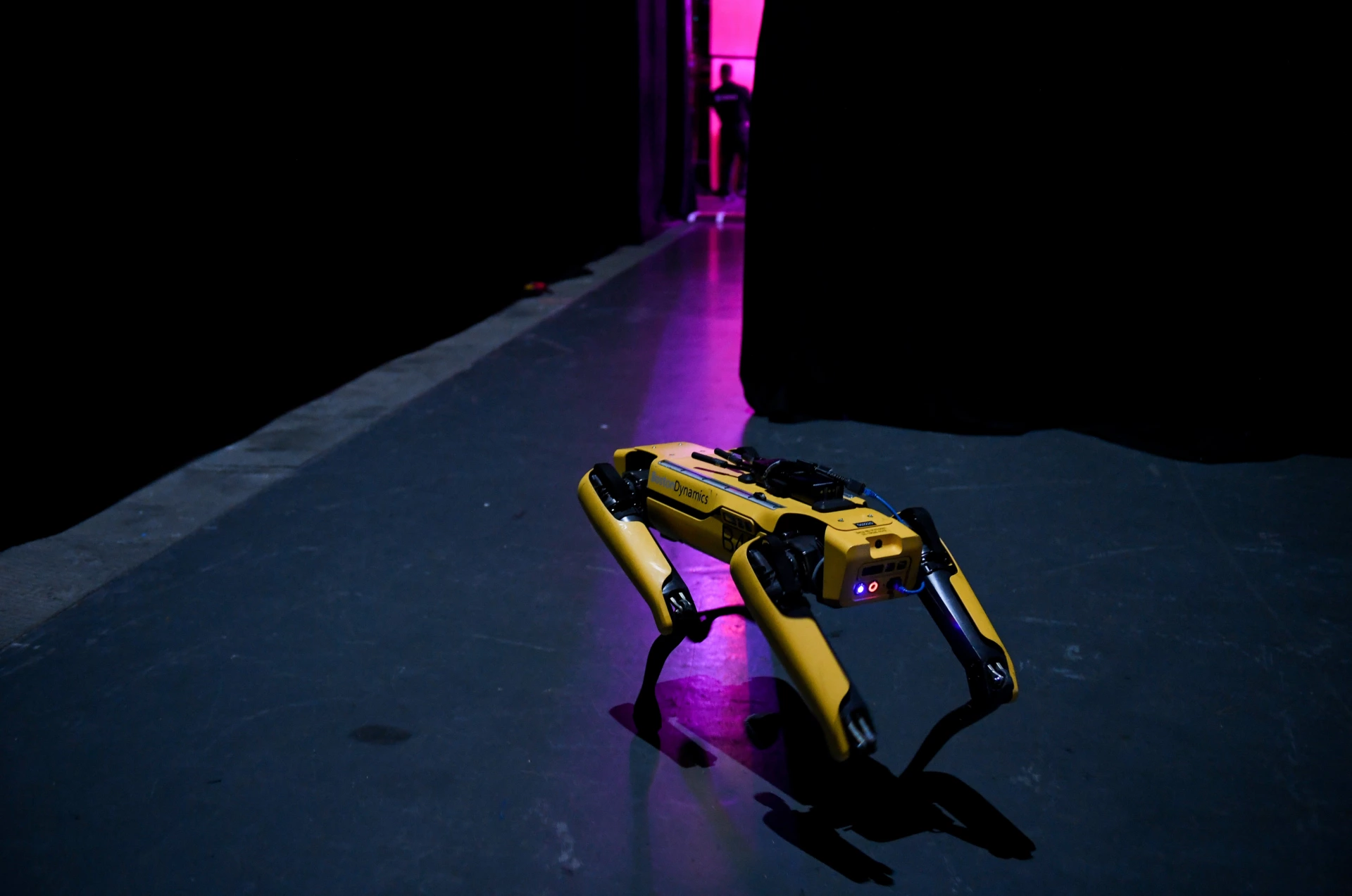
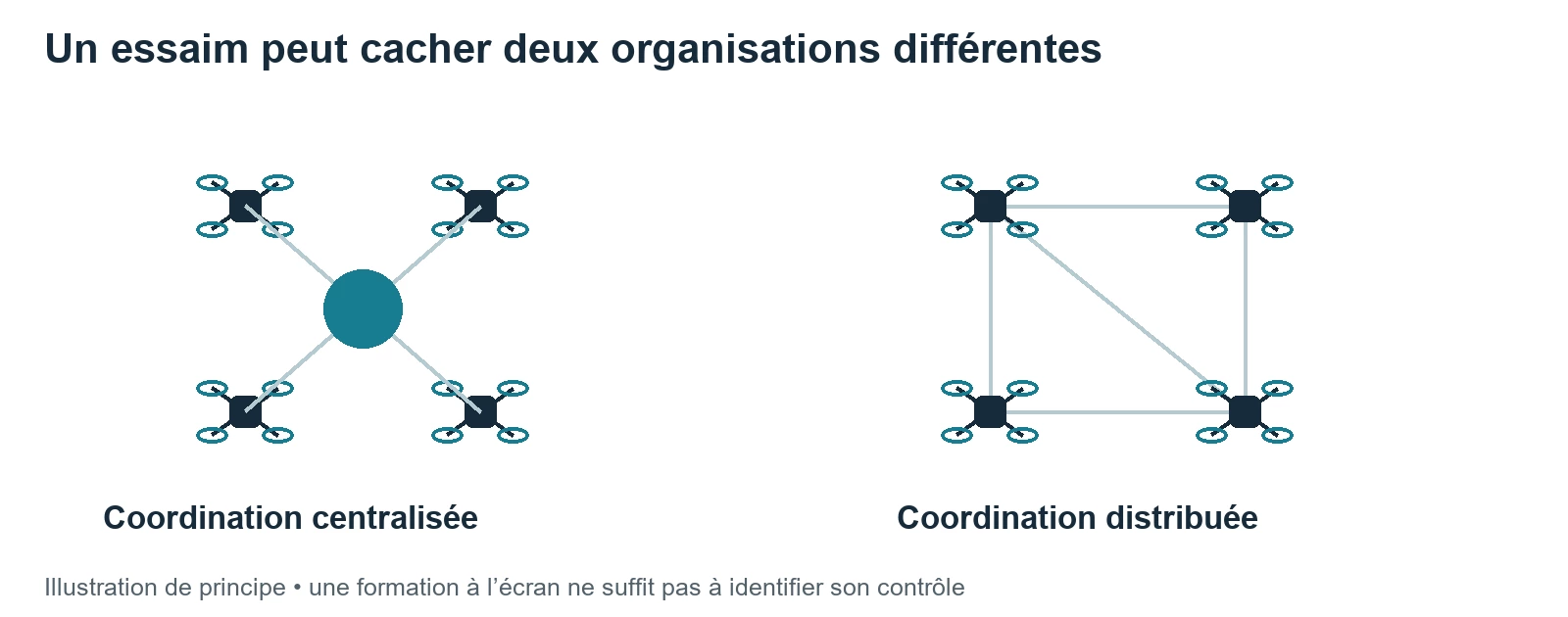
The announced swarms encourage us to shift our attention from the individual unit to the group. One drone attracts attention; several can change how players move through and monitor space. But the word "swarm" covers different realities. In robotics research, cooperation can rely on exchanges between machines, task allocation and decentralized decisions. For example, EGO Swarm presents work on decentralized quadrotor navigation. [3]
On screen, a visually similar organization can be produced by a software orchestrator, preset trajectories or agents that adapt to one another. A simultaneous attack therefore does not, by itself, prove distributed intelligence.
Three indicators will be particularly revealing: do the drones occupy different spaces, avoid interfering with one another and react when one unit disappears? These behaviors will help describe their coordination without revealing the method that produces it on their own. For players, the group's organization matters as much as each craft's power: it determines what must be monitored and what can be anticipated.
Combat Drone and Wheelson in MW4: Piloting or Delegating
Multiplayer equipment makes this difference especially clear. The beta guide describes the Combat Drone as remote-controlled and Wheelson as an AI-controlled vehicle that searches for nearby targets or protects its owner's surroundings. The Seeker Drone is used to locate nearby enemies, while the SAM Airburst turret intercepts aerial threats. These beta-documented functions do not guarantee that every setting will be identical in the final version. [4]
The question then becomes one of attention. Directly piloting a device occupies the player; deploying automated equipment can allow them to focus elsewhere. These two modes divide the work between human and software differently; their value will depend on the gameplay situation.
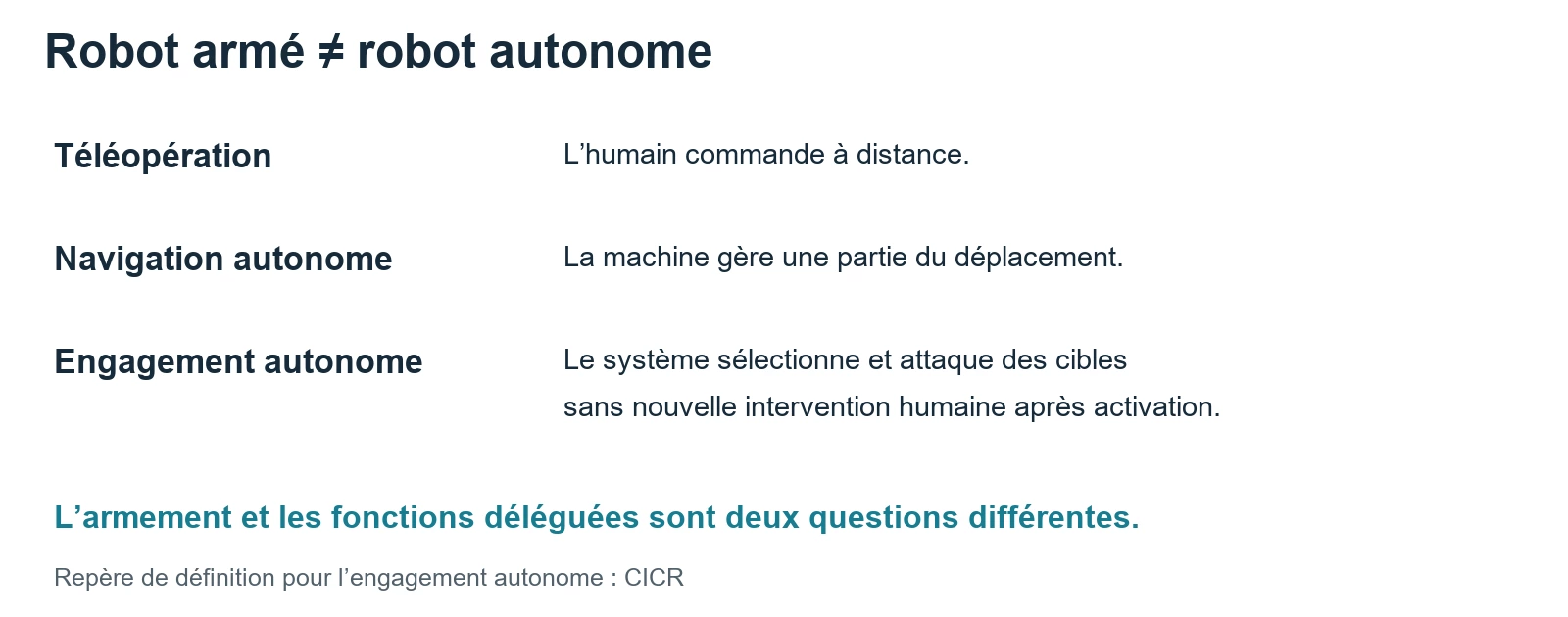
However, the functions must remain separate. Searching for an opponent in order to mark them is not the same as deciding to attack. Moving automatically does not mean freely planning a mission. And "AI-controlled" in a game description does not imply the use of a neural network. These are functional descriptions, not complete algorithmic documentation.
Enemy AI in MW4: When Adversaries Seem to Understand Each Other
DMZ presentations also highlight more dynamic firefights and collective behaviors. A squad that spreads out, seeks cover or reacts to our position can create the impression of sharing an intention. This is one possible achievement of game AI: making opposition readable without making it entirely predictable. To broaden the subject, also see our article How AI Is Changing Video Games in 2025. [5]
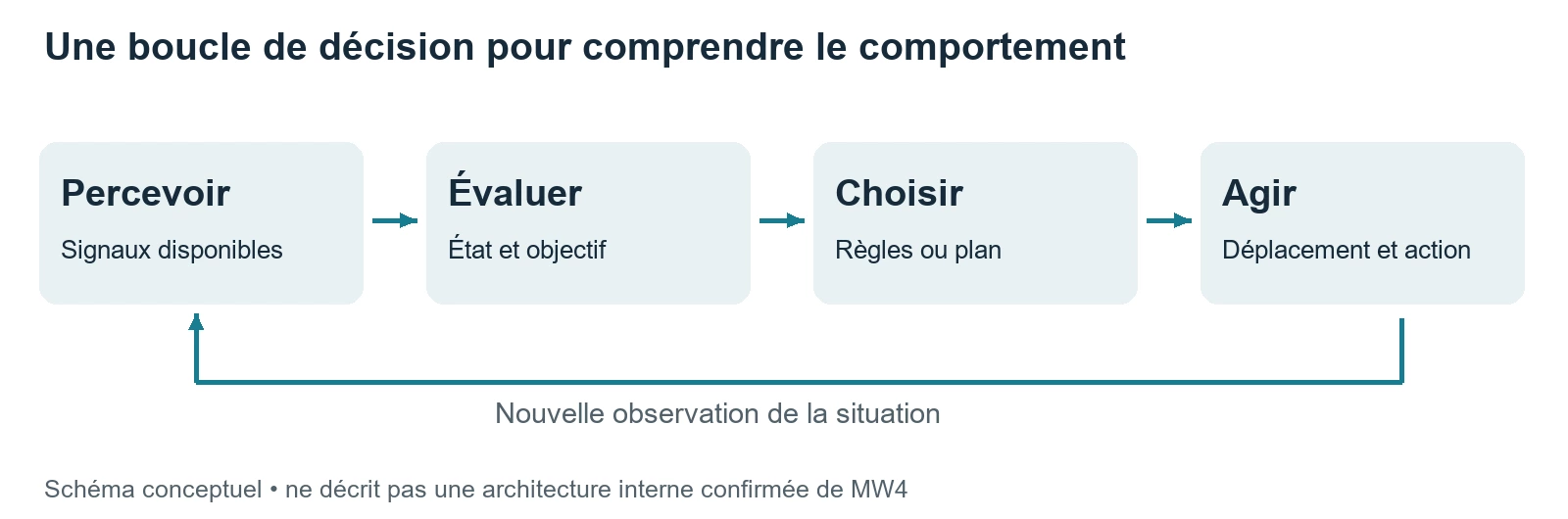
A shared reaction does not prove that units make decisions together: several actions may also be triggered by the same event. Both cases can produce a convincing scene, but they do not describe the same operation. Nor is there any basis for assuming that soldiers and robots share the same decision-making architecture.
This reservation does not take anything away from the enjoyment of the game. It helps describe observable facts: a coordinated reaction, a change of position or a response that repeats in the same circumstances. AI quality is not reduced to the name of its technique; it is also measured by the consistency of the experience it creates.
DMZ Threat Level: Detecting the Player and Raising the Pressure
In DMZ, local detection must also be distinguished from a zone's overall response. The official guide describes a threat level that rises with combat activity and can bring in more dangerous reinforcements. This indicator does not count enemy human operators. [2]
Perception answers a first question: under what conditions does an enemy notice us? Threat management raises another: how does the world respond to what we do? A reinforcement system can make Hajin more reactive without every unit possessing more sophisticated individual intelligence.
The interface will also need to make detection understandable. An enemy reaction is not enough, however, to establish the presence of a particular stealth meter; that point will depend on what is actually displayed in a playable version.
For gameplay, the possible consequence is clear: an encounter can affect the rest of the movement, beyond the enemies who are already present. The decisive point will be whether players understand the world's reactions well enough to adjust their choices.
How to Evaluate MW4's Robots and Drones
To avoid drawing conclusions from a single scene, similar situations will need to be compared: the same enemy category, with similar distance, route and visibility. Two tests will be especially useful: observe a drone group before and after losing one unit, then expose a quadruped to the same obstacles and changes of direction.
These comparisons may reveal patterns and limitations without exposing the game's proprietary code. They constitute a protocol for the full game, not results that have already been obtained.
MW4's K9 Robots and Real-World Robotics: Two Different Problems
Comparisons with physical robotics are useful as long as they remain partial. Ghost Robotics' Vision 60 does belong to the family of terrestrial quadrupeds; multi-robot research explores the coordination of multiple devices. That makes neither these platforms exact models for the game's machines nor MW4 a demonstration of their capabilities. [6] [3]
In reality, energy, mechanical reliability, weather, sensor errors and communications impose constraints that simulation can simplify. An armed robot can also remain teleoperated. According to the ICRC's definition, autonomy in target selection and attack concerns a function distinct from movement, with major implications for human control over the use of force. [7]
This boundary seems essential to us for discussing the subject calmly. The game makes it possible to explore forms of cooperation and delegation; its appearance does not validate real military technology.
What MW4's Robots and AI Change for the Player
The issue for players is how attention is divided: aerial threats expand surveillance into the sky, ground units change how routes are read and allied systems can automate part of reconnaissance or protection. The scale of these effects remains to be verified in-game.
Modern Warfare 4 therefore offers a setting for questioning our relationship with machines. When do we want to remain in control? When do we accept delegation? Which reactions make us attribute intelligence to a program? These questions go beyond the equipment list and give the analysis its scope for NewsRobotique. Reading space and combat is also central to our Warzone guide devoted to Avalon and the weapon meta.
At release, these announced functions will still need to be compared with the behaviors actually observed. This verification will make it possible to measure what delegation changes in the experience, without confusing the strength of a representation with proof of a real capability.
Sources and References
The references distinguish official announcements from observations that remain to be carried out in the full game.
[1] Activision — Call of Duty Modern Warfare 4, official page and release date
[2] Call of Duty — DMZ Deep Dive Part 1, Hajin Environments and Threats, October 5, 2026
[4] Call of Duty — Modern Warfare 4 Open Beta Everything You Need to Know, August 2026
[5] Call of Duty — Modern Warfare 4 DMZ, overview of the Hajin area, June 2026
[6] Ghost Robotics — Vision 60, manufacturer's technical overview
[7] ICRC — Frequently asked questions: Autonomous weapon systems, October 8, 2026
Illustration Credits
The diagrams in this edition are new educational creations. They replace the illustrations from the previous conversation that could not be recovered. Game names are used for identification in running text. No gameplay screenshot or official logo is presented as a freely licensed image.
Figure 1 · Josh Sorenson. Image page · CC0 1.0. Full reproduction, without editing or cropping; dimensions adapted to the page.
Figure 2 · Harry Murphy / Web Summit via Sportsfile. Image page · CC BY 2.0. Full reproduction, without editing or cropping; dimensions adapted to the page.