Gacha Empires: When Digital Gods Devoured Gaming's Soul
Genshin Impact, Wuthering Waves & Zenless Zone Zero — Calculated Addiction
There is something rotten in the kingdom of gaming. Something that shines like gold but reeks of death. It smells like a casino at three in the morning, when the lights are too bright and nobody knows what time it really is anymore.
Chapter I: The Monster Awakens
September 2020. The world was still half-asleep beneath the blankets of lockdown. People were looking for escapes, anything to forget that everything outside was falling apart. That's when it arrived. Not with fanfare. Not with promises shouted from the rooftops. No. It slipped in quietly, like a friend knocking on your door on a rainy evening.
Genshin Impact.
A free open world. Graphics that made your GPU weep with joy. Bright-eyed characters promising adventure. Teyvat spread out before you like an all-you-can-eat buffet. Help yourself. It's free. Really.
Except nothing is ever truly free, is it?
7.9 million users at the peak of its first month. Seven point nine million people who crossed the gateway. Who downloaded the app. Who created their account. Who chose between Aether and Lumine, without knowing they had just signed something with their soul.
The first few days were magical. Truly. Nobody can tell you otherwise. Mondstadt glittered beneath a perfect digital sun. The music—good God, that music—transported you somewhere else. The combat was fluid, almost dance-like. You climbed cliffs, glided over crystal-clear lakes, and discovered chests hidden everywhere.
Then you met your first five-star character in a cutscene. Say Venti. Or perhaps Diluc. It doesn't matter. What matters is the moment your brain understood: I want him.
Not need.
Want.
A crucial difference.
"Desire is the first nail in the coffin of your free will."
So you clicked on that shiny banner. The Wish menu. What an innocent word for what was about to follow. You had free Primogems—the game had generously given you plenty at the beginning, like a dealer offering the first dose. You made ten pulls. The animation began.
The shooting stars. The music building to a crescendo. The sky changing color. Purple for a four-star. Gold for a five-star. Your heart beat faster. You can still feel it, can't you? That flutter in your chest. That electric anticipation running down your spine.
Three stars. Three stars. Three stars again. A four-star weapon you would never use. A four-star character you already owned.
Nothing.
But it wasn't really nothing, you see? It was calculated. Every failed pull brought you closer to the "pity system"—the underhanded mechanism that guarantees a five-star after ninety attempts. Ninety. Let that number sit in your mind for a moment.
Ninety pulls at 160 Primogems each. That's 14,400 Primogems. Roughly ninety euros if you buy the most "cost-effective" pack. Ninety euros for a guarantee. For a digital character who doesn't really exist, who doesn't really belong to you, who will disappear the day the servers shut down.
But your brain doesn't calculate things that way, does it? Your brain only sees the character. It hears the music. It is already imagining devastating combos, perfect screenshots, and your friends' envious reactions on Discord.
0.6%. That's your chance of getting a five-star on each individual pull. Zero point six percent. You have better odds of surviving Russian roulette. But you still pull the trigger. Again. And again.
The developers at miHoYo—sorry, HoYoverse now, because they've grown, because they've become an empire—those developers aren't stupid. Far from it. They're geniuses. Architects of addiction. They studied Las Vegas slot machines. They read the research on dopamine. They know B.F. Skinner and his experiments in operant conditioning better than you know your own family.
 They created something perfect. Not a game. No. A neurochemical experience disguised as cute anime.
 They created something perfect. Not a game. No. A neurochemical experience disguised as cute anime.
In the first few weeks after launch, the forums exploded. Reddit overflowed with enthusiastic posts. Guides appeared everywhere. Tier lists. Character analyses. Damage calculators. An entire parallel economy was forming around this "free" game.
And the streamers. Good Lord, the streamers. They opened their wallets live, spending hundreds—sometimes thousands—of euros to obtain C6 of the latest limited character. Viewers watched, fascinated, hypnotized by those showers of golden stars. Donations poured in. The cycle fed itself.
"Just one more pull," they said. "Come on, I'm close to pity." "This time it's the one, I can feel it."
The language of addiction disguised as entertainment.
⚔ ⚔ ⚔
Three months after launch, the figures began to leak. Never officially, of course. But market analysts have their methods. Sensor Tower, App Annie, all those observers who watch the mobile economy like vultures.
Revenue had already passed one billion dollars.
One. Billion. In three months.
For a "free" game.
Something had changed in the video game industry. Not gradually. Not through ethical debates and expert commissions. No. It happened all at once, like realizing the water in the pot is boiling when you hadn't even noticed it heating up.
Other publishers watched. They took notes. They calculated their own gacha projects. Electronic Arts rubbed its skeletal hands together. Activision adjusted its glasses. Even Nintendo—Nintendo, damn it—was eyeing this business model with renewed interest.
 Because here's the blunt truth, the one nobody really wants to hear: why sell a game for sixty euros when you can extract thousands from "engaged" players?
 Because here's the blunt truth, the one nobody really wants to hear: why sell a game for sixty euros when you can extract thousands from "engaged" players?
"Free-to-play was never free. It was simply a new way to make you pay without noticing the hand in your wallet."
But Genshin Impact had done something different. Something more insidious than the mobile games that came before it. It had quality. Real quality. A beautiful world. An orchestral soundtrack. Quests with genuine stories. Likeable characters voiced by professional actors.
It had given the gacha a soul. And that's what made everything so much more dangerous.
Because now you could no longer simply say, "It's a crappy mobile game with loot boxes." No. It was a real game. A good game, even. Some called it a masterpiece. And they weren't entirely wrong.
The poison had become delicious.

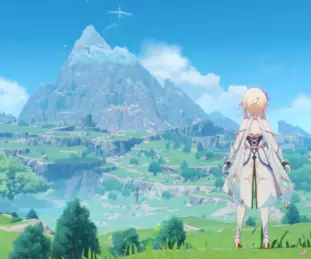
In December 2020, update 1.1 arrived. Zhongli. The God of War. The Geo Archon. His trailer was a cinematic work of art. His deep voice resonated like a promise of power. Players had been saving for him for weeks.
And when they got him, they discovered he was... weak. Pathetically weak for a god. The community exploded. Not in anger at the gacha itself. No. In anger because the character they had paid for wasn't strong enough.
Do you see the irony? They weren't questioning the system. They were questioning the quality of the product within the system.
HoYoverse listened. They buffed Zhongli in a later update. The community applauded. "They really listen to us!" fans cried. "This is a developer that respects its players!"
Brilliant. Absolutely brilliant. Create a problem, then solve it, and collect gratitude for fixing something you broke yourself.
By the end of the first year, 139 million downloads. One hundred and thirty-nine million people had installed the game. How many had spent money? How many had developed unhealthy habits? How many were looking at their bank accounts with a mixture of shame and denial?
Stories began circulating. Not in the traditional media, not yet. But on Reddit, in late-night threads. On Twitter, in anonymous confessions. People who had spent the equivalent of several months' rent. Students who had emptied their savings. Couples arguing over credit-card statements.
A French user posted on a forum: "I developed something close to an addiction. I can't even enjoy other games anymore. Everything seems boring now. Please, don't test yourself. You haven't developed immunity."
Nobody is immune to something specifically designed to bypass your rational defenses.
Meanwhile, in the bright offices of Shanghai, the servers purred. Transactions were counted by the thousands every second. Revenue charts climbed, climbed, climbed like an exponential curve toward the sky.
The monster was awake. It had tasted blood. And it was hungry. So very hungry.
But this was only the beginning. Because others were watching. Others were learning. Other creatures were emerging from the shadows, predators that had studied the king and thought they could do better.
Wuthering Waves was preparing its waves. Zenless Zone Zero was sharpening its urban claws.
The age of gacha empires was only beginning.
"The monster was born. It learned to walk. Now it will learn to run."
Chapter II: The Challengers to the Throne
Night falls over Teyvat, and somewhere behind the screen, other monsters are preparing. They observed the king, studied every shiver, every cry of joy or despair Genshin Impact provoked. And they decided they could do better. Not in beauty or story. No. They wanted to play with what the king had mastered: your brain.
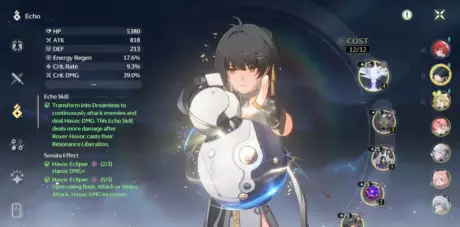
First wave: Wuthering Waves. A world shaped around combat above all else. The developers understood that some players weren't fooled, that they wanted skill, challenge, pure technique. So they offered that, while slipping needles into the flesh at the same time: the gacha was there, subtle and sly, ready to create frustration and irresistible desire.
0.8%. The chance of obtaining a five-star character in Wuthering Waves. Slightly higher than the king's rate, just enough to suggest generosity, but low enough for every success to become an electrifying triumph.
November 2025. Version 2.8, "To the City Set in Amber." Rinascita appears. A new region, new banners, and characters that make hearts race. Every animation is calibrated to maximize anticipation. Every piece of music, every golden glimmer, every pop-up message: everything is designed to create a rhythm, an addictive pulse resonating through your veins like a hypnotic drumbeat.
But be careful: Wuthering Waves isn't a clone. No, that would be too simple. It's a predator that studied the king's hunt. It knows your weaknesses, has seen your reactions, and adjusts its traps. More technical combat, viable free characters from the outset, and yet the gacha follows you, watches you, and pushes you toward temptation, gently but firmly.
"The predator never copies. It perfects. It waits. And when you think you're being careful, it has already struck."
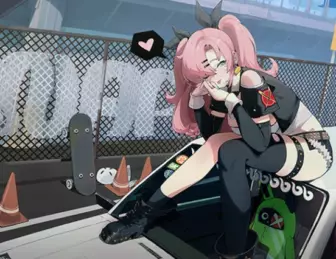
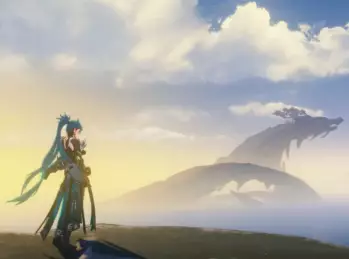
Just a few clicks away, amid a strikingly realistic urban setting filled with garish neon, Zenless Zone Zero was forging its own path. Version 2.4, "On the Precipice of the Abyss." The style is different, the mechanics unique, but the goal remains the same: trap the player in a cycle where every decision triggers calculated dopamine. Here, the offer of free S-Rank characters and powerful weapons acts as a carefully placed lure. A teaser designed to capture the king's addicts, those who think they have escaped manipulation.
0.6%. The S-Rank rate, identical to Genshin Impact. Exactly low enough to create an irresistible need to repeat the action. Every pull is a thrill. Every failure, a prod in the brain.
Players didn't realize it. They thought they were making free choices. Choosing whether to "spend or not." But every system, every animation, every timer is calculated to turn freedom into an illusion. Zenless Zone Zero and Wuthering Waves weren't content to be games: they were psychological experiments, digital labyrinths in which your will became lost.
And behind the screens, the developers smiled. Not maliciously, but with clinical precision. They knew exactly which sensations to activate to maintain attention, tension, and above all, the wallet.
"They offer you a window. An opening. You think you're entering to admire the view. But the room is trapped."
Forums and Reddit exploded with questions and theories. Some French players testified: "I thought I could play several gachas without a problem, but ZZZ swallowed me in less than two weeks." Or: "Wuthering Waves seemed less cruel to me, but the combat rhythm made me addicted. I had to land that combo, just one more time..."
The stories repeated like echoes in a canyon: compulsions, thrills, then frustration. Every player who believed they could escape the king fell into the challengers' claws.
"The king has been challenged. The challengers have learned. The traps are multiplying.
And you, reader, are beginning to feel addiction's icy breath brush against you."
Chapter III: The Victims and the Numbers
Numbers never lie. Or rather, they scream in the darkness, quietly but insistently, until you feel dizzy. 4.8 million monthly active users for Genshin Impact. And that's only an official figure for mobile. Imagine the PC and console players. Tens of millions trapped in the cycle, pulling, spending, hoping.
And then there are the personal stories. The stories nobody tells aloud, except on Reddit, Discord, and forums where usernames replace faces and confessions are made in the dead of night.
139 million downloads since 2020. One hundred and thirty-nine million people who crossed the king's gateway. How many felt addiction's bite? How many felt the cold pinch of their emptied bank account? How many left part of themselves behind a glittering screen?
A French couple. The husband spent hundreds of euros a month on Genshin. His wife didn't understand. Arguments erupted. Bank statements became weapons. Divorce was narrowly avoided, but the addiction was very real. "I spent the equivalent of three months' rent on one character," the husband confessed on a forum. "I didn't need him. I just wanted to feel that thrill one more time."
 Another player: 48 hours, 70% of his Primogems gone on Kazuha's banner. He promised himself he would stop, but continued. The cycle fed itself. Pleasure, frustration, anticipation. Dopamine, always more dopamine.
 Another player: 48 hours, 70% of his Primogems gone on Kazuha's banner. He promised himself he would stop, but continued. The cycle fed itself. Pleasure, frustration, anticipation. Dopamine, always more dopamine.
"Every failed pull is a slap. Every success is a chemical orgasm. And you come back. Again. Always."
Wuthering Waves and Zenless Zone Zero are not innocent. The same patterns. Slightly different rates, calibrated mechanics, but the effect is identical. Players try to resist. Some quit. But many cling on, convinced they are in control, convinced they can beat the system.
The system is smarter. Always. It makes you believe you have a choice. It makes you believe you are strong, rational, that you manage your spending. Meanwhile, it collects your data, adjusts its banners, optimizes your impulses, and keeps you inside dopamine's invisible trap.
2025 study of 1,400 adults:
✅ Strong correlation between loot-box purchases and real-world gambling behavior
✅ Gacha players more likely to display psychological disorders
✅ Virtual items potentially reaching more than €1,000 in some cases
And then there is the psychology behind the curtain. Dr. [Fictitious Name], a specialist psychologist, explains: "These reward loops are designed to exploit random variability and the theory of intermittent reinforcement. The near miss—the almost-success—triggers the same dopamine spike as a real success. Players become prisoners of the promise of next time."
Every session becomes a test. Every banner, a lottery. Every success, a signal to return. And with every return, the brain learns, adapts, and demands more. More money. More time. More thrills.
"0.6%. That's the probability they give you. Lower than surviving Russian roulette. But you still pull. Again. Again."
The French community is not spared. Entire threads discuss excessive spending. Advice on saving... alongside encouragement not to "miss the next character." A disturbing normalization. Players no longer see the danger. They see only the thrill, the loot, the next character who could change everything.
Meanwhile, HoYoverse, Kuro Games, and other developers follow their own science. Every update, every event, every animation is a tiny scalpel cut into players' cortexes. Every figure, every timing, every emotion calculated precisely. Gacha is no longer a simple game. It is a neurological experiment. An empire built on dreams, hopes, and chemical impulses.
"The victims are there. They speak, they confess, they scream in silence.
And the monster continues to grow, relentless, invisible, hungry."
Chapter IV: The Dark Future
The future isn't written. It is programmed. And in the world of Gacha Empires, it is programmed to be merciless. Genshin Impact continues to dominate, but the king sometimes falters. A brutal fall in February 2025, down 74% in some markets. A warning? Perhaps. Or merely a breath before drawing breath and attacking even harder.
Wuthering Waves and Zenless Zone Zero are not mere followers. They are predators that studied the king. They observed its strengths, weaknesses, and cracks in its manipulation. Every update, every character, every banner is calibrated to attract, captivate, and retain. Frustrated Genshin addicts are now their new prey.
Zenless Zone Zero: Version 2.4, "On the Precipice of the Abyss"—free S-Rank characters and weapons offered to attract new players.
Wuthering Waves: Version 2.8, "To the City Set in Amber"—a combat-first system, with slightly more accessible five-stars, trapping technical players.
The battle for wallets is fierce. Each studio adjusts its mechanics like a chef adjusting salt: just enough to make you come back, never enough to make you feel satisfied. The pity system, drop rates, limited events, temporary banners... everything is designed, calculated, tested. And the player still believes they are in control.
But they were never in control. Even those who impose limits on themselves are pulled into the reward loops. Dopamine. Frustration. Anticipation. Again and again. Neuroscience applied to entertainment. Brains become laboratories, and emotions, pure gold.
"Genshin's February decline? A scratch. The urban monsters and waves of money are preparing to reclaim what is theirs."
In Europe, regulation is moving forward, but slowly. January 2025: new European Commission directives. Mandatory transparency, consumer protection, regulation of virtual currencies. In theory, everything should change. In practice, the player remains the same. Gacha empires adapt faster than the law.
Belgium, a pioneer in banning paid loot boxes since 2018, is still watching. Some games remain available despite the bans. Apple's App Store is in the sights of European justice. A precedent could change everything... or nothing. Monsters always find a window.
And the victims? They grow in number, but silently. Couples in crisis, young adults emptying their savings, teenagers trapped by the promise of the next character. Testimonies are everywhere on Reddit, Discord, and anonymous forums. Every confession is a warning. Every compulsive purchase is a cry into the void.
The 1,400 adults studied in 2025 show the link: loot boxes = gambling. Gambling = ruin. Ruin = helplessness. And yet the cycle continues, inexorably. As if every transaction were building an invisible cathedral, erected with dopamine and euros, atop which sits the digital monster, hungry and insatiable.
"This isn't a game. It's a dopamine-extraction machine, designed by engineers who know your brain better than you know your own family."
The future is already underway. Other games, other studios, are watching, learning, perfecting. Every new mechanic, every reward system, every glittering animation is calibrated to entice. Addiction is the product. Pleasure, the façade. The real goal: keep you attached, active, spending.
And you, reader, do you think you can resist? Perhaps. But remember: gacha never sleeps. It learns, adapts, feeds on your desires and impatience. And in this digital world, the monster is everywhere. Invisible. Insatiable. Indestructible... for now.
"The age of gacha empires continues. Kings, challengers, victims—all are caught in a macabre dance orchestrated by dopamine. And the monster grows, silent, methodical, ready to do anything to make sure you come back. Always."