Every year, the video game industry produces promises bigger than the games themselves. In 2025, the gap between hype and reality was particularly brutal—in both directions. Titles celebrated before release crashed on landing, while genuine gems made their mark without major marketing. Here is the game.fr editorial team’s roundup: real names, documented arguments, no mercy.
Overhyping: how does it work?
Hype is an industrial mechanism, not an accident. Huge marketing budgets fund trailers carefully stripped of their flaws, enthusiastic influencers and embargoes timed to maximize momentum before release. Social media amplifies every promise until it becomes a certainty. The result: players buy an imaginary version of the game, not the game itself.
Disappointment is then proportional to the initial excitement. Some players even struggle to admit that marketing swept them along, defending a disappointing title rather than acknowledging the dissonance. This confirmation bias harms honest criticism and keeps the cycle going.
“A good game should be judged by what it offers, not by its publisher’s communications budget.”
Our judging method at game.fr
For this roundup, the editorial team assessed each title according to five fixed criteria: gameplay quality, innovation, narrative depth, art direction and technical performance. Each game was tested over several sessions by at least two members of the editorial team. Sales figures and the overall critical consensus were treated as contextual data—neither as validation nor as a veto.
Key takeaways
- Hype creates a disconnect between marketing promises and the reality of a game.
- Overhyping affects both AAA releases and indies that are oversold before launch.
- game.fr evaluates games using precise criteria: gameplay, innovation, narrative, art direction and technology.
- Sales figures do not validate quality—they measure marketing.
Our verdicts: the overrated games of 2025
2025 was a record year in terms of expectations. Several highly anticipated titles ultimately revealed deep flaws after months of intensive communication. Here are the two cases that drew the most attention from the editorial team.
MindsEye — Build a Rocket Boy
Leslie Benzies, the former legendary producer of the GTA series, carried all the hopes for ambitious independent gaming. MindsEye was supposed to prove that a studio founded by veterans could deliver a AAA game without a publisher. Reality was harsh.
At launch, the title posted a Metacritic score of 43/100—the lowest of all 2025 releases. On Steam, only 33% of reviews are positive. The criticism is consistent: incoherent story, dated combat, persistent technical bugs and disastrous optimization. Steam’s peak concurrent player count never exceeded 3,302 on launch day, dropping below 100 within a few days. Build a Rocket Boy carried out mass layoffs in the weeks following release.
What makes this case so emblematic is the scale of the gap between its creator’s symbolic capital and the product’s actual quality. Benzies’ name alone generated disproportionate press coverage before release. The lesson: a brilliant résumé guarantees nothing.
Assassin's Creed Shadows — Ubisoft
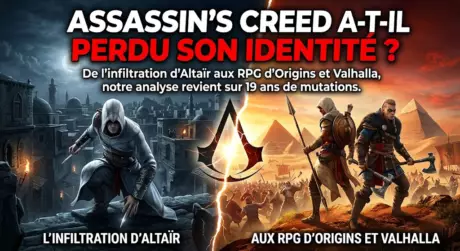
Let’s add some nuance from the outset: AC Shadows is not a bad game. It had sold more than 5 million copies by July 2025 and established itself as Europe’s best-selling game of 2025 at launch. Visually, feudal Japan is magnificent. Ubisoft could not afford to miss with this title—and technically, it did not.
Yet behind the figures, players hoping for a genuine revolution came away disappointed. The world design recycles the tired formulas of previous entries. The level design lacks ambition. Gameplay evolution is minimal for a title presented as a new beginning for the franchise. After years of controversy—delays and various disputes—expectations were sky-high, and that is precisely where the overhyping lies.
AC Shadows is a decent game sold as a masterpiece. The difference matters.
The overlooked gems of 2025
The real surprise of 2025 was not where marketing aimed its spotlight. Many excellent titles existed in the shadow of the blockbusters—whether because they lacked a communications budget, belonged to less bankable genres or launched alongside a media giant. These are the games that deserved far more attention.
Why do some games go unnoticed?
More than 14,000 games were released on Steam in 2025. More than 12,000 of them came from independent studios. Even with an excellent title, standing out in this stream requires either an editorial stroke of luck or an established community. Without those levers, the best gems sell only a few thousand copies when they deserve millions.
Clair Obscur: Expedition 33 — Sandfall Interactive
If we had to single out one game from 2025, it would be this one. Developed by Montpellier-based Sandfall Interactive, Clair Obscur: Expedition 33 is a turn-based RPG with real-time mechanics, set in a world inspired by Belle Époque France. At launch, few people imagined it would crush the international competition.
The result: 5 million copies sold in a few months, nine awards at The Game Awards 2025 including Game of the Year—a historic record for the ceremony. Critics were unanimous in their praise of its exceptional art direction, brilliant writing and already-iconic soundtrack. It is a game that proves France can compete with the biggest Japanese studios on their own turf.
It was little-known before release. It did not have Ubisoft’s marketing budget. Yet word of mouth propelled it to the top within weeks. This is exactly the kind of trajectory game.fr strives to accelerate.
Split Fiction — Hazelight Studios
Hazelight, the studio behind It Takes Two (GOTY 2021), confirmed in 2025 that its cooperative approach was no fluke. Split Fiction places two characters in worlds blending science fiction and fantasy, with gameplay inventiveness that never repeats from one sequence to the next. Each level introduces a new mechanic, always in service of the narrative and the bond between the two players.
It reached sixth place among Europe’s best-selling games in 2025, but its media coverage remained below what the title deserved. Less spectacular in its trailers than a AAA open world, it nevertheless offers a far more memorable experience than most of the year’s blockbusters.
Blue Prince — Dogubomb
Blue Prince demonstrates that the independent industry can still surprise even the most seasoned players. This puzzle roguelike invites you to explore a mansion whose rooms are procedurally generated on every run, with design depth that gradually reveals itself over dozens of hours. It established itself as one of 2025’s critical revelations, rivaling AAA productions with far greater visibility.
Beyond scores: why your own feelings matter
A score out of five cannot capture the complexity of a gaming experience. It provides a reference point, not the truth. Two players can experience the same title in radically different ways depending on their profile, mood and stage of life. What game.fr aims to do with this annual roundup is give you the tools to form your own judgment—not impose ours on you.
To refine your own judgment, here are a few useful practices:
- Watch real gameplay footage, not marketing trailers.
- Compare several critical sources, including dissenting voices.
- Try available demos before buying at full price.
- Trust reviews from players with a profile similar to yours, not the anonymous majority.
Video games remain a deeply personal experience. No algorithm, review-score aggregator or sales ranking can predict what will move you. That is precisely why personal criticism still has a role to play in 2026.