
Article contents:
Understanding Game Mechanics: Beyond Simple Entertainment
Video game design is a complex blend of art, psychology and systems theory. A successful game does not rely solely on stunning graphics, but above all on the strength and interconnection of its game mechanics. These mechanics are the fundamental rules that define what the player can and cannot do. Understanding these mechanics means understanding the beating heart of the gaming experience, and how each game functionality contributes to overall immersion. It is an invisible but fundamental architecture.
We will explore the pillars that support a game world, from the basic gameplay loop to emergent storytelling, examining how these components interact to create a memorable and deeply engaging experience. Studying these systems makes it possible to break down what makes a title captivating and enduring.
The Foundations: The Gameplay Loop and Its Game Functionality
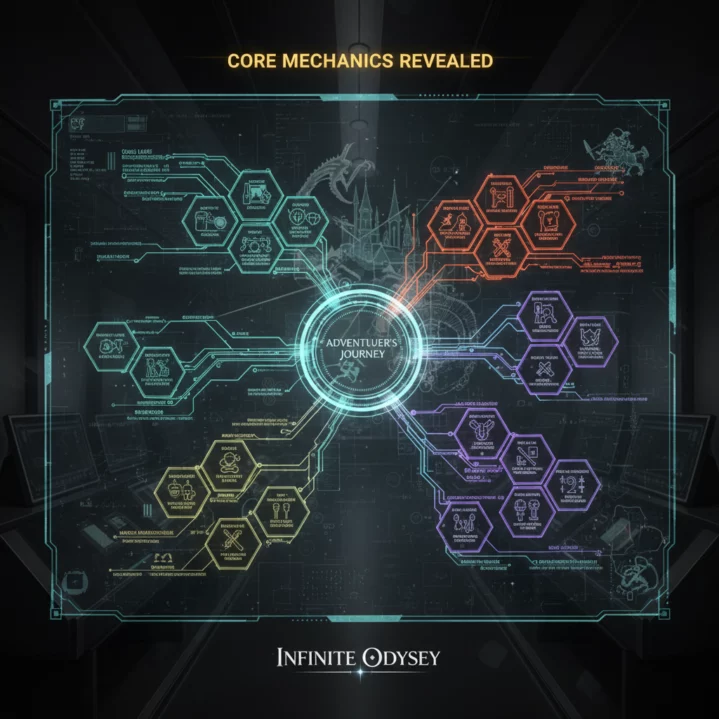 «
Every gaming experience is built around a gameplay loop. This is the repetitive sequence of actions (Action → Reaction → Result → Next Action). A well-designed loop keeps the player engaged by promising constant progress, even as the challenge increases. This cyclical structure is the main engine of game functionality. It must imitate the satisfaction mechanisms we find in real life: solving a problem leads to a new opportunity.
To be effective, this loop must offer a sense of gradually increasing mastery. Boredom sets in when the player feels that their actions have no real impact on how the game unfolds, or that the difficulty increases without adequate warning. Good design therefore manages the escalation of the challenge carefully, keeping the player in a state of “flow.”
- The Challenge: What forces the player to act (an enemy, a puzzle, a missing resource). The challenge must be proportional to the player’s perceived abilities to avoid frustration or boredom. It acts as a catalyst for progress.
- The Action (Agency): The player’s tools and abilities for responding to the challenge. This is the freedom the game offers the player in a structured way, giving them the feeling that they are making meaningful choices.
- The Reward: Positive feedback that validates the action (experience, an item, narrative progress). This reward must be immediate and satisfying, thereby reinforcing the desire to repeat the cycle.
Mastering this loop is essential. If the reward is not perceived as significant enough compared with the effort required, the player disengages. It is crucial that the sense of accomplishment is constantly renewed to maintain motivation. Designers must therefore ensure that the difficulty curve is perfectly calibrated, allowing the player to feel slightly challenged at all times, but never overwhelmed by the game system.
In addition, varying the pace within this loop is a key feature. Alternating between moments of extreme tension and moments of narrative calm allows the player to process the effort and prepare psychologically for the next challenge cycle.
Progression and Mastery Systems: Evolving Game Functionality
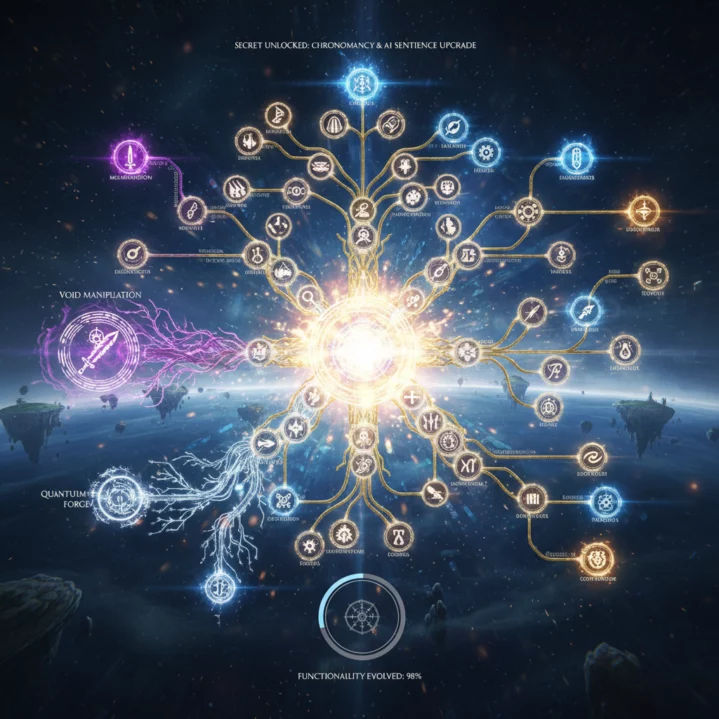 «
Progression should not be linear. It should give the impression of continuous learning. The player should feel that they are growing over time, and that their skills and knowledge are increasing. This progression must be tangible and rewarded, whether through new abilities or access to new narrative territories.
A sense of progress is an essential driver of retention. It is not enough to provide numbers (level, points); the player must feel the impact of their choices on the world and on their own character. Good progression design connects action (gameplay) to narrative (the story).
Modern progression systems often incorporate non-linear mechanics, where choices made early in the game can unlock entire paths much later. This enriches replayability and gives real weight to the decisions made.
These systems can go beyond raw statistics and include reputation, interpersonal relationships or mastery of complex crafts. The accumulation of these elements creates a rich world where every small victory matters, strengthening the player’s engagement.