
EverQuest 2, an undisputed emblem of the MMORPG genre, continues to captivate millions of players. This article offers an in-depth exploration of its core mechanics and game engineering, revealing why it remains an essential reference for the genre.
 Finally, the strategic integration of "instances" for dungeons and raids is an essential component of this architecture. Rather than overloading open areas with computationally intensive group events, instances create private copies of these environments for each group or raid. This approach drastically optimizes server load, guaranteeing a smooth, lag-free experience for participants. It also provides a more controlled and personalized group experience, where challenges and rewards are calibrated specifically to the number and level of players, without outside interference—crucial for high-level content.
Conclusion: The Future of Persistent Architecture
The future of EverQuest 2's persistent world architecture lies in its ability to continue evolving while preserving its legacy. Technical challenges, particularly the continued optimization of the engine for future generations of hardware and the integration of new features without fragmenting the experience, will be crucial. We can anticipate improvements to the management of dynamic world events, even more granular persistence for environmental states, and potentially the use of more advanced data-streaming technologies to make transitions between zones even less perceptible. Maintaining this immersive engineering is the key to keeping Norrath a living, captivating universe for years to come on PC.
Group synergy is a fundamental pillar of the EverQuest 2 experience. Class design encourages complex interdependence, with combat optimization, survival, and progression depending on team composition and coordination. A well-balanced group—with tanks able to maintain aggro, healers supporting survival, DPS bringing down threats, and controllers managing the battlefield—is the key to triumphing over the toughest dungeons and epic raids. Understanding each class's strengths and weaknesses, and being able to exploit them as a team, is just as crucial a skill as mastering one's own character.
Finally, the impact of primary and secondary stats and resistances is crucial. Combat effectiveness is not simply a matter of level or equipment, but of rigorous attribute optimization. Strength, Agility, Intelligence, Wisdom, and Stamina, as well as resistance to different damage types—fire, cold, magic, poison, and disease—must be managed meticulously. Every point invested and every piece of equipment selected must fit into an optimization strategy to maximize a character's potential and ensure its effectiveness against Norrath's growing threats. This statistical depth demands advanced technical understanding and constant strategic planning.
The future of EverQuest 2's class system on PC lies in its ability to preserve this richness while adapting to the genre's evolution. To remain relevant, it will be essential to continue introducing innovative AA options and potentially explore new subclasses or prestige paths that enrich existing archetypes without distorting them. Class balance—a constant challenge in every MMORPG—will need careful adjustment to ensure that every role remains viable and rewarding, encouraging diverse group compositions and long-term player engagement. The key will be preserving the complexity that defines EQ2 while offering newcomers more intuitive entry points, ensuring that mastery remains an exciting pursuit rather than an obstacle.
Article contents
Persistent World Architecture: Immersive Engineering
At game.fr, we are taking a deep dive today into the engineering behind one of the most iconic persistent worlds in massively multiplayer online role-playing: EverQuest 2. Available on PC, the game has maintained a complex and evolving architecture over the decades, shaping an immersive and technically robust experience. The architecture of Norrath in EverQuest 2 is a design achievement. The game deploys hundreds of distinct, interconnected themed zones, each with its own visual, audio, and narrative identity. This modular yet inherently connected approach creates a cohesive universe where exploration is constantly rewarded. The developers have meticulously arranged these environments, from sprawling cities and labyrinthine dungeons to wild expanses, to encourage a sense of technical and emotional belonging. Each zone transition is designed to make the experience smoother, reinforcing the idea of a living, breathing continent where every corner can reveal a secret or a new quest. Beyond its simple geographical scale, state persistence is a fundamental pillar of immersion. EverQuest 2 excels at preserving quest and NPC states on its servers. This means that players' actions have a tangible and lasting impact on the environment. An NPC that has been saved remains saved, and a camp that has been cleared stays that way for a significant period, creating a world that responds and evolves according to community engagement. This complex server engineering ensures that Norrath is perceived as a living world, where personal stories intertwine with the game's overarching history, strengthening players' attachment to their avatars and surroundings. The continuing evolution of the original graphics engine, the EQ2 Engine, testifies to the teams' technical commitment. Designed at a time when standards were different, the engine has been continually updated to meet modern demands for visual rendering and performance. Improvements have been made to texture management, dynamic lighting, particle effects, and shader optimization, allowing EverQuest 2 to remain visually relevant without compromising stability or smoothness, even across a variety of hardware configurations. This technical persistence is crucial to maintaining the appeal of such a vast and detailed world.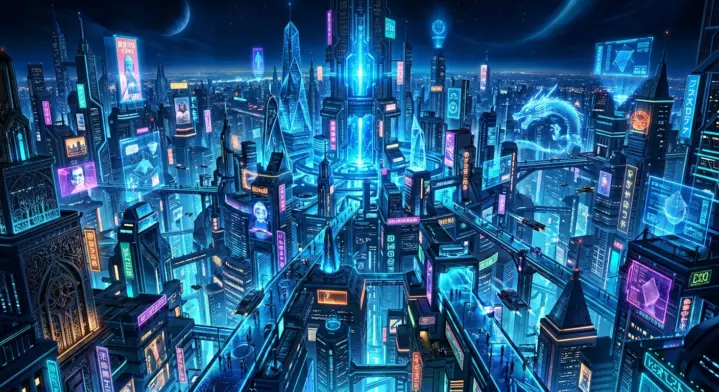 Finally, the strategic integration of "instances" for dungeons and raids is an essential component of this architecture. Rather than overloading open areas with computationally intensive group events, instances create private copies of these environments for each group or raid. This approach drastically optimizes server load, guaranteeing a smooth, lag-free experience for participants. It also provides a more controlled and personalized group experience, where challenges and rewards are calibrated specifically to the number and level of players, without outside interference—crucial for high-level content.
Conclusion: The Future of Persistent Architecture
The future of EverQuest 2's persistent world architecture lies in its ability to continue evolving while preserving its legacy. Technical challenges, particularly the continued optimization of the engine for future generations of hardware and the integration of new features without fragmenting the experience, will be crucial. We can anticipate improvements to the management of dynamic world events, even more granular persistence for environmental states, and potentially the use of more advanced data-streaming technologies to make transitions between zones even less perceptible. Maintaining this immersive engineering is the key to keeping Norrath a living, captivating universe for years to come on PC.
The Class and Archetype System: RPG Mastery and Depth
EverQuest 2: A Technical Deep Dive into the Depth of Its Class and Archetype System In Norrath's persistent universe, progression-system engineering is a cornerstone of the RPG experience. Available on PC, EverQuest 2 stands out through the complexity and richness of its class and archetype system, offering players a level of strategic depth that is rarely matched. Far more than a simple role selection, this system is a true matrix of technical customization, where every choice has tangible consequences for individual and group gameplay. At the heart of this architecture are 26 unique classes, meticulously divided among six main archetypes: Warrior, Scout, Mage, Priest, Brawler, and Crafter. Each archetype defines a fundamental direction, but specialization truly comes into its own within each branch. From the Conjuror to the Paladin, and from the Inquisitor to the Bard, every class is designed with a set of skills, spells, and abilities that give it a defined and complementary role. This granularity ensures that every character is more than a simple avatar: they are an essential link in a strategic chain, capable of directly influencing the outcome of the most demanding encounters. Customization does not stop with the initial selection. The Alternate Advancement (AA) system drives technical refinement, allowing players to invest thousands of points to precisely shape their specialization. Whether increasing the effectiveness of a crowd-control spell, strengthening a tank's resilience, or optimizing DPS output, AAs offer unprecedented freedom to adapt a character to specific challenges or a preferred playstyle. This additional progression layer transforms every class into an evolving framework, encouraging experimentation and mastery.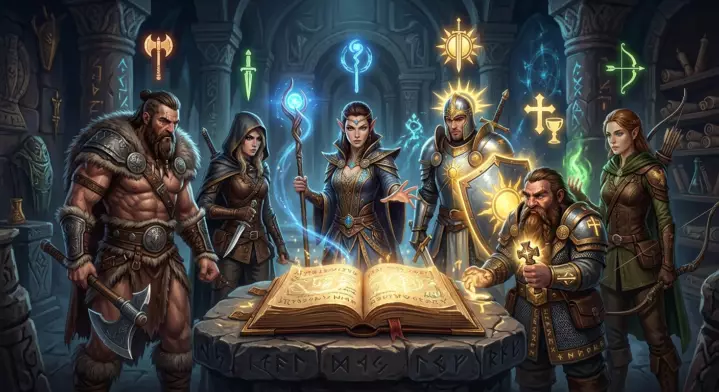 Group synergy is a fundamental pillar of the EverQuest 2 experience. Class design encourages complex interdependence, with combat optimization, survival, and progression depending on team composition and coordination. A well-balanced group—with tanks able to maintain aggro, healers supporting survival, DPS bringing down threats, and controllers managing the battlefield—is the key to triumphing over the toughest dungeons and epic raids. Understanding each class's strengths and weaknesses, and being able to exploit them as a team, is just as crucial a skill as mastering one's own character.
Finally, the impact of primary and secondary stats and resistances is crucial. Combat effectiveness is not simply a matter of level or equipment, but of rigorous attribute optimization. Strength, Agility, Intelligence, Wisdom, and Stamina, as well as resistance to different damage types—fire, cold, magic, poison, and disease—must be managed meticulously. Every point invested and every piece of equipment selected must fit into an optimization strategy to maximize a character's potential and ensure its effectiveness against Norrath's growing threats. This statistical depth demands advanced technical understanding and constant strategic planning.
The future of EverQuest 2's class system on PC lies in its ability to preserve this richness while adapting to the genre's evolution. To remain relevant, it will be essential to continue introducing innovative AA options and potentially explore new subclasses or prestige paths that enrich existing archetypes without distorting them. Class balance—a constant challenge in every MMORPG—will need careful adjustment to ensure that every role remains viable and rewarding, encouraging diverse group compositions and long-term player engagement. The key will be preserving the complexity that defines EQ2 while offering newcomers more intuitive entry points, ensuring that mastery remains an exciting pursuit rather than an obstacle.