
Do you remember the sound of keyboards in early-2000s LAN cafés, the cheers after an unlikely clutch and the motionless green crosshair in the middle of a CRT screen? For an entire generation of PC players, Counter-Strike 1.6 remains associated with names that became almost as famous as the game itself: de_dust2, cs_assault, de_inferno, de_nuke, de_train and fy_iceworld.
These maps are not just levels. Some helped shape the birth of Counter-Strike esports, others became LAN-party classics among friends, and several continue to influence maps in modern versions of the series.
Let’s look back at the most famous CS 1.6 maps, their gameplay, their history and the memories they left with players.
Why did Counter-Strike 1.6 maps become iconic?
Since its beginnings, Counter-Strike has been built around a relatively simple idea: two teams, clear objectives and maps that are easy enough to understand quickly, yet deep enough to require hundreds of hours to master every angle. During the Counter-Strike 1.6 era, the same maps were played in cybercafés and at LAN parties as well as in professional competitions. Their geometry, sightlines and routes thus became a common language shared by millions of players. A simple word such as “Long A”, “Banana”, “Mid” or “vents” was often enough to immediately indicate a position to the entire team. [caption id="attachment_11803" align="aligncenter" width="1920"]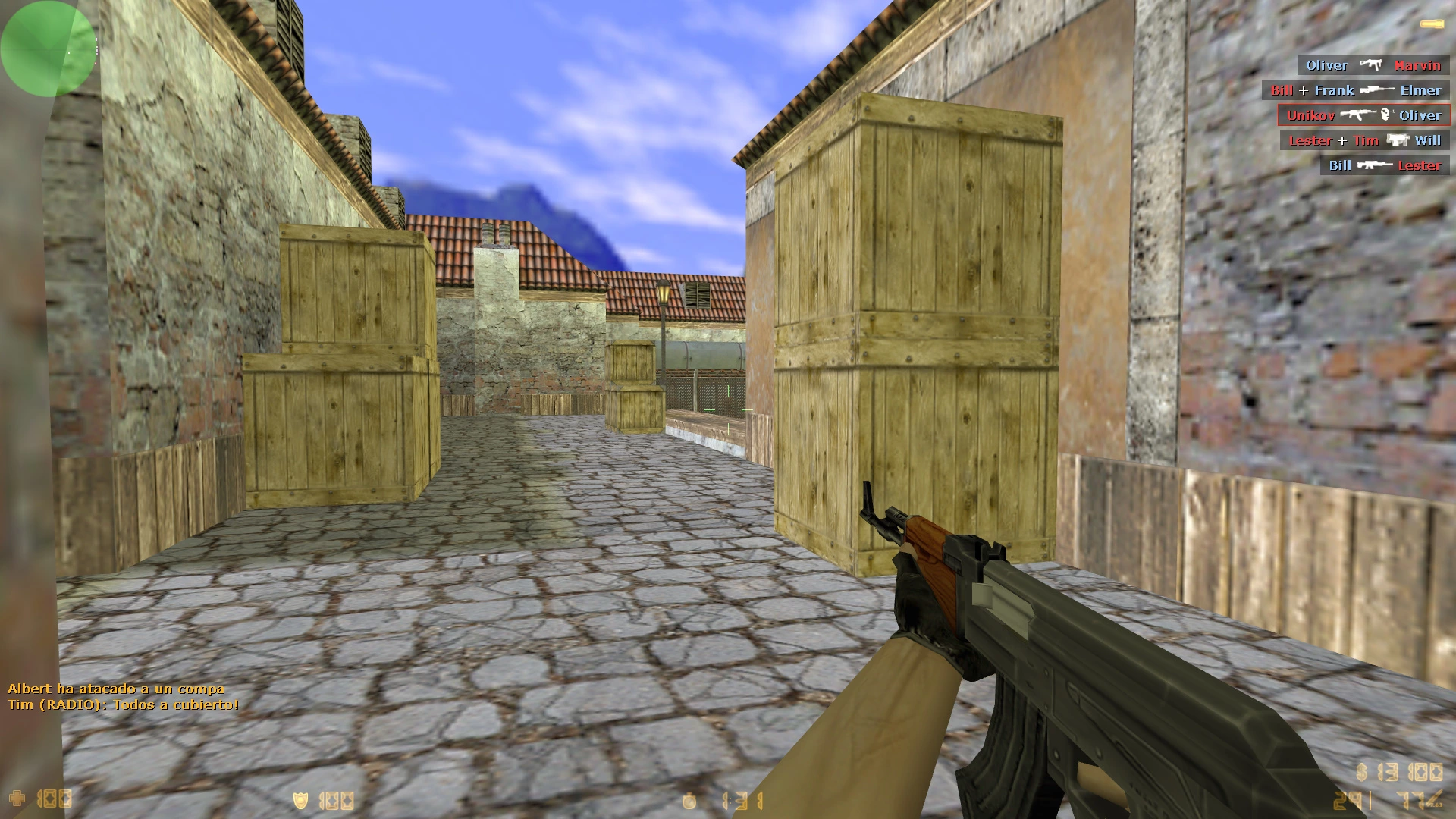 De_dust2 and the legends of bomb mode[/caption]
De_dust2: Counter-Strike’s most iconic map
There is no better place to start. De_dust2 is one of the most recognizable maps in the entire history of Counter-Strike. Created by David Johnston, it draws on the desert setting of the original Dust while offering architecture that became a genre benchmark. Much of its strength comes from its readability. The terrorists can attack two bombsites through several clearly identifiable routes, while the counter-terrorists must quickly decide how to distribute their defense.- Long A and its long-range engagements;
- Short / Catwalk for reaching the A site;
- Mid, the map’s central route;
- the B tunnels, associated with the famous “Rush B”;
- the double doors, which became one of the game’s most recognizable landmarks.
De_inferno: Banana, apartments and close-quarters combat
De_inferno is another of Counter-Strike’s great historical maps. Originally created by Chris “Narby” Auty, it appeared during the game’s early years before undergoing several transformations across different versions. Its European village setting contrasts with the brutality of its firefights. The most famous area is obviously Banana, the long passage leading to the B site. From the first seconds of a round, grenades, gunfire and attempts to seize control can multiply there. The map also includes:- the apartments;
- Mid;
- the narrow approaches to the sites;
- numerous angles enabling ambushes and retakes.
De_nuke: two almost overlapping bombsites
De_nuke uses an industrial setting built around a nuclear power plant. Its historical distinction comes mainly from its verticality. Unlike most classic maps, sites A and B are located on two different levels of the same complex. For a player discovering the map, hearing the bomb without immediately understanding which floor it had been planted on was part of the learning process. Several areas became iconic:- the outside area, exposed to long-range weapons;
- the ramps leading to the lower site;
- the ventilation shafts;
- the roof and upper access points;
- the large indoor hall around site A.
De_train: carriages, angles and constant map awareness
De_train turns a railway yard into a huge tactical playground. The train carriages create countless sightlines and positions from which players can almost completely disappear from an opponent’s view. The map can therefore be difficult for new players: danger may come from behind a carriage, from a ladder, from above or from a long firing lane controlled by an AWP. In competitive matches, Train particularly rewarded knowledge of positions and coordination during site takes.De_aztec: crossing the bridge under an AWP’s watch
De_aztec has one of Counter-Strike’s most immediately recognizable atmospheres: ruins inspired by Central America, rain, water and rumbling thunder. It is best known for its enormous sightlines. The suspension bridge could become especially dangerous whenever an enemy sniper controlled the other end. The other major combat area ran through the lower level near the water. Aztec was never considered the most balanced map in competitive history, but its atmosphere and unusual architecture made it an especially powerful memory of the CS 1.6 era.De_cpl_mill: a map designed for competition
De_cpl_mill holds a special place in Counter-Strike history. As its name suggests, it is associated with the Cyberathlete Professional League (CPL), one of the major esports circuits of the early 2000s. Its architecture was designed to provide several tactical options, with corridors enabling rotations, secondary routes and two sites requiring genuine team coordination. CPL Mill thus joined Dust2, Inferno, Nuke and Train among the familiar names for competitive Counter-Strike fans.De_tuscan: the spiritual successor to CPL Mill
De_tuscan is closely linked to the history of CPL Mill. Created by Colin “brute” Volrath, it draws on several principles from classic competitive maps while developing an identity of its own. Its secondary routes, rotations and many opportunities for area control made it particularly popular with competitive Counter-Strike 1.6 players. Tuscan perfectly represents the period when a community-made map could become a genuine esports standard.De_cpl_strike: the ancestor of Mirage
For players who mainly know modern versions of Counter-Strike, the name Mirage is immediately recognizable. But in the history of CS 1.6, it is important to remember de_cpl_strike. This competitive map belongs to the lineage that would eventually lead to Mirage. Its architecture already relied on several now-familiar principles: important central control, several routes to the sites and rapid rotations between different areas of the map. Over time, this family of maps evolved into Mirage, which became one of the major maps in CS:GO and later Counter-Strike 2.De_cbble: Counter-Strike’s castle
De_cbble, short for Cobblestone, places players in a vast castle combining outdoor courtyards, stone passages and long routes connecting the sites. Its imposing size immediately sets it apart from more compact maps. Movement and time management play an important role there: a bad rotation can cost several crucial seconds before a firefight has even begun. Cobblestone would also receive different versions throughout Counter-Strike’s history.De_prodigy: infiltrating a military complex
De_prodigy offers an atmosphere very different from Counter-Strike’s desert or urban settings. Players move mainly through a military complex built into a mountain, with metal corridors, automatic doors and confined spaces. These doors also make noise, sometimes turning sound itself into tactical information. The map remains one of the defining memories of Counter-Strike’s early years, even though it gradually disappeared from the most popular rotations. [caption id="attachment_11802" align="aligncenter" width="1920"]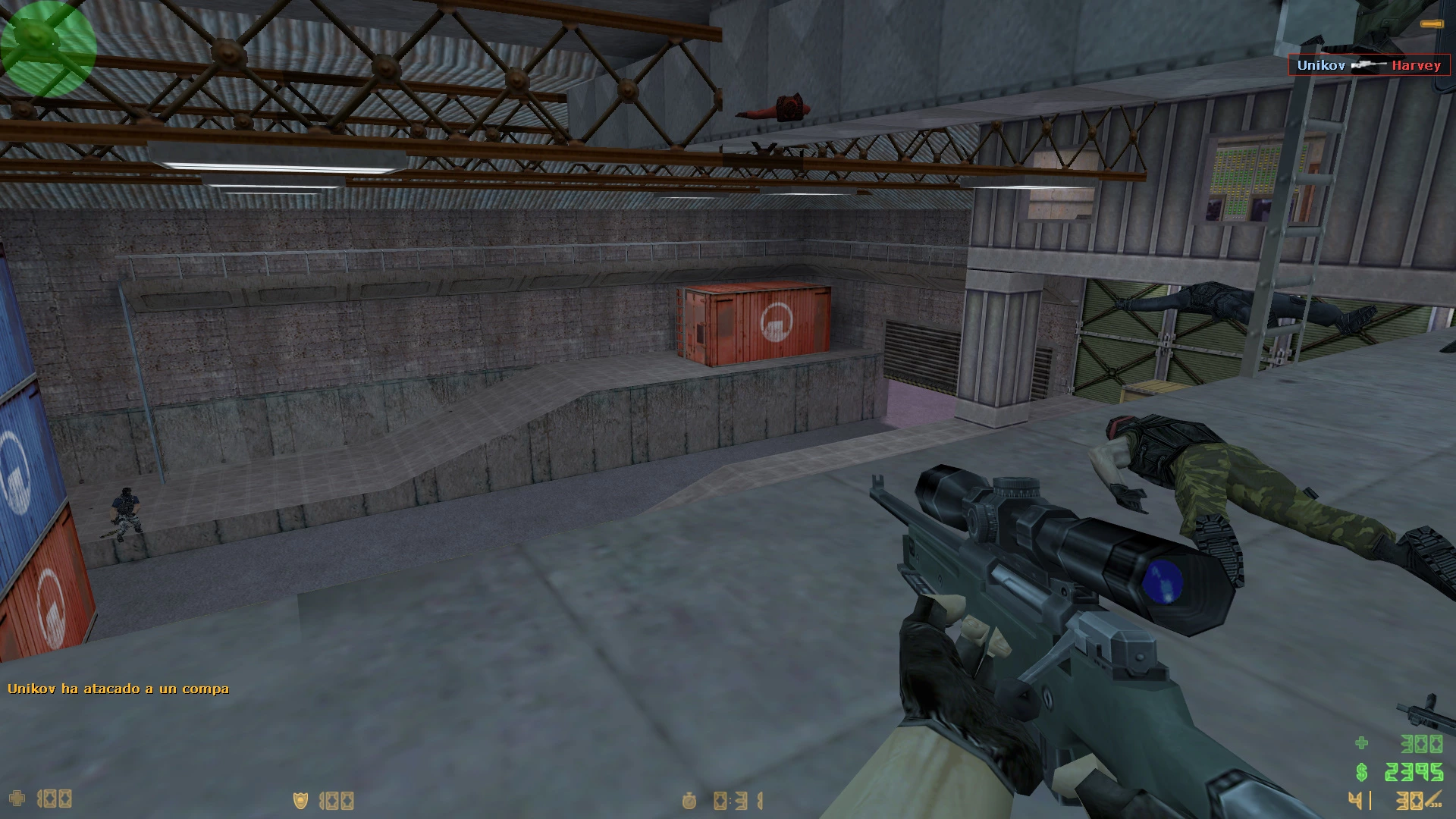 Cs_assault and the chaos of hostage rescue[/caption]
Cs_assault: one of the great symbols of hostage mode
The Hostage Rescue mode reverses the usual logic of bomb-defusal maps: the counter-terrorists must enter an area controlled by the terrorists in order to retrieve the hostages. Cs_assault is probably one of the most famous examples of this formula. Its huge industrial warehouse became a true icon of LAN parties and public servers. The terrorists have many defensive positions inside, while the counter-terrorists can try several approaches:- the main entrance;
- the roof;
- the ventilation ducts;
- various secondary entrances around the building.
Cs_office: chaos in the snowy offices
Cs_office takes place in an office complex surrounded by snow. Long sightlines quickly give way to firefights in narrow corridors, offices and rooms filled with furniture. Weapons effective at short or medium range naturally excel there. Breaking windows, fighting around the central lobby and the difficulty of progressing toward the hostages all contributed to the map’s lasting popularity.Cs_italy: music, markets and Mediterranean alleyways
Cs_italy probably has one of the most memorable atmospheres in hostage mode. The map depicts a small Mediterranean setting made up of houses, a market, narrow passageways and several routes leading to the hostages. Many players also remember the opera music heard in certain areas of the map, which became almost inseparable from the gameplay experience. Italy perfectly captures the charm of Counter-Strike’s early maps: a few simple textures and immediately recognizable sounds were enough to create a place players could identify within seconds.Cs_mansion: a memory from Counter-Strike’s early versions
Cs_mansion belongs more to the memories of Counter-Strike’s early years. A large house, a garden and several relatively easy-to-understand entrances were enough to create fast-paced firefights. Its less complex architecture than that of later competitive maps made it an ideal setting for impromptu matches among friends.Fy_iceworld: no bomb, no hostages, just the duel
Counter-Strike would not be Counter-Strike without its thousands of community maps. Fy_iceworld is probably one of the most famous. Its premise is almost the opposite of the major tactical maps:- a small symmetrical arena;
- a few blocks serving as cover;
- weapons available directly on the ground;
- almost immediate firefights.
Aim_map: the school of headshots
Aim_map represents another essential side of the Counter-Strike community: practice. Its deliberately minimalist layout places players face to face behind a few crates, generally with weapons such as the AK-47 or M4A1. The objective is simple: work on reflexes, crosshair placement and accuracy. Long before the modern training tools available today, aim_ maps already allowed players to repeat duel situations over and over again. [caption id="attachment_11804" align="aligncenter" width="1920"]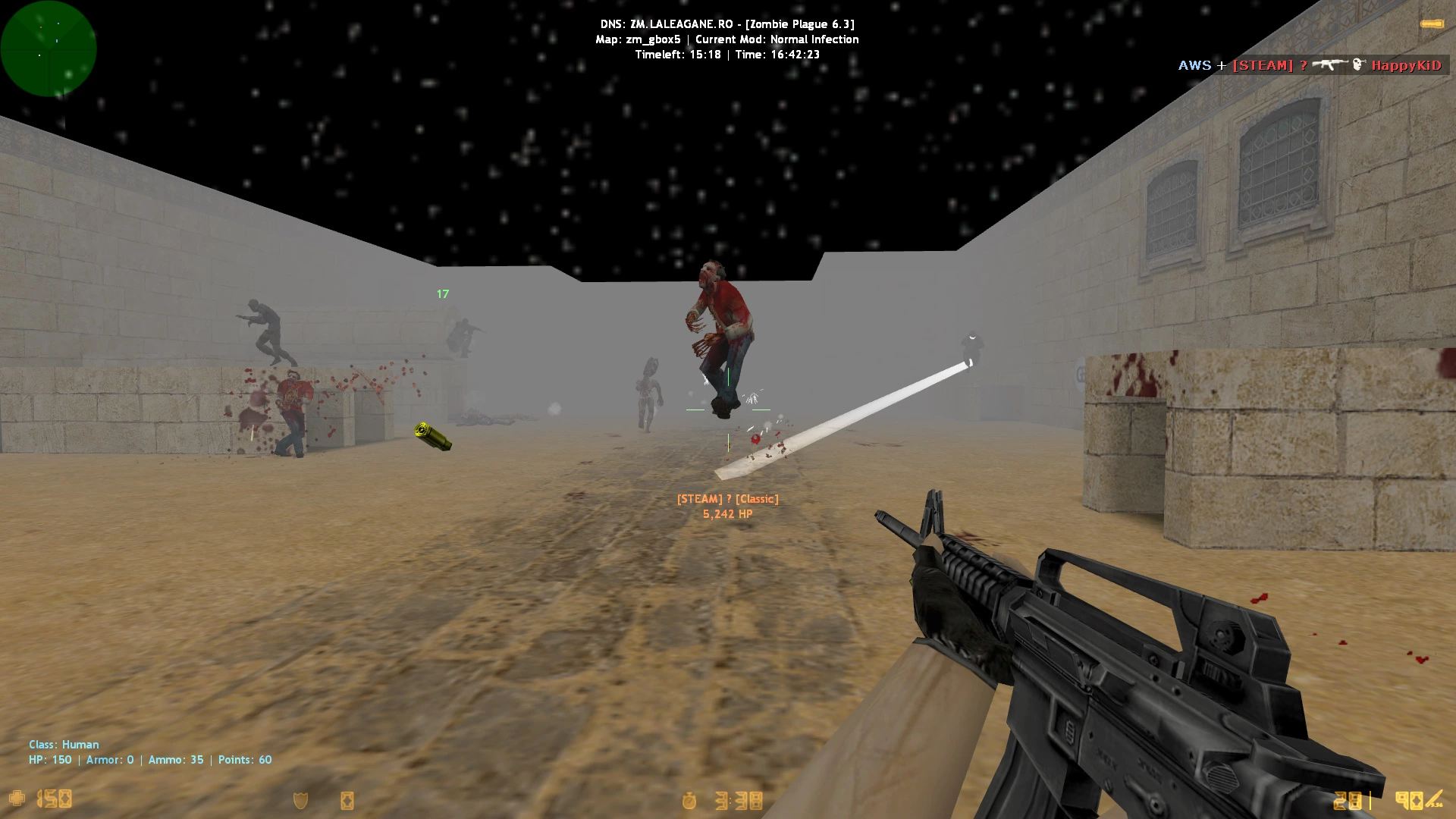 Expansion maps and outrageous community modes[/caption]
Zm_lila_panic and the rise of Zombie servers
The Counter-Strike community also transformed the game profoundly through mods. Among them, Zombie Infection variants achieved huge success on many servers. Zm_lila_panic became one of the maps representative of that era. Humans must find defensible positions, regroup and prevent infected players from reaching them. The gameplay has almost nothing in common with a classic defusal match, but it draws on exactly what made Counter-Strike so powerful: simple controls, community servers and the almost limitless possibilities offered by custom maps.Zm_dust_world: Dust transformed into a zombie apocalypse
Zm_dust_world takes Counter-Strike’s familiar desert aesthetic and adapts it for Zombie servers. Towers, platforms, tunnels and hard-to-reach positions are used to create temporary shelters when the first infected players appear. These maps show how classic Counter-Strike environments could be repurposed to create experiences completely different from the original game.Why do CS 1.6 maps remain so deeply etched in our memories?
Counter-Strike 1.6 maps obviously benefit from nostalgia. But nostalgia does not explain everything. Their strength also comes from their exceptional readability. A few dozen matches were enough to start memorizing:- the routes;
- sniper positions;
- dangerous areas;
- rotations;
- distinctive sounds;
- places to throw a grenade.