The Witcher 4: In Ciri's Shadow, the Rebirth of a Next-Gen RPG
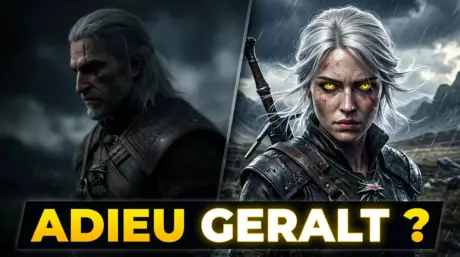
Imagine a storm-battered moor, silver hair swept by the wind, and yellow eyes piercing the darkness. This is not merely the world of The Witcher 4 — it is the shiver that runs through you when its name is whispered. Because yes: the next chapter in CD Projekt Red's iconic saga is there, hidden in the shadows but heavy with promise. More than a sequel, it is a narrative and technical rebirth.
In this article, we explore every aspect of the game: Ciri's central role, the Unreal Engine 5 technology redefining open worlds, the colossal ambitions behind development, and what this means for the future of the franchise.
An Unprecedented Epic: Between a Colossal Budget and Worldwide Anticipation
Since its official announcement, The Witcher 4 has been awaited like few games before it. Built around technical and narrative ambitions never seen before at CD Projekt Red, the project has now reached legendary proportions. Some analysts estimate that the overall budget could approach USD 800 million, placing the title among the most expensive in video game history.
To put that into perspective: the figure is far higher than the budgets of iconic games such as The Witcher 3 or Red Dead Redemption 2. And yet, nothing is finalized — the game is not expected to launch before 2027, as the team wants to polish every detail.
The project also marks a turning point for CD Projekt Red: after Cyberpunk 2077's post-launch fixes, the studio now appears determined to redefine the standards of narrative and technical RPGs.
Before this new generation of the saga, Geralt still has to return in a new expansion: check out our feature on The Witcher 3 Remastered and the Songs of the Past DLC.
The Protagonist: Ciri, Beyond Geralt's Legacy
While The Witcher 3 revolved around Geralt of Rivia, Ciri is now taking the reins of The Witcher 4 — and this is far more than a simple narrative choice. It is a genuine passing of the torch, years in the making, with roots planted as early as Blood and Wine.
In the technical demo unveiled at Unreal Fest 2025, we see Ciri accepting a contract in the previously unseen region of Kovir, accompanied by her mare, Kelpie. She crosses rugged mountains, dense forests, and explores Valdrest, a bustling port city never before seen in the series.
Ciri is a powerful narrative choice: young, fast, and intuitive, she offers a **more personal, more dynamic** experience while inheriting the spirit and values that made Geralt so successful.
Next-Gen Technology: Unreal Engine 5 as the Cornerstone
The Witcher 4 is not anticipated solely for its setting — it is also a major technical showcase. Developed with Unreal Engine 5.6, the game was shown in action during State of Unreal 2025. This is not simply a teaser: it is technology laid bare before your eyes.
The demo, running at 60 FPS with ray tracing on a standard PlayStation 5, showcases astonishing graphical power: reactive crowds, dense forests, living vegetation powered by Foliage Nanite, and incredible fluidity despite a vast, detailed world.
Of course, some have pointed out that this was not yet the game's final gameplay, but rather a technical demo intended to show what the engine will be capable of in the real world.
Nevertheless, the ambitions are clear: living environments, deep interactions, detailed animations, and total immersion — everything fans expect from a next-generation RPG.
Storytelling & Ambitions: The Quest for a Living World
More than a simple game, The Witcher 4 promises to be a deep narrative experience: an entire trilogy centered on Ciri, with arcs, choices, and consequences woven into a complex dark fantasy universe.
In the same dark fantasy RPG vein, we are also following The Blood of Dawnwalker, Rebel Wolves' project that continues the legacy of former CD PROJEKT RED developers in a different way.
Rather than simply following in its predecessor's footsteps, this installment appears eager to explore new themes:
- Geralt's legacy, passed on but transformed.
- Ciri's personal choices as she faces her destiny.
- A changing world, where old powers are cracking and new forces are emerging.
There is already talk of deeper interactions with NPCs, a world that responds to your decisions, and storytelling that does not merely tell a story but invites you to take part in it. It is a little like stepping into a Stephen King tale, where the atmosphere, shadows, and even silences tell you something.
Conclusion — The Witchers' Return
The Witcher 4 is not simply a highly anticipated title: it is where narrative, technical, and emotional ambitions converge. With Ciri in the central role, advanced use of Unreal Engine 5, and promises of a living, reactive world, the game is shaping up to be a major turning point for the modern RPG.
Of course, we will still have to wait until at least 2027, but every new glimpse, narrative detail, and fragment of a demo brings us closer to an adventure that could redefine what a narrative RPG can be.