GTA 6: The Great Crossing of Leonida—How Rockstar Is Reinventing Crime, Satire and the Open World
GTA VI is not content with simply enlarging the map: it promises to transform police pursuits, equipment management, immersion and even the way a city "remembers" you.
What if this new installment marked the transition from arcade chaos to a more tactical, organic and dangerous criminal adventure?
In this dossier, we bring together the saga's legacy (from GTA 3 to GTA 5) and the clues surrounding GTA 6 to understand what is really changing: storytelling, systems, technology, activities and the shadow of Online.
GTA's DNA: What Has Never Changed
To understand GTA 6, we need to return to one obvious fact: GTA is not "just" an open world with cars.
The series stands on an inseparable mix of urban freedom, driving, crime, characters and satire that comments on its era.
Social criticism already existed in GTA 3: it slipped into radio commercials and absurd missions while the technology moved the series into 3D.
Vice City strengthened its presentation and the rise of a criminal empire, San Andreas exploded the density of activities and tackled racism, discrimination and police violence head-on, before GTA 4 took a turn toward a darker tone and heavier realism.
GTA 5, meanwhile, chose Hollywood energy and satire focused on social media, celebrity culture and modern media.
Key takeaway: GTA 6 is not arriving in a vacuum. It builds on more than 20 years of evolution: police systems, narrative tone, activity density and technical ambition, moving from "pure arcade" toward more credible simulation depending on the episode.

Read more:
Complete chronology of the GTA saga •
GTA 4 vs. GTA 5: Realism or Spectacle?
Leonida: A State-World, Not Just a City
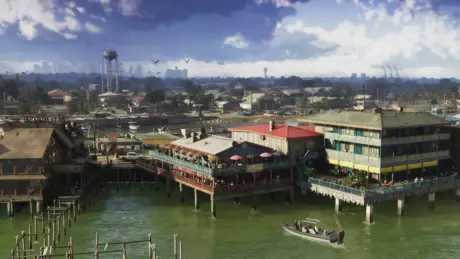
Rockstar places GTA VI in Vice City, but the ambition goes beyond nostalgia: Leonida is designed as a complete territory made up of urban, coastal, swamp, industrial and rural areas.
The idea is no longer simply to "visit" a city, but to cross contrasting environments and sense their social divides and local ecology as you travel.
Your documents describe a much higher density of interactions than in GTA 5: more interiors, more usable locations and the feeling that every street corner is a "level."
This change is crucial: an open world only truly becomes adventurous when it is not limited to façades.
Modernized Vice City: Sun, Neon and Scams
Vice City returns in a contemporary version: gone is the frozen fantasy of the 1980s, replaced by a Florida saturated with images, smartphones, viral culture and opportunism.
This is said to be a city where the setting is not there merely to look pretty, but to trigger stories: witnesses, cameras, businesses, exits, hideouts and points of friction.
The Regions: Travel Is Part of the Gameplay
The texts mention notable areas—an archipelago, swamps, a declining resort, an industrial heartland and northern highlands—each with its own atmosphere and associated activities.
This suggests progression "by territory," with the world itself setting the story's pace: you do not play the same way everywhere because you do not feel equally safe in every location.
Read more:
Leonida map: regions and points of interest •
Vice City: districts, landmarks and exploration tips
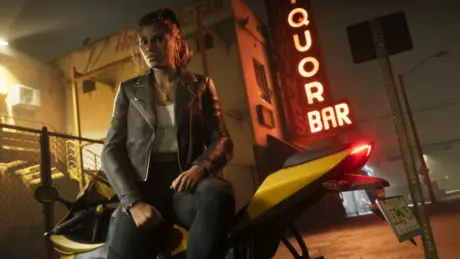
Jason & Lucia: The Duo Carrying the Story
Officially, Rockstar presents Jason and Lucia as two characters forced to rely on each other after an "easy score" goes wrong, at the heart of a criminal conspiracy spanning Leonida.
This premise suggests an adventure in which their relationship is not mere window dressing: it structures their survival, choices and rise to power.
Your documents emphasize a potentially more emotional and intimate tone, perhaps closer to the gravity of GTA 4 than the explosive cynicism of GTA 5.
It is a narrative gamble: making their bond believable without smothering the GTA spirit of freedom, irreverence and unpredictability.
Read more:
Jason & Lucia: narrative duo, inspirations and stakes •
Theory: Is Jason an undercover agent?
Crime 2.0: The End of "Magical" Police
If one system can redefine GTA 6, it is this one: crime would no longer simply trigger stars and automatic pursuits.
Your sources describe a more modern logic: connected witnesses, alert delays, search perimeters and law enforcement that does not react like an omniscient script.
Witnesses, Smartphones and Latency: The Crowd Is the Danger
The central idea is that every passerby becomes a potential threat in the city.
Not because they "see" a crime, but because they can report it—or broadcast it—instantly, turning a robbery into a race against time.
Perimeters and Searches: Leave the Area Instead of Driving Straight Away
Rather than a chase in which police appear everywhere, your documents refer to pressure zones and more tactical searches.
The player no longer wins simply by accelerating: they win by obscuring the trail, managing visibility and mastering the environment and access routes.
Memory & Reporting: The City Retains Details
Where some older episodes forgot things quickly, GTA 6 is described as a more persistent world: clothing, vehicles and descriptions could all fuel suspicion.
The result is that changing your appearance would no longer be an aesthetic whim, but a survival tactic.
Read more:
Search system: witnesses, perimeters and memory •
10 ways to lose the police without brute force
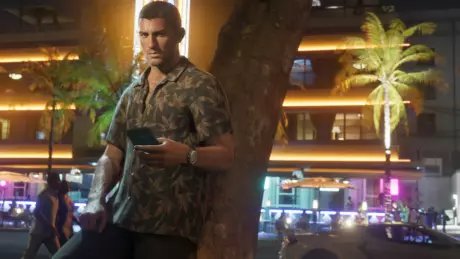
Inventory & Trunk: When Equipment Becomes a Choice
Another major shift being discussed is that the unlimited arsenal "in your pockets" could give way to stricter management.
Your documents refer to a limited inventory—around a few items—supported by bags and the vehicle's trunk as a mobile reserve.
This change is not only intended to make the game "more realistic": it forces you to plan.
During a heist, you no longer succeed by pulling out an ever-bigger weapon, but by preparing your kit, your exit and your backup plan.
Read more:
Limited inventory: weapons, bags, trunks and strategies •
Trunk: storage, search risks and tips
Activities & Events: Adventure Between Two Heists
A memorable open world is not merely large: it must produce moments.
Your texts mention a very high number of dynamic events and a range of activities—sports, exploration, leisure and nightlife—designed to turn every session into an improvised expedition.
From a storytelling perspective, the potential is powerful: activities are not filler if they reinforce the characters' identities through physical fitness, reputation and habits, and if they give the story a rhythm.
When a game offers something besides "mission → escape → mission," it gains breathing room and therefore impact.
Read more:
GTA 6 activities: sports, leisure and exploration •
Dynamic events: how to trigger them and make the most of them
RAGE & Animation: Technology in the Service of Lived Experience
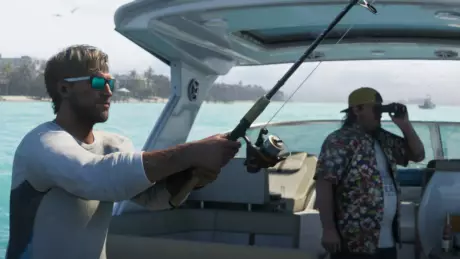
Your documents describe a technical ambition focused on adaptive animation: movements that adjust to body type, context and manipulated objects, along with more natural interactions.
The goal is not simply to look "better," but to feel more coherent: fewer actions that break immersion and more continuity in movement.
This kind of evolution changes gameplay without making a show of it: if getting into a car, moving while injured or handling an object becomes believable, the space feels more "real."
And when the space feels credible, the tension of a pursuit or heist rises automatically.
Read more:
RAGE engine: innovations, AI and adaptive animation •
Body type & fitness: impact on gameplay
Satire: A Sharp Mirror or Simple Reproduction of Reality?
GTA has always been a broad caricature targeting consumption, politics, media and social hypocrisy.
Your documents recall how the series has moved through the eras: radio satire in GTA 3, scathing criticism of the American Dream in Vice City, social tensions in San Andreas, disillusionment in GTA 4 and buzz culture in GTA 5.
The challenge for GTA 6, as it emerges from your texts, is dizzying: how do you go beyond a reality that is already "virally absurd"?
If the game merely piles up references to social-media videos, it risks losing its edge—the criticism, rather than the imitation.
Read more:
SnapMatic, viral culture and satire: what GTA 6 is saying •
Satire in GTA: from GTA 3 to GTA 6
Solo vs. Online: An Uneasy Balance
Your documents raise a clear concern: GTA 6's single-player mode could serve as a showcase for an Online mode designed to last, evolve and absorb attention through updates, RP and community creation.
This tension already exists in Rockstar's recent history, changing how players interpret every new feature: "Is this for the story, or is it preparing the multiplayer?"
The key point for the experience is that the more Online becomes an ecosystem, the more it consumes resources, making solo expansions less likely.
The question is not about choosing sides, but whether GTA 6 can offer a complete single-player adventure without feeling like a giant demo.
Read more:
GTA 6 Online: RP, cross-play, AI and an evolving world •
How GTA Online changed the saga
FAQ (SEO / AEO)
Where does GTA 6 take place?
Rockstar places GTA VI in Vice City and the state of Leonida, with a story centered on Jason and Lucia amid a criminal conspiracy spanning the region.
This is the clearest official information available so far.
What is changing in the police system?
Your documents describe a more tactical model: witnesses equipped with smartphones, a delay before intervention, search zones and a more persistent reporting system.
The goal is to move away from the old feeling of law enforcement appearing everywhere at the same instant.
Will GTA 6 have a limited inventory?
According to your sources, yes: the game is said to use stricter management with a few slots, while trunks and bags provide logistical solutions.
This would encourage players to prepare their scores instead of solving everything through weapon escalation.
Will there be many side activities?
The documents mention a high density of activities and dynamic events, including sports, exploration and leisure.
The intention seems to be making Leonida feel alive even outside the main missions.
Will the story mode be sacrificed for Online?
Your texts highlight this risk and recall the precedent of GTA 5, where Online was prioritized. At this stage, however, this is not official confirmation, but a credible scenario given the historical strategy described.

The GTA Cover: A Visual Manifesto Like No Other
Where competitors confine their covers to clean, reassuring visuals,
the GTA cover has always been an aesthetic declaration of war.
This deliberately embraced visual chaos is not a design accident: it represents the chemical formula
of a balance that nobody else dares to synthesize.
GTA's paradigm rests on the absolute interdependence of four pillars:
open world, automobiles, narrative and satire.
Remove any one of them and the series collapses—it becomes the linearity of Max Payne,
or worse, a hollow criminal version of The Sims.
This alchemy, visible from the very first cover, forges the saga's identity:
an indivisible whole in which every pixel of bodywork must carry the weight of social criticism.
From Liberty City to Los Santos: The Legacy of the Five Foundational Episodes
GTA 3 (2001)—The Quiet Revolution
Claude, a silent protagonist betrayed by his girlfriend during a heist, embodies the birth
of a new era. GTA 3 moved the series into 3D and laid the foundations: satire slipped
into radio broadcasts, secondary characters reduced to walking clichés and a freedom of urban wandering
that had never been seen at the time. The violence caused an uproar. The success was unprecedented.
Vice City (2002)—The American Dream in a Hawaiian Shirt
Tommy Vercetti arrives in 1980s Miami amid palm trees, synth-pop and cocaine.
The Scarface references are deliberate and unapologetic. The presentation takes a step forward:
longer cutscenes, more distinctive characters and a criminal empire to build district
by district. The satire of the American Dream reaches an early maturity—Tommy can crush,
betray and steal everything, and he is never punished. He is glorified. Pure GTA.
San Andreas (2004)—An Overdose of Dopamine
Carl Johnson, known as CJ, returns to Los Santos after his mother's murder.
A map three times larger, countless activities and, above all, a human protagonist
torn between family, gangs and police corruption.
San Andreas does not merely show discrimination and racial violence—
it stages them directly, inspired by the 1992 Rodney King riots.
CJ is the only hero in the series who does not want this life. That detail changes everything.
GTA 4 (2008)—The Misunderstood Masterpiece
Niko Bellic arrives in Liberty City on the false promises of his cousin Roman.
The RAGE engine revolutionizes procedural physics. But the writing hits hardest:
GTA 4 deconstructs the American Dream with surgical precision, in a context
that could hardly have been more appropriate—the release coincided with the 2008 subprime crisis.
The game depicts failed social advancement, disillusionment and debt.
Many players found it too dark. They rediscovered it as adults.
GTA 5 (2013)—The Interactive Hollywood Movie
Three protagonists, three player profiles and one massive world.
Michael represents the nostalgic player, Franklin the new generation and Trevor pure chaos.
Rockstar draws on Tarantino to intertwine parallel stories that converge.
The satire targets social networks, reality television and celebrity culture—
with sometimes excessive cynicism. GTA 5 brings everyone together.
GTA 4 had divided players. Rockstar learned the lesson.
Tarantino and GTA 5: The Art of Telling a Story Without a Single Protagonist
To escape the impasse left by GTA 4—too dark for part of the audience—
Rockstar searched for a new narrative model. The answer came from cinema:
Quentin Tarantino's Pulp Fiction and Reservoir Dogs.
These films broke the single-protagonist formula by allowing several characters
with intertwined stories to coexist, with dialogue that sometimes seems to have no place
in the story's economy—and yet reveals everything about their personalities.
GTA 5 applies this logic on the scale of a massive open world.
Three characters, three perspectives and three ways of inhabiting the same city.
Their stories cross, complement and collide—like a three-voice play.
Rockstar does not copy Tarantino: it adds its own DNA,
that of increasingly sharp satire aimed at media-driven, consumerist America.
Michael, Franklin, Trevor: Three Players in One Game
One of GTA 5's boldest gambles was designing its three protagonists
as mirrors of real player profiles.
Trevor embodies the player who enjoys sowing chaos: unpredictable,
excessive and capable of anything at any moment. Michael represents
the nostalgic player, the one who has been there from the beginning and prefers scripted heists
to pointless carnage. Franklin is the new generation:
he discovers this universe, starts at the bottom and is surprised by the normality with which
the others treat the surrounding absurdity.
This construction allows GTA 5 to leave nobody behind.
Depending on your mood or play style, you instinctively embody one or the other.
Rockstar's genius is that these three player archetypes, once brought together,
produce a far richer social critique than any single character
could ever provide.
GTA 5 and the Stock Market: When Manipulating Markets Becomes a Minigame
In GTA 5, Rockstar takes financial satire into the interactive realm.
Certain missions literally allow you to manipulate the in-game stock market
to multiply your fortune—a direct critique of speculative trading practices
and get-rich-quick courses proliferating online.
The message is clear: the same mechanisms that cause scandals in real life
are presented here as an ordinary minigame, available to any criminal out for a stroll.
Likewise, Franklin stalks local celebrities in missions that parody
the unhealthy fascination with stars' private lives and the race for media buzz.
Michael watches reality-TV shows being ridiculed,
exposing the voyeurism of mass media. Every mission is a satirical attack
on a different facet of contemporary America.
LifeInvader, AmmuNation, eCola: The Encyclopedia of Brand Parodies
GTA's DNA can also be read in its fictional brands, each one an arrow aimed
at a real-world target. LifeInvader parodies Facebook with
terrifying precision—an invasive social network, data collection and attention manipulation.
eCola stands in for Coca-Cola, Burger Shot
for McDonald's and Burger King, and AmmuNation for America's obsession
with firearms, complete with ultra-patriotic and absurd messaging.
Each business is a functional caricature: you can enter, shop
and commit crimes there.
In GTA 6, the tradition continues with modernized targets:
What-Up (WhatsApp), Rydeme (Uber),
and an obvious parody of OnlyFans. The list of victims grows
as surveillance capitalism finds new faces—and Rockstar is always there
to immortalize them in code.
The Hot Coffee Scandal: When Rockstar Declared War on Censorship
In 2004, a modder discovered a hidden sexual minigame in San Andreas' files
called "Hot Coffee". It had initially been removed from the game
but left in the code. The scandal exploded. Hillary Clinton, then a senator from New York,
spoke out and called for a federal law banning the sale of violent or sexually explicit
video games to minors.
Rockstar responded in its own way, inside the game itself. In GTA 4, the Statue of Liberty
is renamed the Statue of Hilarity. It bears Hillary Clinton's features,
holds a Starbucks cup in place of a torch—a direct reference to the Hot Coffee mod—
and its tablet displays a corrosive text about the hypocrisy of the American Dream.
Inside the statue is a giant chained heart: freedom of expression
constrained by political censorship. A remarkably dense message for a video game.
WKTT Radio: When Rockstar Invited Real Americans to Write the Script
One of the boldest easter eggs in the entire saga is hidden in GTA 4's WKTT radio.
A year before the game's release, in 2007, Rockstar broadcast a phone number
inviting people to call and pour out their most absurd opinions on American culture.
The best calls were selected and integrated directly into the game's radio,
hosted by fictional presenter Richard Bastion—a perfect caricature of American
"shock jock" stations.
The result is both hilarious and chilling: real listeners demanded that children
work in factories instead of going to school, and railed against microwaves or sushi.
Another formidable easter egg was a radio advertisement citing a fictional website
for children's underwear. Visiting an in-game cybercafé and entering the URL immediately
gave the player a five-star wanted level. Rockstar was not merely criticizing the sensitive subject—
it was also criticizing the player's own morbid curiosity.
GTA 4 and the 2008 Crisis: When Fiction Caught Up with Reality
GTA 4 released in April 2008, a few months before the collapse of Lehman Brothers
and the biggest financial crisis since 1929. The timing gave the game
a troubling resonance: Niko Bellic, a penniless immigrant, is sucked
into an economic system that crushes the weakest, much like the millions
of American families trapped by impossible-to-repay subprime loans.
Rockstar never directly references the crisis—but the parallel is striking.
You move through poverty, dream of Manhattan without ever being able to reach it
and find that illegality seems to be the only viable path. The message resonates even more strongly
because the world outside looked like what the game was depicting from within.
Censored or Banned GTA: A World Map of Countries That Resisted
Although GTA has sold hundreds of millions of copies, it has not conquered
the entire planet in the same way. Several countries imposed modified versions
or total bans. In France, Germany and Australia,
some installments were released in cut-down form: no blood effects, no dismemberment,
non-player characters did not drop money when killed and so-called "Rampage" missions were removed.
Even more radically, in Malaysia, the United Arab Emirates, Saudi Arabia
and Thailand, the entire GTA series is completely banned from sale.
These decisions raise a question Rockstar likes to provoke: if the same themes
were addressed in a novel or film, would the censorship be identical?
For GTA's creators, the answer is no—and this injustice continues to fuel their satire.
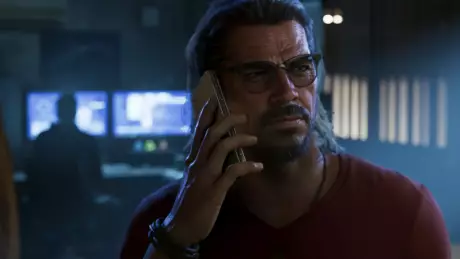
The Rockstar Paradox: The Rebel Turned Multinational
There is a painful irony at the heart of Rockstar's recent history:
the studio that spent 20 years satirizing predatory capitalism,
corruption and the hypocrisy of major institutions has itself become
exactly what it criticized. The success of GTA Online—
more than $10 billion in revenue since 2013—
sealed the fate of the eight single-player expansions originally planned for GTA 5,
all sacrificed on the altar of microtransactions.
This shift, described by some analysts as the "Nintendo-ification of the rebel",
saw Rockstar take its own fans to court to protect its profits—
particularly in lawsuits against the Liberty Five modders.
The departure of historic figures such as Dan Houser and
Leslie Benzies reinforced this feeling:
the studio now seems to calculate every cent with the coldness of a multinational
it once would have ridiculed on its own radio stations.
GTA 6 will have to answer an existential question: does Rockstar still
have something to say, or has it become the system?
Hurricanes, Floods and Storms: Weather as Ally or Enemy
Florida also means hurricane season. Rockstar does not intend
to make it a mere visual effect. In GTA 6, extreme weather conditions
look set to become a true gameplay mechanic with two sides.
A storm can conceal your movements during a nighttime operation,
cover the sound of a fleeing vehicle or reduce surveillance-camera visibility.
But that same hurricane can turn your perfect plan into a logistical nightmare:
a flooded and impassable extraction route, an evacuation boat made unusable
by waves that are too high or entire areas inaccessible for several in-game hours.
Some theories even suggest that major weather events could
reveal caches of objects or resources normally buried—
turning every storm into an exploration opportunity for the sharpest players.
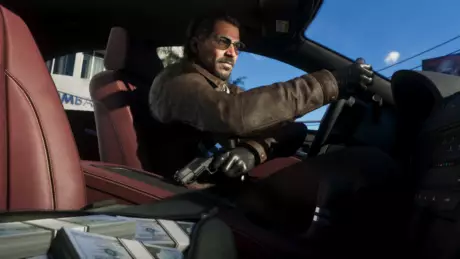
500 Dynamic Events: A World That Plays Without You
One of the most staggering figures associated with GTA 6 is the
500 dynamic events expected to populate the state of Leonida.
Behind this number lies a precise ambition: for every journey,
even the most ordinary, to offer a story opportunity. A car accident that creates
a persistent traffic jam. A street argument that escalates.
An NPC robbery taking place without you triggering anything.
The aim is to definitively break the feeling of a "world as backdrop"
that characterized the older installments. In GTA 5, random events existed,
but they were rare, scripted and repetitive. Here, the ambition is a world
that constantly generates its own micro-stories—
a living narrative fabric in which you are sometimes a spectator, sometimes a catalyst
and sometimes collateral damage in chaos you did not initiate.
Urban Scars: When Vice City Remembers Your Excesses
One of the most innovative concepts discussed around GTA 6 is that of
"urban scars"—the world's ability to preserve
visible, lasting traces of your most destructive actions.
In older installments, an explosion destroyed a building and a crash damaged
a car, but everything disappeared within seconds or after loading.
Leonida is supposed to remember.
A devastated business could remain closed for several in-game days.
A shop window smashed during a robbery might not be repaired for some time,
signaling to passersby—and patrols—that an incident occurred at that precise location.
These visible consequences are not trivial: they reinforce the feeling
that every action has weight, that the world absorbs events, reacts and remembers.
That is the difference between an interchangeable backdrop and a city that truly breathes.
The Online Crime Economy: Factions Controlling Real Territories
GTA 6 Online is not limited to chaining missions and buying sports cars.
Leaks and analyses suggest a player-controlled economic system
of unprecedented depth for the series. Organized factions could take
control of strategic resources—cargo ports, refineries and distribution routes—
by carrying out coordinated collective actions.
This mechanic transforms Online into something beyond a simple game server:
it is a virtual political economy in which a group's influence
can physically change other players' access to certain territories.
Combined with a dynamic reputation system, this dimension promises shifting power struggles
from week to week—exactly the type of content capable of keeping
a community engaged for years without requiring a single update.
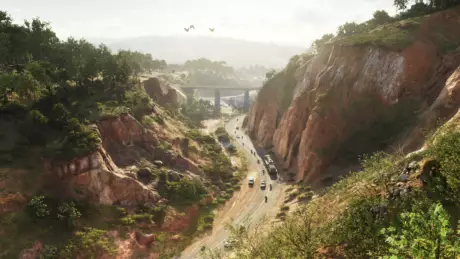
Radio Stations: The Soundtrack of Leonida
In GTA, radio is never mere background noise—it is a character in its own right.
From GTA 3's corrosive commercials to the real calls on GTA 4's WKTT Radio,
each station is another layer of satire, a living commentary
on the era in which the game takes place. In GTA 6, this tradition should not only
continue, but grow to reflect the age of podcasts,
influencers and viral talk shows.
Fans are particularly hoping for the return of V-Rock,
Vice City's iconic rock station, whose unhinged hosts
Couzin Ed and Lazlow Jones became cult figures in the saga.
In a modern city saturated with digital culture, an old-school rock station
would be the perfect satire of the generation gap—
an old world resisting in an ocean of TikToks and reels whose lifespan
is shorter than a red light.
Trailer 2: A Cultural Phenomenon Before Release
When Rockstar unveiled the second GTA VI trailer, the world responded
with a collective fever unprecedented in video game history.
In less than 24 hours, the video accumulated more than 475 million views,
smashing the record set by the first trailer.
This is not simply a trailer—it is a media event
comparable to a World Cup final or the release of a global album.
This second trailer does more than impress visually:
it delivers 70 official images, 42 new artworks
and the first detailed introductions to Leonida's characters and locations.
Every frame is analyzed, decoded and debated in real time across thousands of threads
and reaction videos. Rockstar is no longer just advertising—
it is generating a perpetual stream of attention that exceeds in value
any traditional marketing campaign.
The game has not been released yet. It is already everywhere.
Read more:
All our GTA 6 dossiers •
Guides & walkthroughs •
Analysis & deep dives
Beyond crime: mastering life-simulation mechanics