Editor's note: Article checked and updated on September 14, 2026, with the final results of the EWC Paris.
Fortnite at EWC Paris 2026: vic0 & Malibuca / BIG crowned champions
vic0 & Malibuca / BIG finished top of the overall Fortnite standings at the 2026 Esports World Cup, ahead of RVNS SkyJump & LYOST Momsy. The final day of the competition took place on 08/22/2026 in Paris.
The vic0–Malibuca duo carried BIG to the top of the overall Fortnite tournament standings.
- Champion: vic0 & Malibuca / BIG
- Finalist or runner-up: RVNS SkyJump & LYOST Momsy
- Score or format: Overall standings
Also check out our complete overview of the Esports World Cup Paris 2026, including all 25 winners and the final club standings.
- Fortnite C7S2: The key points of the Fortnite meta at the end of the season
- Breakdown: Weapons and strategies in the Fortnite Season 2 meta
- Looking toward Season 3: Leaks, official roadmap and the evolution of the Fortnite meta
- Fortnite & Esports World Cup 2026: a meta also designed for the global stage
- Summary and outlook: anticipating tomorrow’s Fortnite meta
Fortnite C7S2: The key points of the Fortnite meta at the end of the season
The countdown to Season 3 is accelerating: Chapter 7 Season 2 “Showdown” is coming to an end after a cycle that began in early March and is scheduled to conclude around the beginning of June, according to Epic Games’ 2026 roadmap and information cross-checked by the main specialist websites. This transition period is always the most interesting for competitive players: the meta has stabilized, mistakes are punished immediately, and everything you learn now will help you from the first days of the following season. Several articles and guides—including our “Fortnite: Showdown Season 2 ending, get ready for Season 3” feature—agree on one point: understanding the dominant mechanics at the end of the season is both an immediate performance concern and an investment in your medium-term progress. Players who know the Points of Interest (POIs), rotation paths and weapon synergies consistently have an advantage over the rest of the lobby, particularly in ranked and Zero Build, where the environment is your main source of cover. At the end of C7S2, the meta is heavily focused on close- and mid-range engagements, driven by highly effective shotguns and SMGs such as the Chaos Reloader Shotgun and the new Seven weapons, as well as mobility tools that make fights much more dynamic than in previous seasons. This trend is confirmed by the successive 2026 updates and feedback from competitive players taking part in community tournaments, FNCS and Fortnite Reload qualifiers.This is where our critical analysis becomes particularly useful: rather than chasing every leak, the goal is to focus on the solid C7S2 trends, understand them, and then apply them intelligently as soon as Chapter 7 Season 3 “Runners” imposes its new meta.Key takeaway: Preparing for Season 3
- Shotguns and SMGs remain unquestionably dominant at close range: most eliminations take place within 15 meters, matching the accumulated experience of Showdown tournaments and ranked Zero Build modes.
- Smart-reloading weapons, such as the Chaos Reloader Shotgun, allow more aggressive sequences by alternating slots without wasting time on animations.
- Movement mechanics have become essential pillars: slides, jumps, grapples and new mobility items are everywhere in late-zone engagements, as shown by competitive Chapter 7 VODs.
- Credible rumors and datamining suggest that mobility items will be strengthened for Season 3 rather than seeing a major return of flying vehicles such as planes—this remains speculative and should be treated cautiously.
- Overshield and area-damage balance is adjusted regularly: new nerfs and buffs can be expected at the beginning of C7S3, but the exact values will not be known until the official patch notes.
- Adaptability will be the key: players who can quickly change their loadout and rotation style traditionally gain a progression advantage on the Battle Pass during the first few weeks.
Breakdown: Weapons and strategies in the Fortnite Season 2 meta
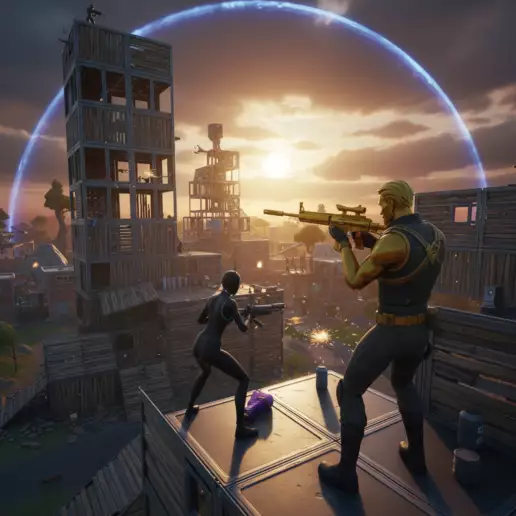
Dominant weapons: why they set the pace of fights
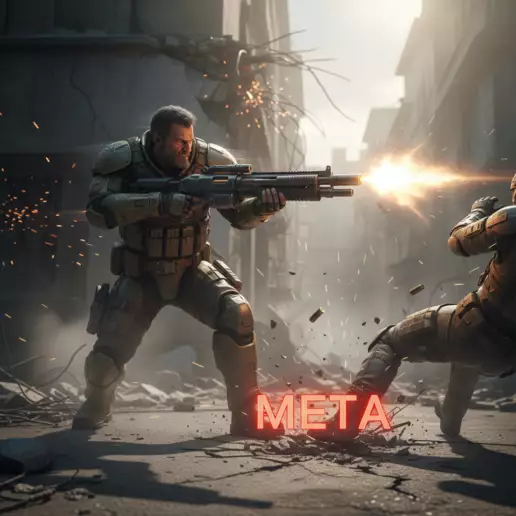
Qualitative Fortnite C7S2 tier list (2026 patches)
| Tier | Weapon | Role | Effective range | Use in competitive matches |
|---|---|---|---|---|
| 🏆 S TIER | Chaos Reloader Shotgun | Close-range burst, passive reload while stowed, excellent for aggressive duos. | Short (<10 m) | Very common in C7S2 clips and tournaments; considered a close-range staple. |
| 🏆 S TIER | High-level “classic” shotguns (enhanced Pump / Combat types) | One-shot potential at close range and excellent punishment for poor positioning. | Short to medium (<8–10 m) | Essential in ranked queues and tournaments; dominate most box fights. |
| 🏆 S TIER | Aggressive SMGs | Shotgun complement for finishing targets and breaking builds. | Short to medium (10–20 m) | Widely used in hybrid loadouts, particularly in Zero Build. |
| ⭐ A TIER | Stable DMRs/ARs | Mid-range pressure and control of rotations and high ground. | Medium (20–50 m) | Ubiquitous for punishing poor rotations and players in the open. |
| ⭐ A TIER | Seven Cluster Cannon | Zone control, structure destruction and late-game pressure. | Long (area impact) | Rather rare but highly decisive in end-game or on certain rotations. |
| ⚠️ B TIER | “Average” versatile weapons | A good compromise without an exceptional strength; useful in the early game. | Variable | Found early in matches and often replaced as loot improves. |
| 💩 C TIER | Situational or event weapons | Useful only in very specific scenarios and rarely viable in ranked. | Specific | Rarely seen in the competitive meta; more common in fun modes. |
🔮 Mythics & powerful items: how they disrupt the meta without inventing figures
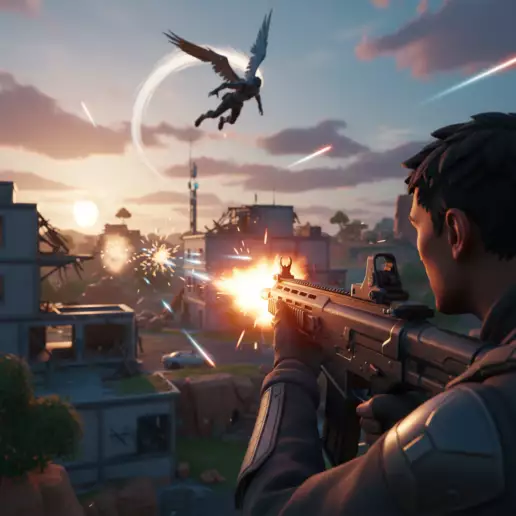
Fortnite has made a habit of introducing very powerful mythic items and themed abilities, as seen with the Thunderbolt of Zeus and the Wings of Icarus during Chapter 5. These items, documented by guides and wikis, temporarily unbalanced the meta by offering burst and mobility options far beyond the rest of the loot pool. The Thunderbolt of Zeus, for example, allows players to suspend themselves in the air and launch several successive lightning bolts, each dealing contact and explosive damage. Some members of the community considered this mechanic “too strong,” leading to rapid adjustments. The same pattern can be seen in Chapter 7: highly impactful mythics appear, force players to adapt, then get nerfed or removed when their presence becomes too dominant. Rather than pretending to know exact win-rate or victory percentages linked to each mythic, it is more honest to focus on the broader logic: every season introduces “disruptive” items that force players to rethink their positions, engagement timings and rotation paths before the meta stabilizes. C7S2 is no exception, and C7S3 will continue along the same lines.💪 Recommended loadouts by playstyle (editorial view)
Based on trends observed in FNCS VODs, community guides and our own tests, we can identify loadout archetypes that work well without getting lost in artificial statistics:| Style | Slot 1 | Slot 2 | Slot 3 | Slot 4 |
|---|---|---|---|---|
| 🔥 Aggro Zero Build | Burst shotgun (Chaos Reloader or high-level shotgun type) | Aggressive SMG | Support AR/DMR | Mobility item (grappler, dash or jump item) |
| 🛡️ Squad Support | DMR or stable AR | Shotgun for close-range defense | Healing items (packs, Slurp, Shield) | Utility items (grenades, zone-control items) |
| 🎯 Late-game ranked | AR/DMR for controlling rotations | Reliable shotgun | Mobility item for forced repositioning | Flexible slot (healing, cluster or explosives depending on the game plan) |
Winning strategies: Build, No-Build and zone management
The coexistence of Build and No-Build modes is one of the defining features of modern Fortnite. In Build, fast editing, taking high ground and box control remain fundamental: strong building mechanics can turn unfavorable situations into offensive opportunities. In No-Build, priority shifts toward reading the map and using natural cover, vehicles and mobility items to compensate for the absence of instant walls. Exact win-rate statistics by mode are not public and vary by region and playlist, but the logic remains the same: players who master storm management, information gathering—sound, lines of sight and visual radar—and rotation planning are consistently better positioned late in the game. C7S2 has reinforced this trend with sometimes more punishing storms and denser rotations around certain late-zone POIs.Key takeaway: how the meta evolves throughout the season
Chapter 7 Season 2 is part of the 2026 roadmap published by Epic, with a launch in early March and a handoff to Chapter 7 Season 3 “Runners” around late April or early June, depending on the sources. Between these milestones, several patches adjusted weapons, items and modes. Exact version numbers and dates are listed on the Creator Roadmap Trello and in summary articles from the main media outlets. The key point: each patch changes the landscape slightly, but the guiding principles remain the same—mobility, close- and mid-range pressure, and a dynamic meta centered on initiative.
Looking toward Season 3: Leaks, official roadmap and the evolution of the Fortnite meta
Chapter 7 Season 3 “Runners” marks a new turning point for Fortnite, with an announced focus on mobility, combat tempo and fast rotations. Summary articles and the 2026 roadmap indicate a C7S3 launch toward the end of the first four-month period, following a live event and a period of downtime. Beyond the date, the real question for players is: what will this new season concretely change in the meta? Epic Games likes to distribute environmental clues before every major update: texture changes, teaser items on the map, weather events and cryptic messages on social media. Combined with official announcements, these signals can reveal the season’s general theme, but they do not tell the whole story. Dataminers, meanwhile, search through the files and uncover weapon names, sounds and POIs, but their work remains speculative by definition until the patch notes are released.Roadmap and leaks: what is confirmed and what is not
The 2026 roadmap published through the Creator Roadmap Trello and repeated by several media outlets clearly indicates the major patch dates: the launch of Chapter 7 Season 2 at the beginning of March, the arrival of Chapter 7 Season 3 toward the end of April with content tied to the “May the Fourth” event, followed by new patches in June and summer, an October mini-season and the launch of Chapter 8 at the end of November. This calendar provides the year’s overall structure, including break periods—with no updates at the end of June or beginning of July—that coincide with Epic teams’ vacation periods. Leaks, for their part, mention new weapons—thermal snipers, harpoons and very fast SMGs—limited crafting mechanics and water-based or post-apocalyptic POIs, but none of this information can be considered official before the patch notes. In a Game.fr article, we have already emphasized this distinction: speculation can be useful for anticipating trends, but it must not be presented as fact in a meta guide.Key takeaway: why anticipation matters without overinterpreting leaks
Every new season reshapes the Fortnite meta: topography, loot, utility items and combat pace. Anticipating these changes reduces the time needed to regain your performance level in ranked. The right approach is to:In our guides, we systematically offer a first-week checklist to help you get to grips with these changes without wasting time or getting lost in contradictory rumors.
- Use the official roadmap for dates and major phases.
- Treat leaks as avenues for consideration, not certainties.
- Plan “laboratory” sessions—Team Rumble, Creative and high-loot modes—to test new features from day one.
Fortnite & Esports World Cup 2026: a meta also designed for the global stage
In 2026, the Fortnite meta is no longer played only on public servers: it is also shaped by the global competitive scene, particularly through Fortnite’s official return to the Esports World Cup. Epic Games and the Esports World Cup Foundation have announced a multi-year partnership that adds the Fortnite Reload Elite Series Championship to the EWC 2026 program, with a global qualification circuit and a $1 million grand final for Reload mode. The circuit is built around online qualifiers in seven regions—Europe, the Americas, Asia, the Middle East and Oceania—followed by Play-Ins, Heats and finals that send the best duos to the world championship. In total, 40 qualified duos will compete on stage in a tournament that is both spectacular and highly structured, integrated into an EWC featuring a record global prize pool of $75 million and 25 tournaments across 24 games. For players, this means that understanding the C7S2 meta and looking ahead to C7S3 is not only useful for climbing ranked or winning more public matches: it is also a way to prepare for competitive formats where loadouts, rotations and map awareness are tested at the highest level. Teams specializing in Reload must deal with a slightly different meta—respawns, a faster pace and adapted maps—but the fundamentals of gunplay, close-range combat and mobility remain the same. On Game.fr, our articles on EWC 2026 in Paris, the games included in the program—EA Sports FC 26, CrossFire, MLBB, Free Fire and others—and the esports roadmaps for major titles help place Fortnite within the broader ecosystem: it is no longer just a popular battle royale, but a fully fledged part of the global competitive economy, with club, prize-money and visibility stakes comparable to those of other major esports titles.Summary and outlook: anticipating tomorrow’s Fortnite meta
Lessons from the current season
Chapter 7 Season 2 leaves behind a meta rich in tactical lessons. The prominence of aggressive mobility weapons, the central role of close-range shotguns and the growing importance of zone-control items show that Fortnite continues to push players out of their comfort zone and toward more reactive and proactive playstyles. Compared with previous seasons, C7S2 has increased the average pace of matches and the value of smart rotations. More punishing storms and denser final zones, combined with varied mobility tools, reward players who plan their movement rather than simply react to the circles. The future meta is unlikely to change this logic: mobility will remain at the center of the game.Anticipating Season 3: Challenges and opportunities
The transition to Chapter 7 Season 3 “Runners” promises structural changes in terms of theme, topography and loot. Roadmap documents and official announcements suggest a season focused heavily on pace, with a strong emphasis on players’ ability to read the map while moving, chain engagements and manage versatile loadouts that cover several ranges. These changes bring both challenges and opportunities: aggressive players will be able to capitalize on enhanced movement tools, while more calculated players will need to refine their rotation timing, information gathering and late-zone positioning. Adaptability will remain the key: do not lock yourself into a single loadout type or strategy; test, observe and adjust.Tips for a successful transition
To approach Season 3 with confidence, a few simple principles apply:S3 checklist (D1–D7):Finally, remember that the first week of a new season is an open-air laboratory: mistakes are acceptable, experimentation is encouraged, and the biggest discoveries are often made outside your usual habits. It is the ideal time to try new styles and loadouts—and perhaps begin preparing for a future competitive path through circuits such as the Fortnite Reload Elite Series and, eventually, the Esports World Cup. For more, check out our other Battle Royale and esports guides on Game.fr: the complete analysis of the end of Showdown Season 2, our Chapter 7 Season 3 feature, our guides to Free Fire, CrossFire and Mobile Legends as part of EWC 2026, as well as our weekly recaps of video game and esports news.
- Explore new POIs and modified areas in low-pressure modes—Creative and Team Rumble—to understand lines of sight and possible routes.
- Test every new weapon in high-loot modes, varying the situations: close range, mid range and end-game.
- Analyze replays from pro players or meta-focused content creators to observe their rotation and loadout choices.
- Adjust your settings—sensitivity and binds—if new weapons or mechanics change recoil or movement feel.
- Join communities—Discord, forums and social networks—to share discoveries and refine your understanding of the meta.