
In World of Warcraft, a simple bug was enough to make an entire world tremble. Born in Zul’Gurub, Corrupted Blood escaped the raid, infected pets, struck the capitals and gave Blizzard one of the most famous bugs in video game history.

The day Azeroth trembled
Some outages quietly fade away. Others leave a mark, like a fever beneath the world’s skin. In World of Warcraft, Corrupted Blood was more than just a bug: it was a contamination, a breakdown and a small flaw that grew into a major fear.
It all began in Zul’Gurub, with Hakkar the Soulflayer, whose Corrupted Blood mechanic was supposed to remain confined to the instance. It did not. A design error allowed the affliction to cross the raid’s boundaries before finding an unexpected vector: pets.
When pets opened the breach
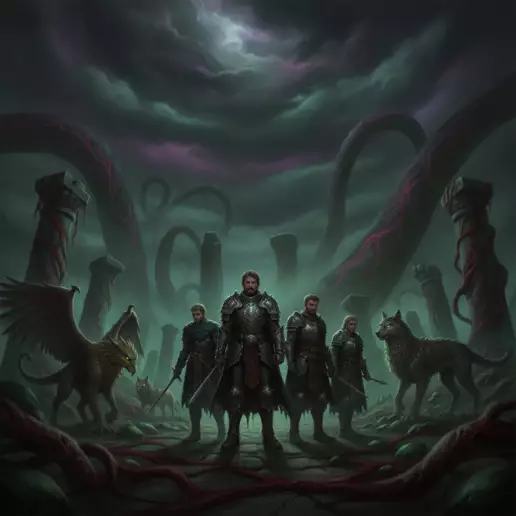
The real danger was not just the spell. It was its ability to travel silently, disappear and then resurface elsewhere, in a different setting and among another crowd.
Pets unintentionally transported the bug, turning a raid mechanic into a server-wide threat. Where there should have been a single fight, there was transmission. Where there should have been an instance, there was an open world coughing.
The capitals under fever
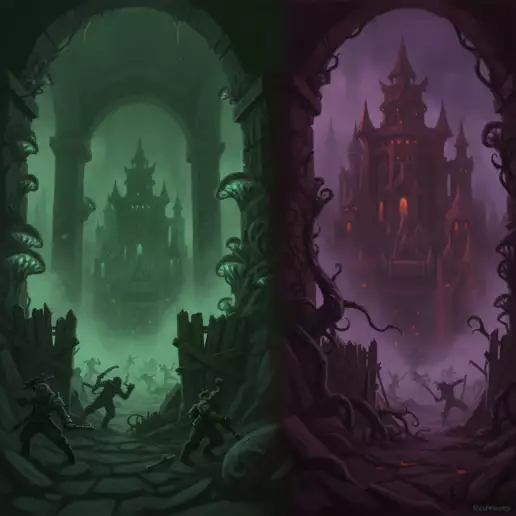
Cities such as Ironforge and Orgrimmar were quickly affected because of their high concentration of players. The more players gathered, the more bodies the bug found to infect.
The MMO began behaving like a space vulnerable to flows, crowds and mass reactions. The effects went beyond mere inconvenience: Corrupted Blood created zones of chaos, flight and panic.
Blizzard faces the invisible threat
Blizzard eventually responded with emergency patches, changes to pets and several hard resets to break the chain of transmission.
The problem was easy to summarize and difficult to fix: a tiny flaw had found a way to set an entire system ablaze. What makes this episode so memorable is not just its strangeness. It is its structural violence.
A case study for researchers
The incident later moved beyond the game. In 2007, Eric T. Lofgren and Nina H. Fefferman published an article in The Lancet Infectious Diseases about the potential of virtual worlds to improve our understanding of real-world epidemics.
Their idea was clear: an online game can become a setting for observing human behavior because it combines known rules, large-scale interactions and unpredictable reactions. However, it is important to be precise: Corrupted Blood did not help manage COVID-19 in an operational sense, but it served as an intellectual reference during the pandemic.
Why this story endures
Corrupted Blood remains fascinating because it touches on something larger than the game. It shows how a small error can expose the fragility of a system, and how thousands of players can unintentionally reenact the behaviors of a public health crisis.
In the world of World of Warcraft, people often remember the bosses, loot and raids. But Corrupted Blood left a different mark: that of a world suddenly realizing it could fall ill.
FAQ
What is Corrupted Blood in World of Warcraft?
It is a disease effect linked to the boss Hakkar in Zul’Gurub, which became famous after a bug allowed it to escape the raid and spread through the open world.
Why were pets decisive?
They unintentionally acted as vectors for the bug: they could retain the effect and then reintroduce it elsewhere when they were recalled.
Which cities were affected?
Heavily populated capitals such as Ironforge and Orgrimmar were hit particularly hard, accelerating the spread.
Why are researchers still interested in this incident?
It provided a rare opportunity to observe human behavior in response to contagion within a controlled environment, informing epidemiological and modeling research.
Was WoW really used for COVID-19?
Not directly. The incident was primarily reused as an analogy and scientific reference during the pandemic, not as a public health management tool.