
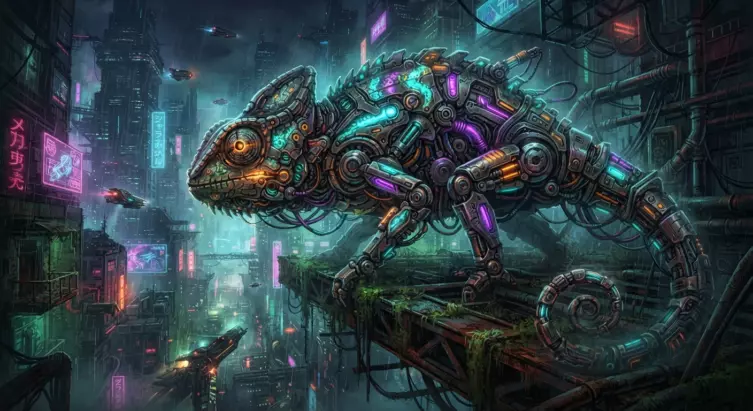
Meccha Chameleon stands out as one of 2026’s most unique games: a multiplayer stealth title where camouflage does not rely on shadows, sound or conventional stealth, but on painting the character to visually blend into the environment. Available on PC via Steam, the game turns a simple idea into an instantly readable mechanic built around constant bluffing and strategic hide-and-seek, which largely explains its viral potential.
Meccha Chameleon: A Concept That Is Going Viral
Meccha Chameleon is an asymmetrical multiplayer stealth game in which players must hide in their surroundings by painting their bodies to imitate the environment’s colors, textures and shapes. The premise is immediately appealing: instead of offering passive camouflage or simple hide-and-seek in an enclosed area, the game encourages players to read the space, understand its contrasts and create a false visual certainty. That is precisely what gives it its personality and appeal.Platforms and Availability
The game is available on PC, and its Steam version has been confirmed, making it immediately accessible to a broad audience of computer players. According to the official Steam page, it was released on June 9, 2026, with a clear focus on public multiplayer and streaming—two elements that strengthen its long-term visibility. This context matters: Meccha Chameleon is not just a conceptual game, but one designed to be watched, shared and discussed.Why the Buzz?
Key Takeaways
- Genre: Asymmetrical multiplayer stealth.
- Concept: Blend into the environment by painting your character.
- Platform: PC, with a confirmed Steam version.
- Release: June 9, 2026, on Steam.
- Why the buzz: A mechanic that is easy to understand but highly rewarding to master.
Getting Started in Meccha Chameleon: The Fundamentals
Meccha Chameleon offers a different kind of stealth experience from most games in the genre: here, camouflage is not only about positioning, but also about color, material and visual consistency. To improve quickly, you therefore need to think like a decorator as much as a stealth player.
Key Takeaways
- Understand the roles: hunter versus chameleon.
- Master camouflage: color, texture, posture and stillness.
- Read the environment: identify visually credible areas.
- Avoid beginner mistakes: sudden movements, inconsistent colors and overly obvious positions.
Understanding the Roles: Hunter vs. Chameleon
In Meccha Chameleon, players are divided between hunters and chameleons, with radically different objectives. Hunters must identify, track and eliminate hidden players, while chameleons try to blend into the environment so well that they become almost invisible to the naked eye. This simple opposition creates a clear rhythm, making matches easy to follow even for spectators while leaving plenty of room for anticipation and deception.Mastering Camouflage
Camouflage is the central mechanic, and it is also where the game reveals its subtlety. Chameleons must adjust their appearance to match the environment, working with dominant colors, visible patterns and the logic of the shapes found on the map. Staying still is often a basic rule, but true mastery lies in knowing when to move, when to freeze and how to prevent even a tiny movement from giving away an otherwise well-camouflaged silhouette. This combination of caution and timing creates the game’s tension.Reading the Environment
To play well, you need to learn to observe maps as spaces that must be visually interpreted. Safe areas are not simply the ones offering a hiding spot, but those that create perfect consistency between your character and its surroundings: wall, floor, texture, lighting, height and the image’s outline. The better you understand a map’s visual logic, the more likely you are to disappear in the right place at the right time.Beginner Mistakes
New players often make the same mistakes, making them easy to spot. Sudden movements, poorly chosen colors, positions in the middle of highly recognizable elements and obvious changes of direction are all signals that immediately alert an experienced opponent. To improve, you need to adopt a more patient approach: observe, test, make mistakes and then correct one detail at a time instead of starting over in a panic.Advanced Tips to Dominate Every Match
Once you have mastered the basics, Meccha Chameleon becomes more about anticipation than simple hide-and-seek. The best players do not merely imitate the environment: they understand the pace of encounters, the most useful blind spots and the moments when an opponent stops looking where they should.
Key Takeaways
- Strategic positioning: use elevation, blind spots and breaks in visual flow.
- Anticipate routes: predict hunters’ movements and habits.
- Adapt your camouflage to the map: every environment follows a different logic.
- Master bluffing and timing: move to deceive, not to run away.
Strategic Positioning
Using elevation and blind spots is essential to surviving longer. Good positioning is not simply about hiding behind an obstacle, but exploiting an area where the opponent’s gaze will naturally pass without stopping. The more credibly you fit into the map’s visual composition, the less you need to do to remain discreet.Anticipating Routes
Observing hunters’ habits makes a huge difference. Aggressive players often follow repetitive routes, favor certain viewing angles or use scanning patterns that recur regularly. By understanding these habits, you can choose smarter positions and avoid direct confrontations, turning the match into a battle of perception rather than a simple race to evade.Adapting Your Camouflage to the Map
Every map has its own visual rules, and mastering them is essential for improving. Some areas favor light surfaces, others darker contrasts, while others rely on irregular textures that break up your silhouette. The most common mistake is using the same camouflage everywhere, whereas a good player knows how to adapt their approach to the environment, much like choosing a different outfit depending on the lighting in a scene.The Art of Bluffing and Timing
Bluffing is probably the game’s most satisfying element when executed well. Creating a diversion, pretending to flee, moving your character at the exact moment your opponent looks away—or staying still when everything urges you to move—can all turn a compromised situation around. Timing then becomes a weapon as important as camouflage itself. In a game like Meccha Chameleon, the right moment is often worth more than a quick reflex.Expert tip: never underestimate timing. A well-placed movement at the right moment can turn a situation in your favor, even if your camouflage is not perfect.
Game.fr Verdict: Should You Try Meccha Chameleon?
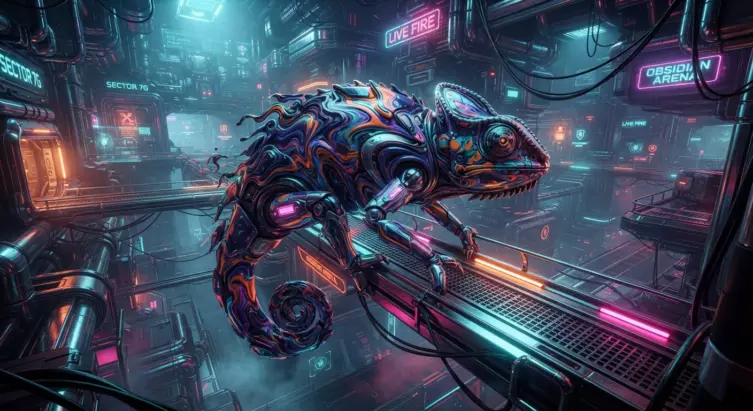
Meccha Chameleon stands out with an extremely strong premise that is immediately understandable and easy to showcase in video, social media or streaming formats. The real question remains: does this original promise hold up long enough to justify players’ investment?
Key Takeaways
- Score: 85/100.
- Strengths: Unique concept, tense gameplay, strong replayability and good readability on stream.
- Weaknesses: Demanding learning curve, initial content to monitor and possible repetition if balance does not keep pace.
- Who it’s for: Indie fans and fans of strategic multiplayer and stealth games who enjoy highly readable concepts.
Strengths
Meccha Chameleon has a genuine point of difference: it takes a simple mechanic and turns it into a strategic playground for experimentation. The gameplay is tense while remaining easy to understand, which is excellent both for getting started and for watching others play. Replayability is another major strength, since each match can produce different situations depending on the maps, positions and players’ decisions. The game therefore has the ideal profile for creating memorable moments, whether experienced in-game or shared in video form.Weaknesses
The downside of such a distinctive concept is that it quickly demands precision and strong visual awareness. Players looking for a very gentle progression curve may be held back by the demands of camouflage, while an overly limited initial offering could reduce match variety over time. These are points to watch, especially if the game wants to maintain its momentum after the initial discovery phase. In short, Meccha Chameleon has an excellent starting idea, but it will need solid support to last.Final Verdict
Ultimately, Meccha Chameleon deserves the attention of players who enjoy original concepts, readable mechanics and encounters where psychology matters as much as skill. Its release on Steam on June 9, 2026, makes it easy to try, while its paint-based approach to camouflage gives it an instantly recognizable identity. If you enjoy multiplayer games that break from the traditional mold and focus on clear rules, fast pacing and strong bluffing potential, this title clearly deserves a place on your radar.FAQ: Your Questions About Meccha Chameleon
Players often have the same questions about Meccha Chameleon, especially because its idea seems simple at first but is more subtle than it appears. Here are the most useful answers to help you get straight to the point.
- How do you change color quickly?
- To change color effectively in Meccha Chameleon, use the controls provided by the game interface and learn to anticipate the area where you are going to take shelter. The more you prepare your camouflage before moving, the less time you spend exposed to hunters.
- Are there different game modes?
- The game is primarily built around public multiplayer and its competitive hide-and-seek format, which form the core of its identity. If variants or specific configurations exist, it is best to view them as additions to the main experience rather than the center of the concept.
- Does the game support cross-play?
- At this stage, none of the sources consulted confirm cross-play between platforms, so it is best to remain cautious on this point. However, the presence of a Steam news hub and a clearly identified PC version confirms the game’s connection to the Steam ecosystem.
- How do you report a suspicious player?
- The simplest approach is to use the reporting tools built into the game, generally accessible during or after a match depending on the interface in place. This type of feature is common in online multiplayer games, especially when the experience relies on fairness and reading opponents visually.