Analysis / Retro
Rise of the Tomb Raider: Behind the Xbox Exclusive That Shook the Industry
More than a decade after its release, Rise of the Tomb Raider represents far more than a Lara Croft adventure. The deal between Microsoft and Square Enix in 2014, followed by an Xbox release in 2015, remains a textbook case in the recent history of timed exclusives. How was this partnership received, and what legacy did it leave behind?
Key takeaways:
-
- A controversial announcement: at Gamescom 2014, Microsoft presented Rise of the Tomb Raider as an Xbox exclusive before confirming that it was a temporary deal.
- A deal with few public details: Microsoft secured the initial Xbox release, but the partnership’s complete financial and operational terms were never disclosed in detail.
- A symbol of its era: the game remains associated with the rise of timed third-party exclusives during the Xbox One / PlayStation 4 console war.

An announcement that surprised the industry
In 2014, the Tomb Raider reboot released the previous year had given fresh momentum to a historic franchise. Crystal Dynamics’ sequel, Rise of the Tomb Raider, was therefore among the most anticipated action-adventure games of the Xbox One and PlayStation 4 generation. When Microsoft announced at Gamescom 2014 that the game would arrive first on Xbox, the reaction was immediate. The deal did not change ownership of the franchise, but it temporarily turned a highly anticipated multiplatform title into a strategic asset for the Xbox ecosystem.Why Microsoft targeted Tomb Raider
At the time, the PlayStation 4 held a commercial advantage over the Xbox One. Microsoft was therefore looking to strengthen its catalog with productions capable of creating a major event for the general public, particularly in the narrative action-adventure space. Rise of the Tomb Raider fit the profile: a well-known license, an iconic heroine and a direct sequel to a well-received reboot. The deal gave Xbox a major game for the 2015 holiday season, when competition between platform holders largely revolved around exclusives and marketing partnerships. The exact terms of the partnership between Microsoft and Square Enix were not fully detailed publicly. It is therefore preferable to describe it as a timed exclusivity deal accompanied by strong commercial support, rather than claiming without a primary source that Microsoft financed a specific share of development or assumed a full co-publishing role.Gamescom 2014: The announcement and its ambiguities
During the Xbox conference at Gamescom in August 2014, Darrell Gallagher, then head of Square Enix’s Western studios, announced that Rise of the Tomb Raider would be exclusive to Xbox in winter 2015. The initial communication left room for uncertainty: permanent exclusivity, a license acquisition or simply a launch window? In the following days, Phil Spencer clarified the temporary nature of the deal. However, the exact duration of the exclusivity was not disclosed at that time.Player reactions
The decision triggered a strong reaction among players, particularly on PlayStation. Historically associated with Sony’s first consoles since the PS1 era, the Tomb Raider franchise had a very strong image among part of the PlayStation audience. Social media and forums became the scene of criticism aimed at Square Enix and Microsoft. Beyond the emotion it generated, the episode above all revealed how sensitive players were to timed exclusives involving licenses that had previously been available on multiple platforms.Impact and commercial reception
The deal surrounding Rise of the Tomb Raider illustrates the role third-party partnerships play in platform holders’ strategies. Microsoft secured an initial Xbox release, while Square Enix retained the option of subsequently expanding the game’s distribution to PC and PlayStation 4.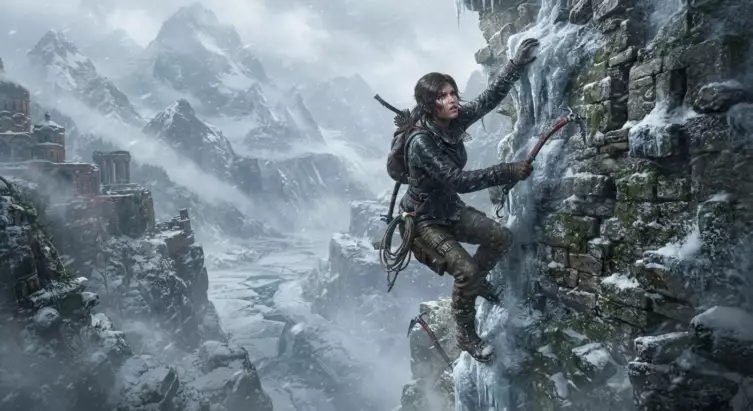
“The case of Rise of the Tomb Raider shows that a timed exclusive does not merely alter a release schedule: it can also permanently change how a franchise and a platform holder are perceived.”
What legacy does it have in 2026?
With the controversy surrounding its launch behind it, Rise of the Tomb Raider is regularly cited as the most balanced entry in the Survivor trilogy. Its blend of exploration, action sequences, stealth and optional tombs remains particularly effective. Visually, some standards have evolved since the Xbox One and PlayStation 4 era. Nevertheless, the lighting, snowy environments, Lara Croft’s animation and the design of its spaces remain highly readable and effective. The game also remains representative of a period when platform holders relied on exclusivity deals negotiated with third-party publishers. It predates the major studio acquisitions that would shape the following decade, while already demonstrating the strategic value of a temporary partnership.Platforms and release timeline
The release of Rise of the Tomb Raider took place in stages. This strategy initially focused attention on the Xbox versions, before gradually expanding the audience to PC and then PlayStation 4.Timeline of key events
- August 2014: Xbox exclusivity announced at Gamescom.
- November 10, 2015: release on Xbox One and Xbox 360.
- January 28, 2016: release on Windows PC.
- October 11, 2016: release on PlayStation 4 with the 20 Year Celebration edition.
Where can you play Rise of the Tomb Raider in 2026?
The game remains accessible on modern platforms through the PC versions and console backward compatibility. Exact performance may nevertheless vary depending on the platform, version used and available settings.| Platform | Status and edition | What to know in 2026 |
|---|---|---|
| Xbox Series X|S | Backward compatibility through the Xbox One version | The game remains playable through backward compatibility. We found no official confirmation of a specific FPS Boost for this entry. |
| PlayStation 5 | Backward compatibility with the PS4 version | The 20 Year Celebration edition is accessible through PS4 backward compatibility on PS5. |
| PC | Steam, Epic Games Store and other compatible storefronts | The PC version offers advanced graphics settings, high resolutions and a frame rate dependent on the system configuration. |
| Xbox One / PS4 | Original versions | The original editions remain playable on their native hardware. |