By NewsRobotique • Analysis as of October 18, 2026
From Berzerk to Modern Warfare 4, machines have changed their appearance, but above all their role. This journey invites us to look beyond the spectacle to understand what games actually simulate when it comes to intelligence and autonomy.
There is something fascinating about bringing the robots of Berzerk closer to the machines announced for Modern Warfare 4. In 1980, a few pixels and an electronic voice were enough to make us recognize a mechanical opponent. In 2026, quadrupeds, drones and groups of machines occupy the battlefield. Forty-six years have passed between the two, and the way we look at these opponents has changed along with them. For NewsRobotique, the interest of this history goes beyond graphical quality. What holds our attention is the place the game gives to the machine: predictable enemy, remotely controlled tool, tactical support, and finally a partner to which a task can be delegated. Each of these representations says something about our relationship with control. We must first separate three histories that intersect without being interchangeable: that of the robots represented on screen, that of the algorithms that animate them, and that of the machines built by roboticists. An armed robot is not necessarily autonomous; a convincing enemy does not necessarily use machine learning. With this distinction in mind, we can trace the thread back to its origins.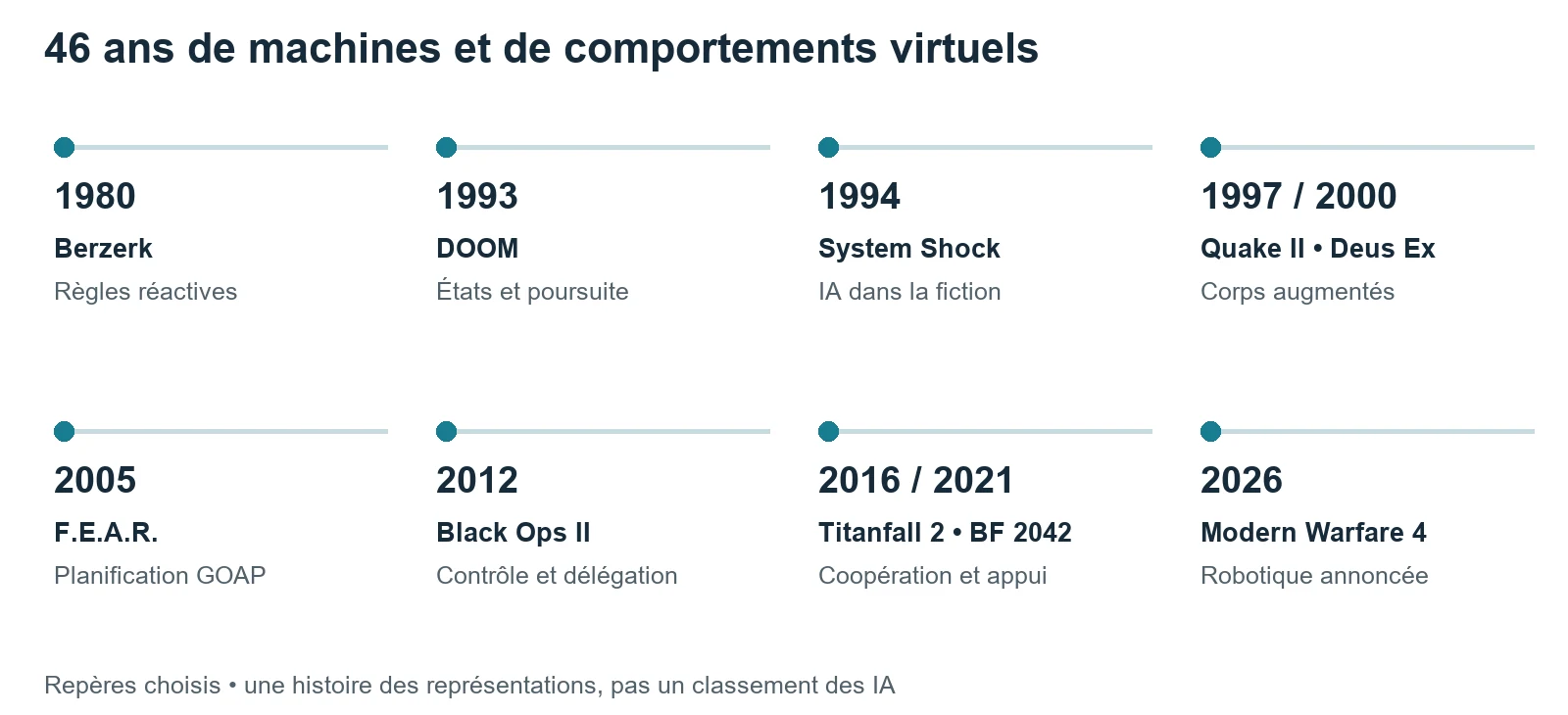
When a Few Rules Were Enough to Bring a Machine to Life
Berzerk, released by Stern Electronics in 1980, does not put us behind the character's eyes. This two-dimensional arcade game is viewed from above: the player moves through mazes populated by robots that move and shoot. It therefore predates modern FPS games—first-person shooters—while offering an illuminating starting point for our subject. [1] Its electronic voices play a decisive role in the impression these machines leave. The robot seems to address us, even though its behavior remains governed by a limited set of instructions. We are already seeing a lasting video game principle at work: a few coherent reactions, combined with effective presentation, can give an automaton a strong sense of presence. DOOM, in 1993, moves this question inside the FPS. Its demons are not robots, but the mechanisms that make them wait, pursue and attack shed light on how a program creates a credible opposition. The source code published by id Software makes it possible to examine target searches, visibility checks and the choice of movement directions. [2] This organization can be understood through the principles of finite-state machines, or FSMs: the agent moves from one situation to another when certain conditions are met. Neither a neural network nor learning is needed for the player to feel pursued. This gap between the simplicity of some mechanisms and the power of the experience is essential to understanding what follows.With SHODAN, the Machine Becomes a Power
System Shock, developed by Looking Glass Technologies in 1994, takes the imagination across another threshold. Aboard Citadel, SHODAN is not merely an enemy encountered around a corridor. She acts through the facilities, security robots and station systems. The technical environment itself becomes a threat. [3] In retrospect, we can see this as an evocation of cyber-physical systems: software connected to equipment capable of acting on a physical environment. This is an interpretive comparison, not a demonstrated technical lineage. The intelligence attributed to SHODAN by the narrative does not describe the actual capabilities of the program running the game, let alone artificial general intelligence. Quake II in 1997, followed by Deus Ex in 2000, extends this question in different ways. The Strogg combine organic and mechanical elements; Deus Ex's security robots and augmented humans blur the boundaries between body, equipment and surveillance. The machine is no longer merely external to humanity: it also transforms what humans can become.Tactical Planning Becomes Visible
In 2005, F.E.A.R. made another advance particularly visible: the way enemy actions are organized. The architecture described by Jeff Orkin relies in particular on GOAP, or goal-oriented action planning. The agent chooses a sequence of actions based on a situation and an objective, rather than relying solely on a succession of transitions written in advance. [4] Repositioning, seeking cover or supporting an ally thus becomes a question of organizing action. This flexibility remains constrained by the possibilities provided by the developers. It implies neither consciousness nor human understanding of combat. But it changes what we feel: the opponent appears to have an intention because its actions form a legible response. This stage interests us precisely for that reason. Perceived intelligence depends as much on the coherence of behaviors as on their complexity. A program can produce a convincing tactical scene without reproducing the decision-making mechanisms of a human.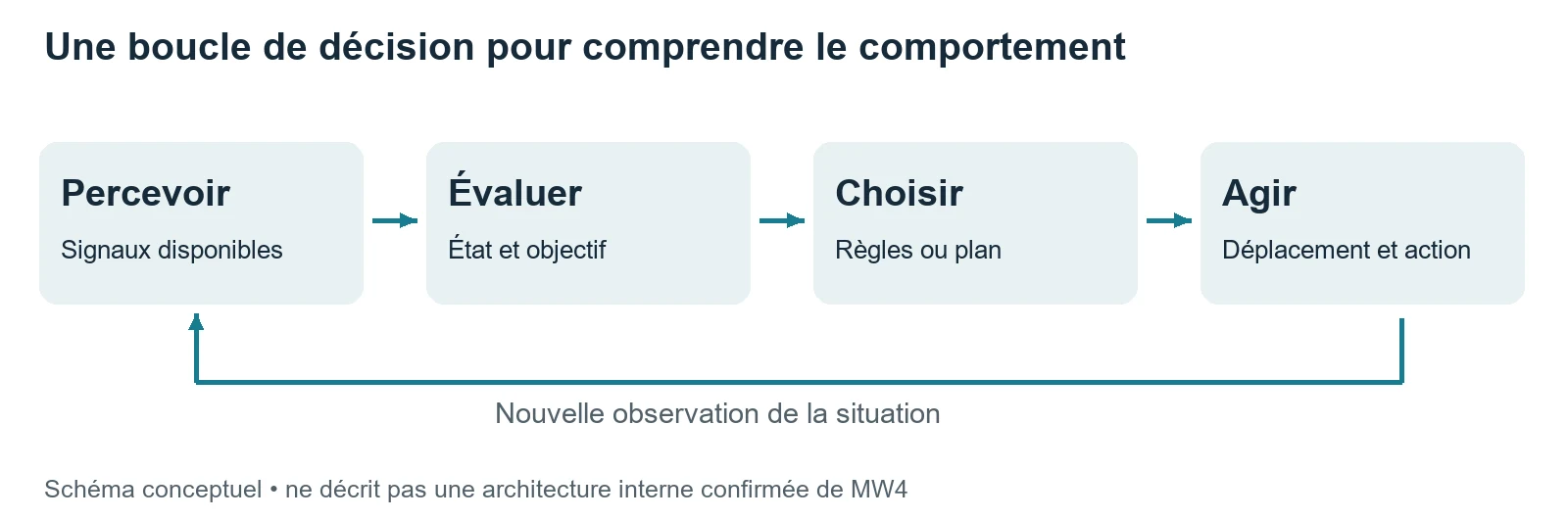
When the Player Takes Control—or Shares It
With Black Ops II in 2012, drones and ground robots take a more direct role in the action. The Dragonfire, a remotely controlled armed quadrotor, extends the player's capabilities: the player pilots another platform and uses its weapons remotely. The AGR, whose name means Autonomous Ground Robot, combines automatic operation with the possibility of direct control. This change is more interesting than a simple diversification of the arsenal. It lets the player experience two relationships with the machine: acting through it or allowing it to handle part of the action. Autonomy no longer appears to be an absolute property. It can apply to one function, at a given moment, within a specific scope. Titanfall 2, in 2016, gives this relationship a narrative dimension through BT-7274. The Titan cooperates with its pilot and participates in decisions within the fiction. What stands out here is the depiction of a partnership: the machine is no longer merely available; it becomes an interlocutor whom the story invites us to trust. Battlefield 2042, released in 2021, offers a figure closer to today's ground robots with Ranger. Electronic Arts presents it as an anti-infantry quadrupedal support unit capable of following the player and receiving several commands. Movement automation coexists with human command. Its performance remains that of a game object; it does not measure the capabilities of a physical platform. [5]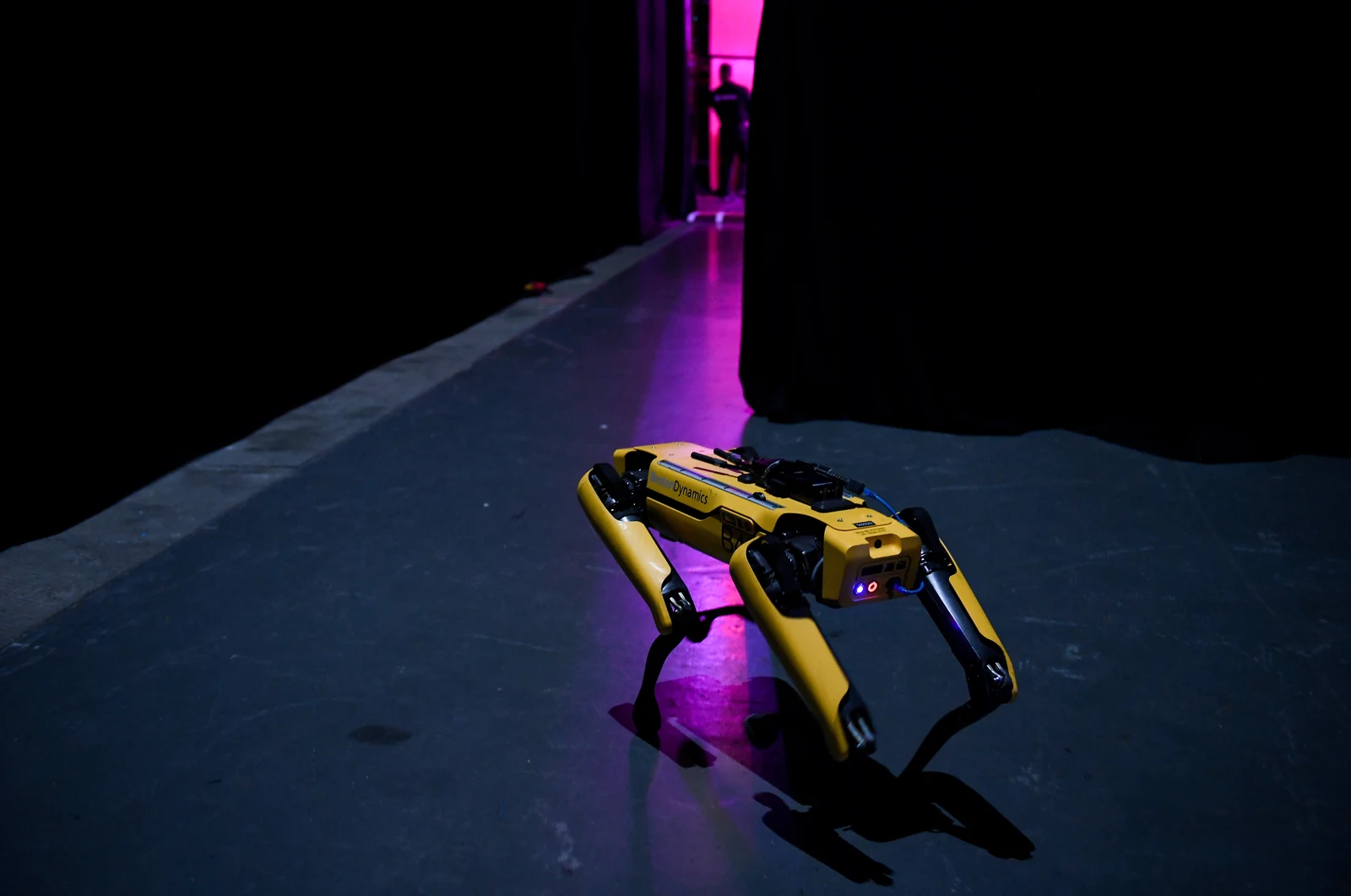
An Onboard Weapon Does Not Tell Us Who Is Deciding
This distinction deserves a brief departure from the screen. Real military platforms already carry machine guns, explosive charges or incendiary devices. Some are remotely controlled. The presence of a weapon therefore does not prove that the machine selects its own targets. The remotely operated ground vehicles reported in Ukraine provide a concrete example. [6] The same reasoning applies to single-use FPV drones, sometimes described as "suicide drones." An operator can guide them to their target: their destruction during the attack does not, by itself, tell us anything about their autonomy. In September 2024, Ukrainian drones carrying thermite-based incendiary charges were also documented. Their payload likewise does not prove autonomous decision-making. [7] To maintain precise terminology, we must distinguish teleoperation, which preserves human control at a distance, from navigation autonomy, which delegates certain movement tasks. Engagement autonomy raises a different question: does the system select and attack targets without further human intervention after activation? This is the function used by the ICRC in its definition of autonomous weapon systems. [8] A machine can therefore move on its own while leaving the decision to use force to a human. Conversely, a fixed weapon can automate engagement without needing to navigate. We gain precision by talking about delegated functions rather than too quickly applying the label "autonomous" to a silhouette.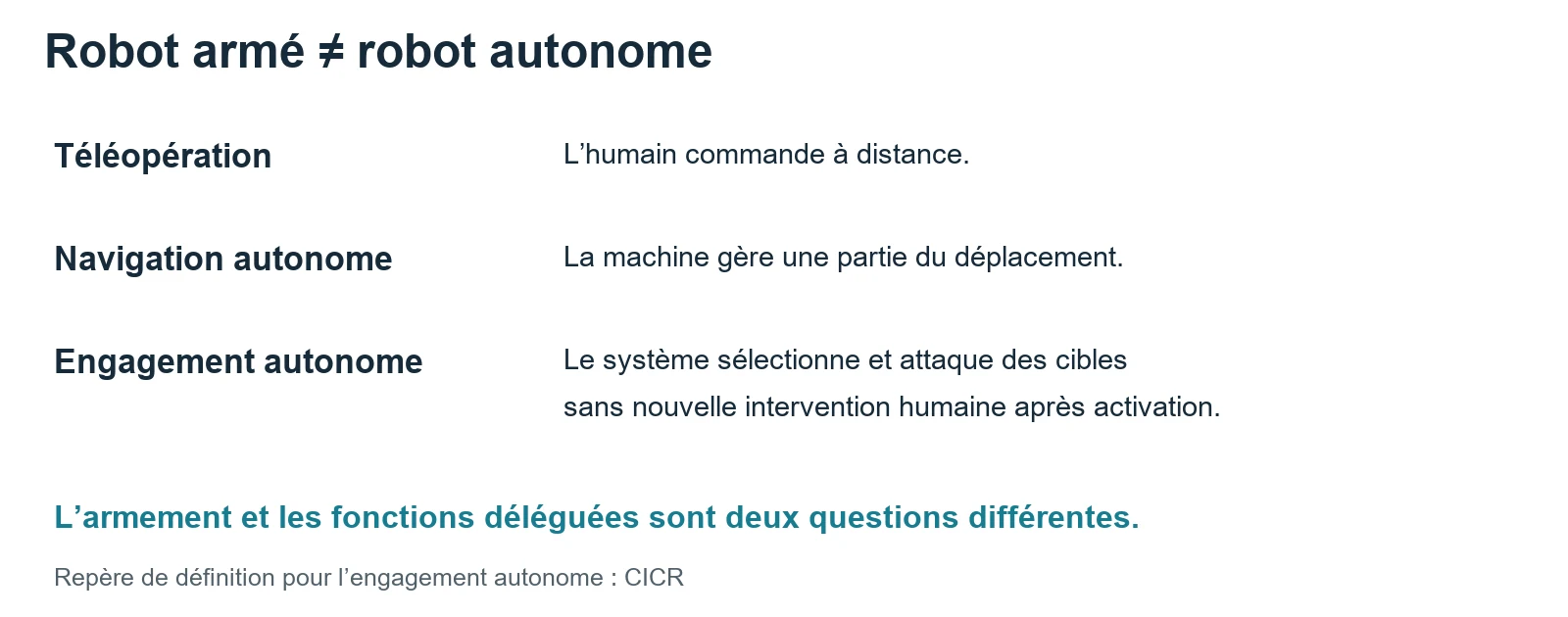
Modern Warfare 4 Brings Together Several Faces of Robotics
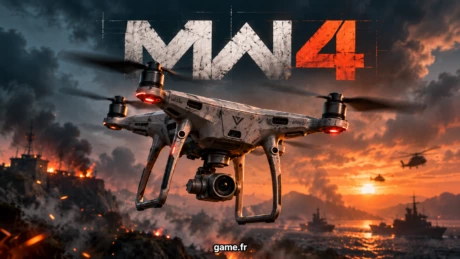
As of this analysis, Modern Warfare 4 is scheduled for general release on October 23, 2026. The official DMZ guide mentions K9 quadrupeds, swarms of combat drones and autonomous drones equipped with a machine gun. They take their place alongside the fighters and vehicles of the world of Hajin. These are the announced capabilities we examine here, without claiming to report on a full review of the game. Our analysis dedicated to the robots, drones and AI of Modern Warfare 4 details how these machines could change gameplay. [9] [10] In this context, the word "autonomous" belongs to the description of the virtual units. On its own, it does not indicate whether the engine uses rules, behavior trees, planning or learning methods. The challenge for us will be to observe what these machines actually do on screen and how they redistribute decisions between player and program.For release information, new features and the DMZ mode, also consult our guide to Call of Duty: Modern Warfare 4.
This brings us back to the thread running through this history. Virtual machines are not merely becoming more numerous or more detailed. They occupy more roles and make the question of control more visible within the game.Behind the Spectacle, Programming at Work
Hardware advances alone are not enough to explain this evolution. State machines organize reactions; behavior trees structure decisions; systems such as GOAP build sequences of actions. Pathfinding, of which A* is a classic example, helps agents move around, while multi-agent architectures organize interactions between several entities. These tools can be combined with simulated physics, procedural animation and virtual perception. They do not constitute a universal recipe: not every FPS uses all these methods, and studios do not systematically publish their architectures. It would therefore be misleading to attribute a specific algorithm to a game based solely on its appearance. The developers' skill also lies in choosing what must be calculated and what can be suggested. Making a coherent decision seem believable during the very short time of a firefight can matter more than simulating every detail of a reasoning process.Reality Resists in Different Ways
A game robot moves through a world whose engine defines the objects, boundaries and physical rules. This does not mean every agent has access to all that information: developers can limit its perception. But the universe remains constructed and controlled by software. A real machine must estimate what surrounds it using cameras, lidars or inertial sensors, then control physical actuators. Measurement noise, available energy, wear, unexpected obstacles and degraded communications are all part of the problem. A beautiful quadruped animation does not solve these difficulties; a group of drones synchronized on screen does not demonstrate distributed coordination.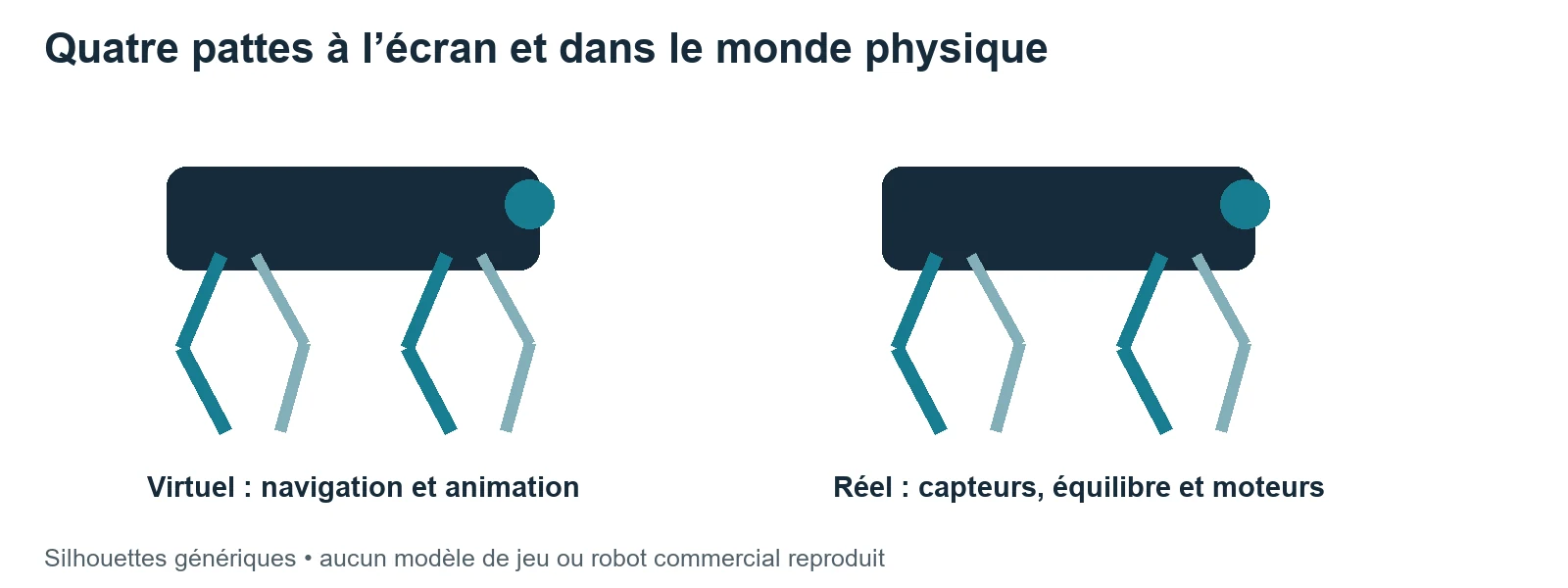
Sources and References
The numbered callouts refer to the references below. The MW4 announcements are distinguished from observations yet to be made. The Reuters reference has been retained from the supplied text; its full content could not be consulted during this edition.[1] Arcade History — Berzerk, historical profile of Stern Electronics' game (1980)
[2] id Software — DOOM, source code for enemy behaviors, p_enemy.c
[3] Nightdive Studios — System Shock, presentation of the remake and overview of the 1994 original
[4] Jeff Orkin — Three States and a Plan: The AI of F.E.A.R., GDC 2006
[5] Electronic Arts — Battlefield Briefing, answers to your questions, how Ranger works
[6] Reuters — Ukrainian brigade pioneers remote controlled ground assaults, January 16, 2025
[7] Le Monde — Ukraine, a dragon drone breathing an incendiary munition, September 6, 2024
[8] ICRC — Frequently asked questions: Autonomous weapon systems, October 8, 2026
[9] Activision — Call of Duty Modern Warfare 4, official page and release date
[10] Call of Duty — DMZ Deep Dive Part 1, Hajin Environments and Threats, October 5, 2026