Aging is not the same as being broken
Game.fr recently raised a similar question when looking back at LEGO Star Wars: The Force Awakens ten years after its release. The game naturally shows its technical age, but that does not mean everything that feels old needs fixing. A mechanic, pace or presentation can be dated while still being perfectly consistent with the experience it creates. It is an important distinction. An unstable frame rate, controls poorly suited to a modern controller or a compatibility issue are technical obstacles. A labyrinthine level structure, pixelated sprites or a slow combat system, meanwhile, can be choices that belong to a game’s identity.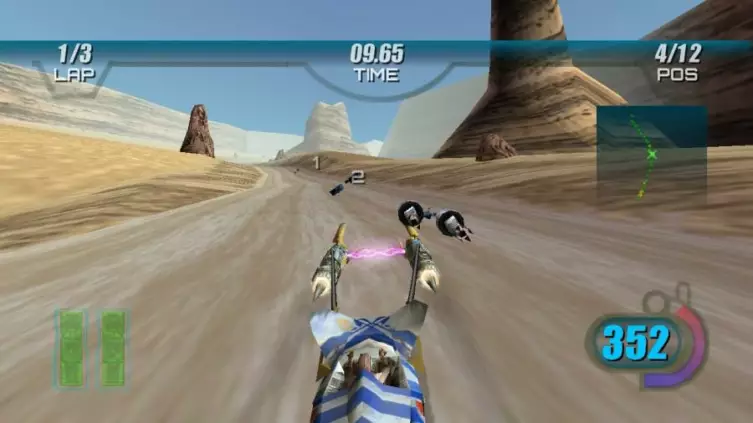
Dark Forces: modernize everything around it without touching the skeleton
Star Wars: Dark Forces Remaster is probably one of the best examples of the other approach. The original 1995 game is still there. The fourteen levels have not been redesigned to look like a modern FPS. The mazes, keys, switches, Imperial corridors and that very 1990s tendency to leave players wondering for several minutes where they are supposed to go are still part of the experience. Nightdive Studios instead modernized what surrounds it: the KEX engine supports up to 4K and 120 frames per second, textures and lighting are improved, modern controllers are properly supported, and a weapon wheel makes weapons easier to use. The studio even had the original source code and deliberately left the level structure almost untouched.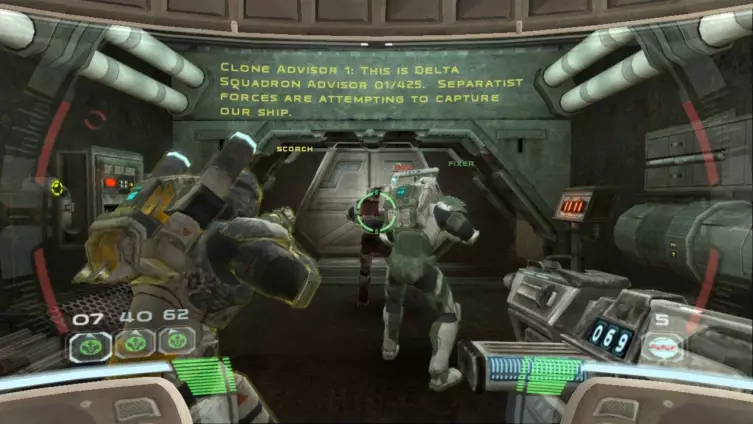
Republic Commando proves a re-release does not need to become an event
At the other end of the spectrum, the modern re-release of Republic Commando is almost surprisingly modest. Aspyr brought the 2005 campaign to Switch and PlayStation with slightly improved graphics and a few adaptations for newer systems. No spectacular rebuild. No new systems designed to convince audiences that Delta Squad has suddenly discovered ray tracing. And, importantly, the original multiplayer was not retained: these modern versions focus on the single-player campaign. Of course, that absence can be regretted. Ideal preservation would keep everything. But this port also demonstrates something valuable: Republic Commando’s core does not need much help. The way Boss commands Fixer, Scorch and Sev remains clear. The helmet-integrated HUD remains one of the smartest of its era. Combat retains that strange feeling of sitting halfway between an FPS and a light tactical game. Its texture is pure 2005. And that is perfectly fine.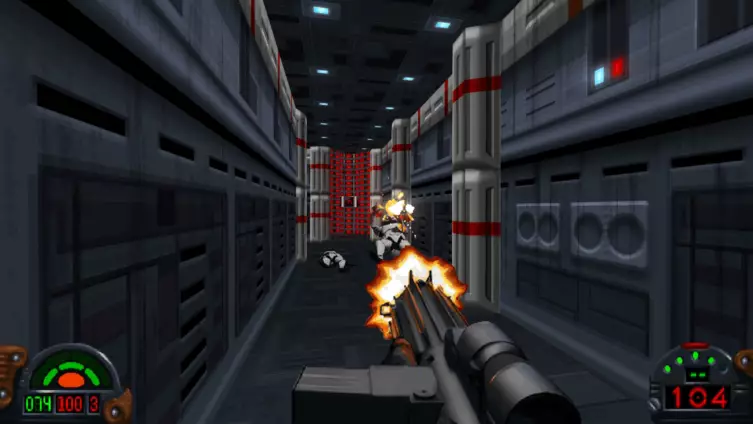
Racer: fix the friction, not the personality
Star Wars Episode I: Racer represents yet another form of preservation. Aspyr’s modern port retains the tracks, racers, progression and the wonderful idea that exceeding 900 km/h between two Tatooine cliffs is a perfectly reasonable sporting activity. But it adds modern control schemes, motion controls on Switch, and retains local split-screen multiplayer. This is exactly the kind of modernization that helps an older game without rewriting what it was. The podracers’ handling does not need to be replaced with a 2026 physics simulation. The tracks do not need to become an open world. You can simply make the game more comfortable on a current controller and accept that it still has the pace, animations and architecture of a 1999 game. That is even part of its charm. An old game is not a draft of a modern game. It is the product of a different era.Jedi Power Battles chose one version of its own past
The return of Jedi Power Battles in 2025 is even more revealing, because Aspyr did not simply restore the first PlayStation version. The studio started with the Dreamcast version’s source code, then reintroduced and mixed in elements from several editions of the game. Jumps are smoother, balancing has been adjusted, characters that were once unlockable are more readily available, and players can choose between certain classic visual elements and versions more faithful to the films. Even the interface can be customized. It is a fascinating decision because it reveals a rarely discussed reality: which original are we actually trying to preserve? Older games often existed in several forms. A PlayStation version could differ from the Dreamcast release. PC could receive other options. Technical limitations could alter the content, controls or even the pacing. Preserving a game therefore sometimes means creating an ideal version from several conflicting memories. In this case, modernization works because it does not try to hide Jedi Power Battles’ age. On the contrary, it celebrates it. The absurd cheat codes are still there. Couch co-op remains central. The action is still deliberately arcade-like. It does not turn the year 2000 into 2025. It simply gives it a better controller.KOTOR hardly needs to be made younger
And then there is Knights of the Old Republic. Aspyr describes the Switch release very plainly as a port of the original game, with only a few hardware-related adjustments. It is not a rebuild or reinterpretation. Its combat systems, menus, animations and RPG structure remain deeply rooted in 2003.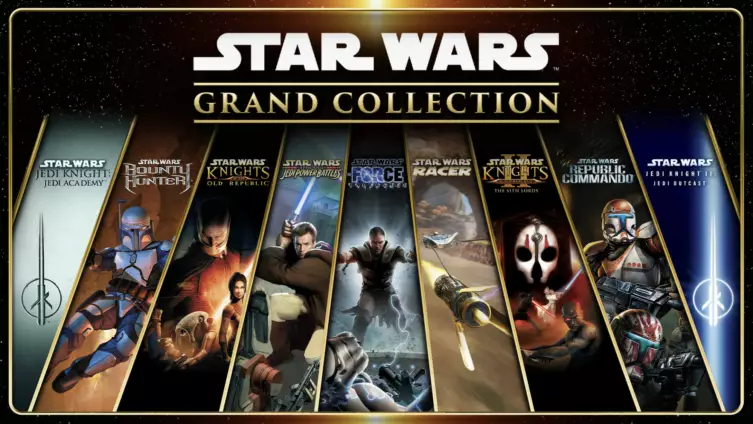
A good restoration should not be ashamed of the past
Game.fr has also recently looked at Halo: Campaign Evolved, which represents almost the other end of the spectrum: a foundational campaign rebuilt with modern technology while seeking to preserve its structure and memory. There is no single right solution. Some games deserve a remake. Others benefit from an ambitious remaster. Some simply need a reliable port, a proper resolution and a control scheme that does not force us to find a 2001 controller in a box in the attic. What matters is understanding what we are trying to preserve. For Dark Forces, it is the architecture and pace of a 1990s FPS. For Republic Commando, it is the relationship between player, squad and HUD. For Racer, it is the absurd, immediate speed. For Jedi Power Battles, it is the arcade joy of a game that never claimed to be subtle. For KOTOR, it is an RPG whose systems tell us as much about its era as its story does. Making them artificially resemble new games would not necessarily make them more alive. Sometimes, a game ages well precisely because we allow it to age. We clean off the dust. We fix what no longer works. But we leave the scratches. Because after twenty or thirty years, they are part of the object too. About the author: Søren Kamper is a writer and editor at Star Wars: Gaming, where he covers the history, design and development of Star Wars video games across more than four decades.For privacy reasons YouTube needs your permission to be loaded. For more details, please see our Annonceurs & Partenariats Gaming sur Game.fr.