Quick answer: The Magnavox Odyssey is generally recognized as the first video game console marketed for home use. It arrived in the United States in 1972, well before the Famicom or PlayStation. This historical first should not be confused with the first programmable cartridge console: the original Odyssey uses circuit cards to select its games, without a microprocessor or software stored on those cards.
Magnavox console timeline
| Console | First launch | Format | Main contribution |
|---|---|---|---|
| Odyssey | 1972 — United States | Home console | Electronic games on a television, without a microprocessor |
| Odyssey 100 and 200 | 1975 — United States | Dedicated home console | Variants with built-in games |
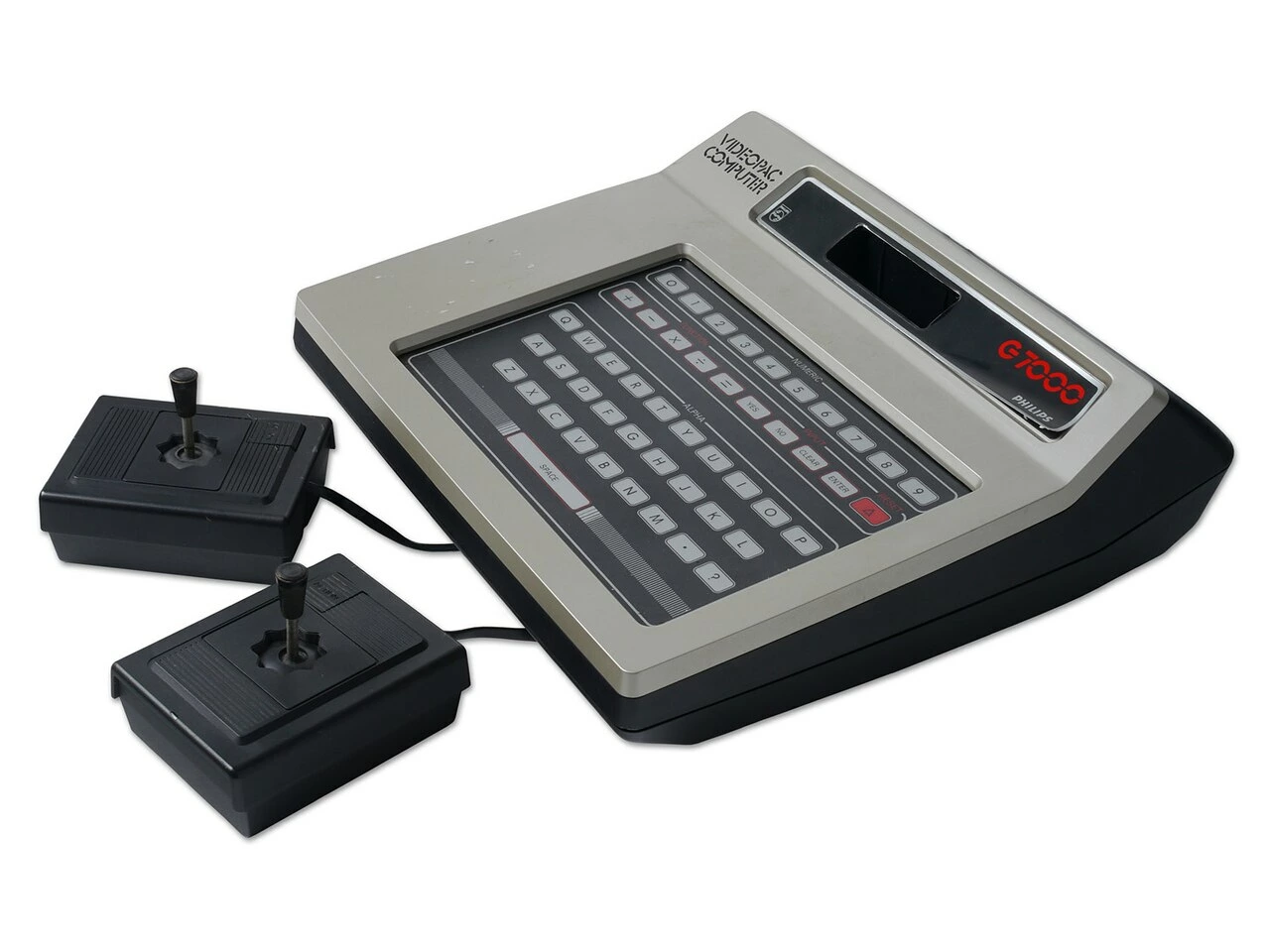
| Odyssey² / Philips Videopac G7000 | 1978 — United States; December 1978 — Europe (first sale), relaunch in 1979 | Home console | Programmable cartridge system with an integrated keyboard |
Brown Box: from prototype to Odyssey
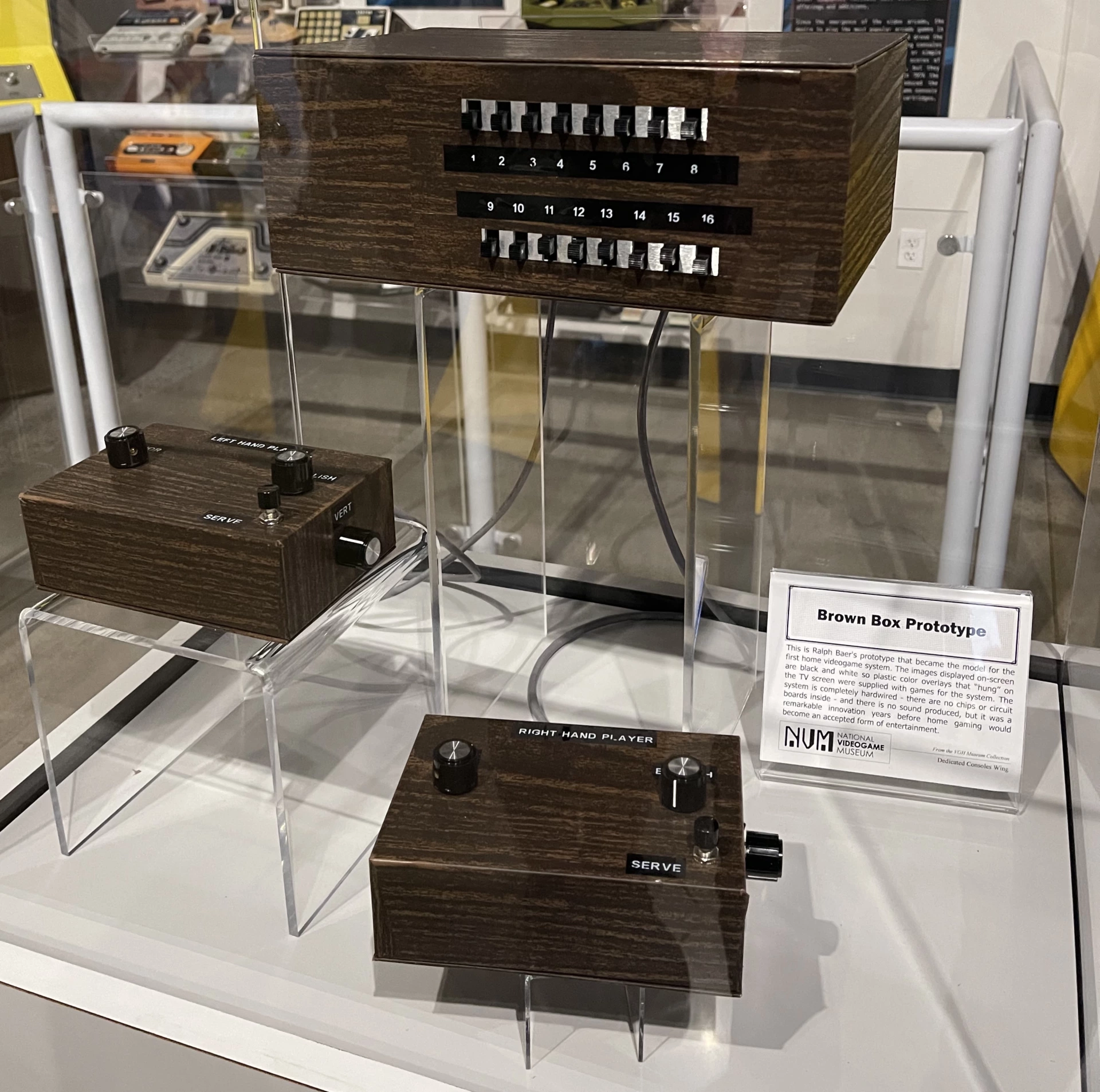
Before the store-bought console came Ralph Baer's experiments at Sanders Associates. Started in 1966, they led, with Bill Harrison and Bill Rusch, to the Brown Box of 1967–1968: a wood-grain-covered box connected to a television and fitted with two controllers. Its switches selected several games, including a ball game. Sanders later licensed the technology to Magnavox, which turned it into the Odyssey. The National Museum of American History preserves Baer's prototypes and documents.
1972: playing on the television
Engineer Ralph Baer imagined a game system that could be connected to a household screen. The version marketed by Magnavox displayed very simple elements; transparent overlays placed on the television provided scenery for certain games. The Computer History Museum notes that this machine runs on dedicated electronics, without a processor or program in the sense used by later consoles. Its importance is therefore historical and conceptual: it brought interactive gaming into the living room.
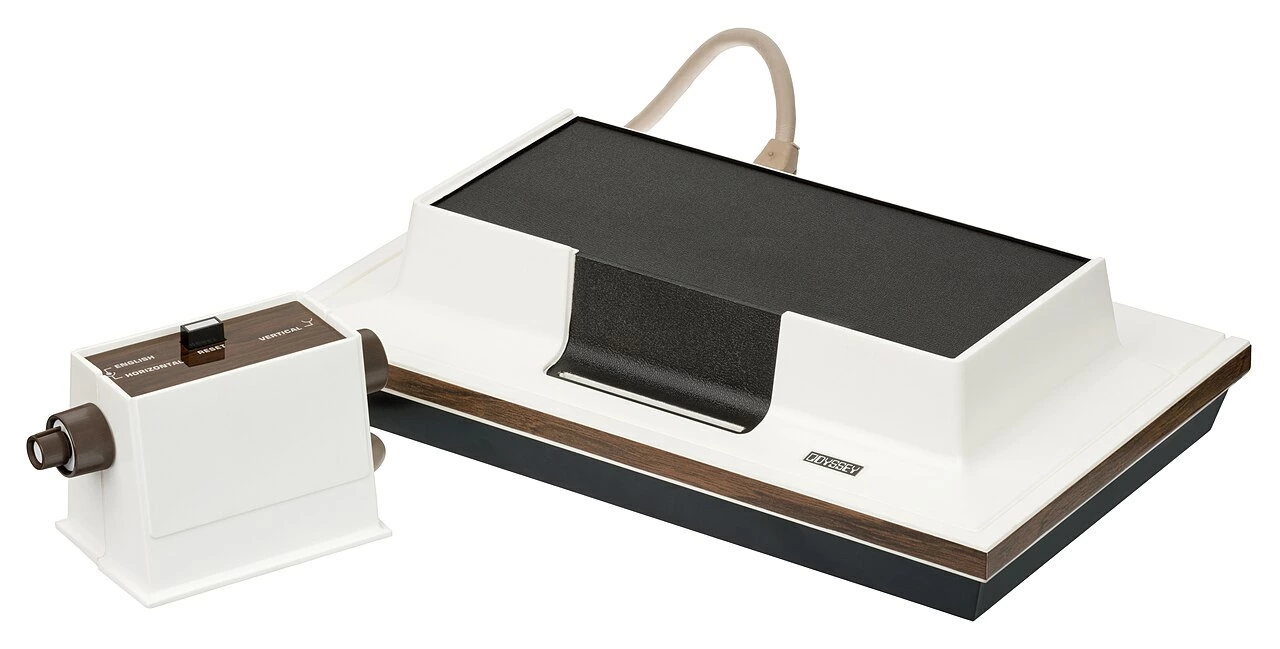
Long before Pong made electronic table tennis popular in arcades, the Odyssey already offered a comparable experience on the family television. Nolan Bushnell attended a 1972 demonstration of its table-tennis game. The National Museum of American History explains that this demonstration helped inspire Atari's Pong; Bushnell's testimony held by the Computer History Museum confirms that recollection.
What did an Odyssey game session look like?
Take the game Tennis described in the 1972 Magnavox manual. Players insert card no. 3 into the console and place a transparent overlay depicting a court on the television. The machine shows a few very simple light shapes; the court scenery comes from the overlay, not the electronics. Each player moves their character with the dials on the controller and tries to return the ball. After each rally, the server calls the score according to tennis rules: the console does not display it.
The game therefore involved the screen, the controllers and the people gathered around the television. This off-screen participation explains the overlays, cards and other accessories in the box. Do not confuse this Tennis with Table Tennis, the basic game in the same manual: it uses card no. 1 and does not require the court overlay.
From dedicated consoles to the ROM-cartridge Odyssey²
Magnavox later used the Odyssey name for several devices with built-in games, including the Odyssey 100 and 200. They are neither reduced versions of the Odyssey² nor consoles sharing one library. The 1978 Odyssey² marked a different approach for Magnavox: games arrived on interchangeable ROM cartridges and a keyboard was built into the machine. The Science Museum Group preserves an example of this second generation.
A first for Magnavox, not for the whole industry: the Fairchild Channel F, marketed in 1976, already used programmed ROM cartridges. The 1972 Odyssey's cards switched circuits; they did not contain a comparable program.
Odyssey² and Videopac: two names, two launch periods
The Odyssey² appeared in the United States in 1978 and was marketed in Europe, notably, as the Philips Videopac G7000. The Centre for Computing History dates its first European commercial sale to December 1978. Jon Shuttleworth, who was involved in the Philips project, recounts that, after roughly 7,500 sales, an electrical-plug issue halted that first distribution; the system was relaunched in 1979. In France, it was also sold as the Philips C52. These regional names refer to the same hardware family, although game catalogues and compatibility require case-by-case checking.
The Magnavox legacy
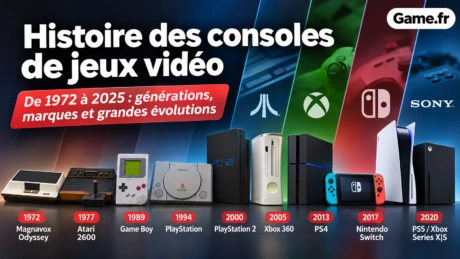
The brand left two major milestones: the Odyssey proved that a television could host interactive gaming, while the Odyssey² later showed the move to interchangeable programs. Atari and other manufacturers expanded the market, but they did not erase this earlier achievement. To read this history alongside other manufacturers, Game.fr's general timeline places Magnavox at the beginning of the 1970s.
What the Odyssey screen did not show
The Odyssey was also played on the living-room table. Its box included score sheets, dice, tokens, play money and cards; some games therefore required players to follow rules and keep score away from the television. The cards inserted into the machine switched circuits: they were not interchangeable software like the Odyssey² cartridges. The Powerhouse Museum collection details these accessories. This distinction explains why calling both machines "cartridge consoles" would hide a real technical break.
Frequently asked questions
What was the first video game console?
The Magnavox Odyssey, marketed in the United States in 1972, is generally recognized as the first commercially marketed home console.
Was the Odyssey² the first ROM-cartridge console?
No. The Fairchild Channel F, marketed in 1976, came first. The Odyssey² marked Magnavox's move to games programmed on cartridges.
Do the Odyssey and Odyssey² use the same games?
No. They use different designs; the original Odyssey's circuit-selection cards should not be confused with Odyssey² cartridges.
Continue reading: browse our list of consoles by release date to place the Magnavox Odyssey among the other machines.
Sources and methodology
Dates refer to the first commercial launch, with region specified. Variants of the same hardware are grouped together; dates may differ by country. Verified: November 11, 2026.
- Computer History Museum — Odyssey, 1972
- Science Museum Group — Magnavox Odyssey 2, 1978
- Computing History — Philips Videopac G7000
- Computer History Museum — Fairchild Channel F and ROM cartridges, 1976
- Jon Shuttleworth interview — first European Videopac launch
- Powerhouse Museum — Odyssey box and accessories
- National Museum of American History — Odyssey and the origins of Pong
- Computer History Museum — Nolan Bushnell testimony on Odyssey and Pong
- Magnavox — original 1972 Odyssey manual (Tennis and Table Tennis rules)
- National Museum of American History — Ralph Baer prototypes and the Brown Box