Monster Hunter Wilds – the hunt that changes everything
Prologue — The night of the first monster
There is a moment, just before the game truly begins, when everything freezes.
The real world slowly fades away, swallowed by the bluish glow of the screen. Your eyes cling to it like a flame in the dark. Silence settles around you, thick and almost alive. Even the ticking clock seems to drift away, as though time refuses to enter the place you are about to visit.
On the screen, a forest stretches beneath Monster Hunter Wilds' digital moon. The trees move in an almost overly realistic way: their leaves tremble in a breeze your headset makes tangible. You could swear you feel moisture on your skin and hear a distant branch snap. Every shadow has an intention; every corner seems to wait for you to venture into it.
You are alone. Almost.
One hand grips the mouse while the other rests on the keyboard. You know these movements. They have accompanied you through dozens of worlds and hundreds of hours. And yet tonight, something is different. Something crawls up your back, a small inner voice whispering: you do not know this monster yet.
You breathe in. The air is dry. The sound of your breathing merges with that of your character. At this precise moment, you are no longer a player. You are a hunter.
Or perhaps prey.
The wind rises across the map. Tall grass bends in a dark green wave. A cry tears through the night—deep, distorted and distant, but enough to make your heart skip a beat. You have not seen anything yet, but you know it is there. Somewhere. Looking for you, perhaps already sensing you.
You move forward slowly, like someone walking through a nightmare they do not want to wake from too soon. Your boots sink into digital mud. The fireflies around you go out one by one, as though fleeing. You listen. Nothing. Then a breath. No, a growl. Heavy. Wet. Close.
And then everything changes.
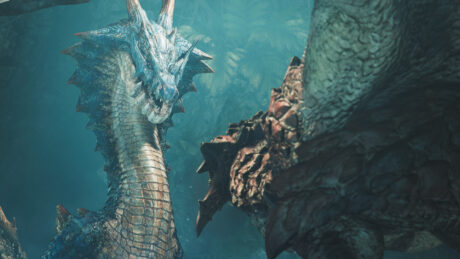
A beat of wings—or perhaps an earthquake—and the forest erupts in sound: trees bend, leaves fly, and the beast bursts out in a shower of sparks and earth. Your screen shakes. So does your heart.
This is the first monster.
And in that suspended second, you understand what King might call the real thrill: the one that does not come from the game, but from what it awakens in you.
Primitive fear.
The hunter's fascination.
The call of the night.
Why Monster Hunter Wilds rules in 2025
The numbers spoke first, like a clap of thunder: more than one million hunters connected on launch night, a digital forest teeming with souls, cries and clicks synchronized across the world. Monster Hunter Wilds did not merely smash Steam records—it fractured the wall between reality and fiction. For a moment, we wondered whether the servers would hold. They did. But somewhere, something gave way in the minds of players.
Because in 2025, Wilds is no longer just a game. It is a collective experience, a shared dream in the open air.
The monster's roar no longer belongs only to your headset: it travels through the wires, slips into living rooms and makes keyboards vibrate. People often say that a good game makes you forget the world; this one devours it gently, like a patient predator.
What stands out is not just the visual beauty—it is the breathing. Forests seem to breathe. Mountains seem to wait. Even the monsters appear to recognize you, as if they remembered you from a previous hunt. The Source 2 engine does more than calculate: it listens. It observes your rhythm, your fear and your hesitation before you strike. Every fight becomes personal, almost intimate, like an ancient duel replayed in the cold light of your screen.
Veterans talk about adrenaline. Newcomers talk about addiction. But it is something else.
It is a strange, visceral tension—the moment you hear something in the tall grass and your heart tightens, even though you know it is only a game.
This is not a simple pastime. It is a nocturnal ritual shared by millions.
A parallel world where a monster's breath is worth more than a heartbeat, where every roar reminds you why you play and why you keep coming back.
And when dawn rises outside and the screen finally goes dark, the silence remains. A strange, almost painful emptiness, as if the Wilds forest continued breathing somewhere without you.
The invisible engine: gameplay and technical innovations
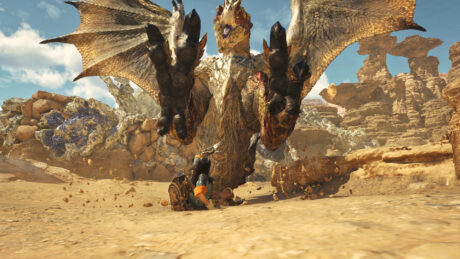
Monster Hunter Wilds' engine is often described as a feat, a jewel of engineering.
But that would be reductive. This engine does not merely run: it breathes, thinks and learns.
It is a silent entity hiding behind every texture, wingbeat and moving shadow on the ground. You never see it, but you feel it at work—a presence that cannot be named, yet regulates everything with frightening precision.
A few figures help measure it:
- The engine calculates more than 200 million collisions per second to ensure that every dodge, charge and jump is perfect.
- Each monster has more than 500 distinct animations, all synchronized to the sub-tick, making the beast seem almost conscious of your movements.
- Weather and environmental effects are updated every 0.016 seconds, the speed of one frame at 60 FPS, ensuring that the ground, wind and rain react to your presence in real time.
When the monster appears, everything becomes clear. The animations blend with fluidity bordering on reality. Textures stretch, get dirty and tear with an almost unsettling naturalness. You strike, dodge and breathe, and the entire universe seems to follow your rhythm—as if an invisible thread connected you to the game.
Maps, monsters and the skin market (expanded version)
Monster Hunter Wilds' maps are not mere scenery. They are worlds. Breathing spaces trapped in code, landscapes that seem to watch you as you cross them.
And behind the skin market lies an unexpected economy:
- The average price of a rare skin reaches €15 to €25, but some limited armor sets sell for more than €100.
- More than 250 exclusive skins have launched since 2023, each telling its own story of hunting and glory.
- The market generates more than 50,000 daily transactions, giving customization a social and competitive dimension.
Each acquisition is more than an item: it is a fragment of legend, a piece of glory torn from the beast. Behind every figure is a story, a player and a night spent running through digital forests, mountains and marshes.
Engineers call it Source 2. But for those who have hunted through entire nights, it is something else. It is the beating heart of the world.
Every hunter's step, every precisely timed dodge and every monster bite is recorded down to the sub-tick—fractions of a second in which everything can turn between victory and death. You could almost swear the engine is listening to you.
It waits for your slightest mistake so it can punish you and force you to relearn and adapt. It does not want to see you win too quickly. It wants you to earn your survival. Watch a fight closely: there is no randomness. The ground reacts to your weight, mud holds your step and rain puts out your torch. The wind works against you as often as it saves you.
They call it physics. No—it is theater. A cruel choreography in which the machine knows its lines by heart while you improvise on instinct.
When the monster appears, everything becomes clear. The animations blend with fluidity bordering on reality. Textures stretch, get dirty and tear with an almost unsettling naturalness. You strike, dodge and breathe, and the entire universe seems to follow your rhythm—as if an invisible thread connected you to the game.
That is Wilds. Not simple code, but an organism. A digital beast that slowly and politely devours you until you no longer know where the game ends and your fear begins.
And when you finally cut the connection, you could swear you still hear the engine running somewhere behind your screen.
Calm. Patient. As if it were waiting for you.
Anatomy of a round: movement, strategy and psychology
A hunt in Monster Hunter Wilds is not a simple fight. It is a three-act play, an ancient dance in which every misstep is paid for in blood and silence.
The round begins before you even raise your weapon. It begins in the waiting, in that suspended second when you observe the monster: its breathing, how it shifts its weight and the tension in its muscles. You are not playing yet. You are watching. Listening. Learning.
The first movement always belongs to the terrain. You move across a living stage: every stone, trunk and glimmer of light becomes an ally or a threat. The ground is not neutral here—it conspires and tests your confidence.
You know the theory: angle, distance and cover. But when the monster spots you, it all collapses. There are no rules anymore. Only raw instinct.
The confrontation is the second act.You see it move, immense and silent, its eyes fixed on you like two shards of moonlight. You raise your weapon. The air grows heavy. Then everything speeds up: a roar, a gust, dust rising—and you, a tiny silhouette lost in the chaos. You strike, dodge and hide.
Your fingers tremble and your breathing falls into the beast's rhythm. It is a trance, a dance of death between two creatures measuring, judging and wounding each other. You are no longer sure which one is hunting the other.
Then comes the conclusion, often brief and never peaceful. The monster collapses in a crash of stone and flesh. The world falls silent. You remain there, motionless, staring at the gigantic body as it slowly disappears into the game's mist. You should be happy—but instead there is a strange feeling, an emptiness in your stomach.
The hunt is over. But you know it will begin again. Because the real trap of Monster Hunter Wilds is not the monster you face.It is the visceral need to return.
To feel that pure fear again, that mixture of control and chaos, that perfect illusion that you hold your fate in your hands—when in reality, the game holds you.
Pro settings: actionable 2Settings025
Before the hunt comes the ritual. Those who think everything begins with the first swing of the blade are mistaken.
True hunters know victory is decided long before the fight—in preparation, in those precise mechanical gestures repeated every night like a prayer. You do not simply sit in front of your screen.
You gear up. You build an altar.
Audio
Sound is your sixth sense.
Your headset must be just right—not too heavy, not too perfect. It should make you forget it exists until the slightest rustle in the jungle makes you turn your head.
Look for rumbling bass, breathing mids and highs that cut through the air like claws.
When you hear the wind change direction, you will know the creature is moving. And if you hear its breathing before it sees you… you have already won.
Network & performance
Nothing is crueler than lagging when the beast leaps. Ping is your pulse. If it rises, you die.
So you check. You clean up. You close anything that could slow your world down. A hunter does not fight the network—they tame it.
Your goal: 144 frames per second. Not one less. The flow must be pure and seamless, like a river without stones. Fluidity is the modern hunter's faith.
Controls & sensitivity
Every weapon has its own soul. Too fast and you lose precision. Too slow and you lose your life. Adjust your sensitivity as you sharpen a blade: slowly and patiently, until your cursor becomes an extension of your instinct. Your shortcuts are not keys—they are reflexes. They must respond before your brain even gives the order.
When your finger moves, the world obeys. That is when you know you are ready. You turn off the light. You breathe one last time. The fan becomes the whisper of wind through the branches. You are alone, connected to thousands of others, each in their own night, each prepared by the same ritual. And somewhere in the world's servers, a monster opens its eyes.
Maps, monsters and the skin market
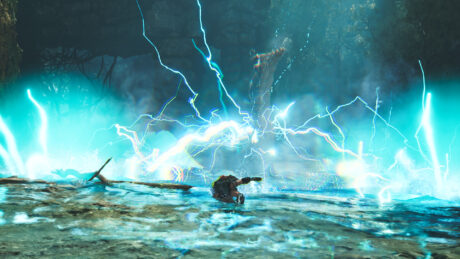
Monster Hunter Wilds' maps are not mere scenery. They are worlds. Breathing spaces trapped in code, landscapes that seem to watch you as you cross them. Some say that after dozens of hours, they can feel the temperature change as a storm approaches or sense a monster's presence simply from the way the wind whistles through the trees.
Maybe it is true. Maybe the game learns too. The forest, for example. It does not merely remain green and alive—it listens. Leaves tremble as you pass, shadows stretch like fingers ready to seize you.
You think you know the terrain until twilight begins to move differently, until silence changes texture. That is where fear settles in. That is where Wilds reminds you that you are the intruder here.
Farther on are the mountains. They forgive nothing. The wind howls there like a wounded beast, and snow swallows your tracks before you even have time to look behind you. There you learn humility, the cold truth that you are never truly the hunter. You are merely an armed visitor, tolerated by a world older than you. And then there is the skin market, that strange modern fair where identities rather than weapons are exchanged.
Armor no longer protects only the body; it protects the ego. Every skin tells a story: a won fight, a felled beast, a night that lasted too long. Some players collect them like holy relics, others like scars they refuse to forget. You meet one in the central hub—red-scaled armor with tarnished gold reflections—and you know at a glance that its wearer has survived things you have not even seen yet.
The market is alive. Prices rise and fall like the tide, but behind the numbers lies something else: a fever. An obsession. The idea that by buying a rare skin, you claim a fragment of the myth, a piece of glory torn from the monster's jaws.
It is false, of course.But it works.
And with every trade and every new acquisition, the legend of Monster Hunter Wilds grows—a little more, perhaps a little too much. Because here, everything can be bought except fear. And perhaps that is what makes it feel so real.
Checklists for every level
There is no shortcut to mastery. Only nights, defeats and the slow transformation every hunter eventually undergoes.
Monster Hunter Wilds does not teach you to win; it teaches you to endure. Every level of play is a molt—a skin left behind, a piece of humanity abandoned to the digital forest.
Beginner
It all begins with confusion. You learn to strike, run and survive. You think you are ready, but you are not.
The world is vast, indifferent and cruel.
Monsters pulverize you effortlessly, and the map seems endless.But this is where everything begins: in the pain of learning. Choose one weapon. Just one.
Learn it until it becomes your shadow. Observe two or three creatures—no more—and work out their rhythms, habits and quirks. Do not seek victory; seek understanding. Beginners who want to win die quickly. Those who want to understand become hunters.
Intermediate
This is the most deceptive phase. You think you know. You think you are in control. Yet the smallest mistake sends you back into the dust. The intermediate hunter discovers that mastery lies not in reflexes, but in routine.
You learn to prepare your equipment without thinking, to manage your inventory like arranging a family heirloom. Every potion and trap becomes a beat of the same heart. You study maps, winds and ambush zones.
You no longer hunt by instinct, but by strategy. And when the creature appears, you no longer panic: you welcome chaos calmly, almost tenderly. You are still human, but something else is beginning to emerge—a sense of danger, a peace within fear.
Competitive
There is no randomness at this level.Only precision. The competitive hunter no longer plays: they see. They read patterns like a secret language and dissect fights frame by frame, searching every dodge for a clue, a weakness or a sign of vulnerability.
Every victory becomes a study, every defeat a ritual of improvement. You analyze videos, movements and timings. You no longer hear the game's music—only the tempo of footsteps, the dry sound of a missed attack and the monster's breathing before it strikes.
You communicate with your team through fragments, gestures and intuition. Words become unnecessary. The hunt becomes pure. And at the end of the road, there is silence.
The silence that follows great victories, when the screen darkens and your reflection stares back from the black glass. You no longer know exactly when you stopped being a player. But you feel that something inside you has changed. That the beast you hunted left part of itself behind.
And now you carry it within you.
Epilogue — Why you need to play the next night
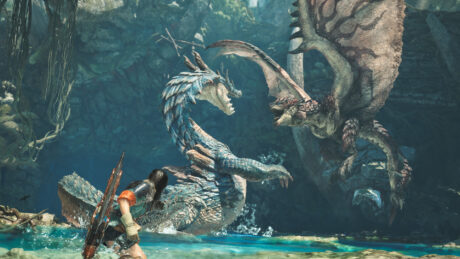
It is late. Too late, perhaps. The real world is asleep, swallowed by silence. Your screen continues to glow in the darkness—that cold halo keeping you awake long after everything else has gone dark.
You could close the game, turn off the machine and return to bed. But you do not. Because something over there is calling you. It is barely perceptible: a breath, a muffled growl somewhere deep in the map. You recognize it. It is the sound of the next monster. The one you have not seen yet. The one waiting for you. Every player will tell you: there is always another hunt.
Always a larger, cleverer and older beast. But it is not the promise of victory that brings you back—it is the call of the emptiness between two fights, that brief moment when your mind floats between fear and fascination. That is where Monster Hunter Wilds slips in. And it never lets go. You feel that familiar shiver, that mixture of exhaustion and pure excitement. The click of the "Join Session" button echoes like an incantation. You dive back in without even thinking.
The forest welcomes you again. Shadows move. Foliage whispers your name. It is not a game. Not really. It is a nocturnal ritual shared by thousands of other silhouettes behind screens like yours.
You cannot see one another, but you are there together, at the same hour and in the same night, hunting the same thing: the feeling of being alive, breathing harder and defying the impossible. And when the first roar tears through the virtual sky, you smile. Because you know everything is beginning again. You have returned to where you belong. Where monsters rule. Where your heart beats in time with the beast.
So you tighten your headset and adjust your hand on the mouse. The outside world can sleep. You still have a night to live.
And it will show no mercy.