
Introduction
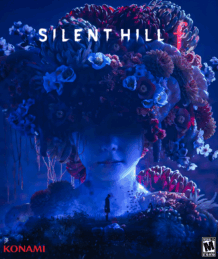
Silent Hill f is not a game that screams. It whispers. It slips through the fog, creeps into the corridors of your mind, and turns fear into something tangible, almost tactile. Every sound, every object, every reflection in stagnant water becomes a sign that something deeper and older is lurking nearby. The game explores the vulnerability of a young Japanese heroine in the 1960s, facing a rural town that, like a shadow, holds on to its secrets and twists them into obsession.
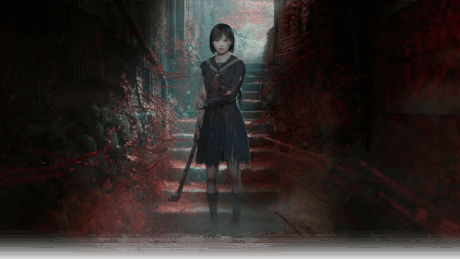
Background & official announcement of Silent Hill f
The announcement of Silent Hill f was no fanfare. It felt more like a letter slipped under the door: restrained, dense, and heavy with an implication that takes your breath away. Konami released a succession of teasers, trailers with slow cuts, and images in which the camera seems to hesitate before the evidence of evil, like a child standing in front of a locked cellar. Official statements stressed a return to psychological horror, rooted in rural Japan in the 1960s. The period may seem distant, but its setting reveals violence and social codes with powerful consequences.
The marketing campaign relied on suggestion. There were few concrete details and plenty of atmosphere: unnerving music, shots of objects — a uniform, a photograph, a doll — and the promise of a story centered on Hinako Shimizu, a young heroine whose vulnerability becomes the lens for a much larger tale. The approach worked: the community began forming theories, searching every frame for clues, and speculating about connections to the original universe. Beneath those discussions lies a clear strategy: let fear spread first through rumor, like an infection.
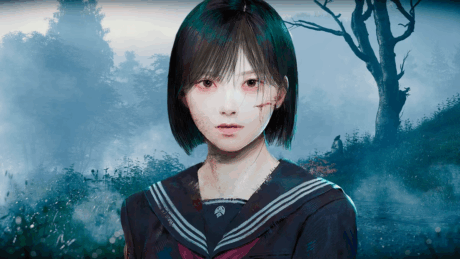
A look back at the series: Silent Hill, the horror that whispers
Silent Hill has never been a series built on loud effects. Its strength lies in the small unsettling detail, the ordinary object that suddenly seems to speak. Since the first game, the franchise has explored the relationship between personal guilt and a nightmarish landscape: streets warp around sins, mental constructs become architecture, and monsters are rough translations of human wounds. In that light, every new entry faces two demands: offer a new setting while remaining true to what players expect — ambiguity, symbolism, and a deliberate pace.
Silent Hill f shifts both place and time: the series leaves fogbound American towns for the Japanese countryside of the 1960s. This is more than a change in appearance; it changes the world of associations the game draws on. The cultural touchstones and taboos are different, but the ambition is the same: to turn the private into something universal. Where a Western protagonist might be haunted by guilt, a Japanese teenage girl in the 1960s carries, alongside her trauma, the weight of a society with suffocating rules.
Setting, period and atmosphere — the bleeding red flower
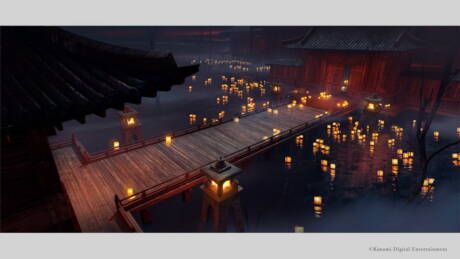
Ebisugaoka may be only a name on a map, yet it has a presence of its own. You feel it in the texture of the walls, the misted shop windows, and the way rain makes a gutter sing like an old lament. The game takes almost surgical care in rendering physical textures: fabric, wood, peeling paint, and above all the fog — a literal substance that clings to stairwells and knees. The 1960s bring details that are more than decoration: school uniforms, parental authority, and local religious rituals. Each plays a part in the story and becomes a clue for the player.
The game's visual storytelling favors contrasts: the seeming gentleness of farmland against the brooding presence of mutilated figures; the harsh light of a classroom revealing scrawled messages against the gloom of a house where memory refuses to speak. That contrast is key. It suggests that the real enemy is not the thing that has changed, but the everyday world that has managed to keep its secret.
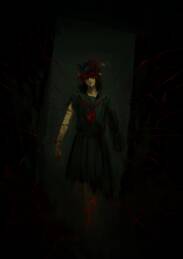
Lore analysis and the organic threat
The monsters in Silent Hill f do not come out of nowhere; they grow from stifled speech, everyday humiliation, and shame made physical. Their anatomy suggests metaphors: disproportionate limbs evoke alienation from the body, while partly erased faces point to truths that have been denied. Their design works like a grammar of fear. To read the game is to learn that grammar. Every confrontation then becomes a lesson in how a society creates its own nightmares.
The scattered clues — scribbled notes, cropped photographs, recordings — invite players to piece together layers of the past. We uncover old events, family rumors, and unspoken pacts. As we play, the feeling changes: the test is no longer simply how well we explore a world, but how willing we are to accept the truth. And that test follows a simple, merciless rule: the more we understand, the more precise the pain becomes.
Comparison with earlier entries
Putting Silent Hill f alongside Silent Hill 2, for example, reveals a constant: an obsession with psychological detail. SH2 built its story around guilt and desire; SHF chooses to explore collective shame and institutional silence. The gameplay remains familiar, though its elements are rearranged: slow exploration, an emphasis on atmosphere, and rewards for players who pay attention to their surroundings all recall the series at its best. Where some entries favored action, SHF opts for reflection, sometimes at the cost of a slower pace.
Fans will also notice the technical changes: an intentionally subtler artistic direction, light and sound postproduction used to create dread, and camera choices reminiscent of art house cinema. Purists will welcome them; impatient players may find the tempo frustrating. Yet this is exactly what the series does best: it asks players to be bold.
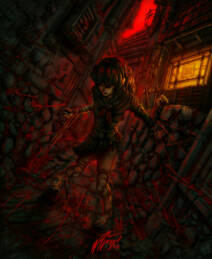
Japanese influences and narrative writing
The Japanese setting is not cosmetic. It shapes how pain is portrayed: instead of an explosive confession, shame is woven into tiny rituals — averted eyes, polite gestures that become chains, school rules that demand silence. The writing makes careful use of what goes unsaid, and the game in turn becomes a wordless novel: you gather the pages, reconstruct the text, and when its meaning finally comes into focus, it hits like a door slammed in your face.
The dialogue is often brief and measured; the silences carry the weight. The developers make use of fixed shots, audible breathing, spare soundscapes, and music used sparingly. Where a melodramatic flourish might have offered relief, the absence of music heightens the anxiety. The dramatic strategy works because it forces players to fill the gaps. And when the mind fills them, it often gets things wrong — precisely the misstep that creates fear.
Gameplay, length and replay value
Silent Hill f combines narrative exploration, puzzles rooted in the setting, and tense encounters. The game favors caution over aggression. Combat is not staged as spectacle; it arrives in violent intervals that deepen our understanding of the protagonist's predicament. Some puzzles require cultural interpretation — of symbols, rites, and references to local practices — making their solutions all the more satisfying when they become clear.
Replay value centers on branching storylines: moral choices, hidden documents to find, and multiple endings. Each new playthrough offers a different view of the same events: one detail, seen in a new light, can change the meaning of an entire passage. For patient players, the game gradually opens up, rewarding curiosity with carefully paced revelations.
Behind the scenes: voices and soundtrack
Accounts from the voice acting teams and composers describe an intense process: some sessions were emotionally demanding for the performers. The often understated soundtrack serves as an instrument of tension — distant industrial noises, metallic rattles, and traditional instruments stretched into unsettling sounds. Suggestion takes precedence over a grand orchestra, and you can feel that choice in every scene: the music does not tell us what to think; it gives the scene a texture.
Critical reception & controversies
On release, Silent Hill f prompted two kinds of response: admiration for its writing and criticism of some technical optimization choices. Reviews praised its thematic depth and artistic direction, while some community members reported performance problems on certain PC setups. Its handling of sensitive subjects — violence, sexuality, and trauma — also sparked debates about the game's choices and sensitivity. Those are legitimate debates, and they show that the work can stir strong feelings.
These controversies deserve an honest response: a game that enters contentious territory must accept public debate. The creators, for their part, have emphasized their artistic intent and their wish to provoke reflection rather than shock for its own sake.
Conclusion: what legacy will it leave the franchise?
Silent Hill f is a bold attempt to redefine fear through the lens of a particular era and culture. It reconnects with the heart of the series: horror rooted in the social psyche. The game offers no instant blockbuster thrills; it asks for time and a willingness to let its atmosphere seep in. Those who give themselves over to it will find a dense, unsettling, lasting experience — a fear that clings to the flesh and refuses to leave easily.
To sum it up in a sentence: Silent Hill f does not scream. It whispers, then it roars. And sometimes — rarely, but often enough to leave a mark — it is terrifyingly beautiful.
Share your experience
Tell us how you felt: which scene stayed with you most? Which theory is still on your mind? Leave a comment or join our discussion on Discord. The best contributions will be republished in a community feature.
Official videos & images (links)
Silent Hill feature — Recommended internal links
Did you survive the read?
Share your favorite Silent Hill f scene in the comments or join our Discord discussion for a community feature.
Join the Discord
Further reading: Pragmata (2026): our review, score and everything you need to know about Capcom's game