Ten years. Ten long years have passed since Pokémon Sun and Moon landed on our Nintendo 3DS systems, inviting us to trade traditional Gyms for the island trials of Alola. At the time, the excitement was palpable: a new region, new creatures, and a formula that promised to reinvent itself. But in 2026, with newer generations under our belts and the series constantly evolving, one question keeps coming up: is it still worth venturing into the Alola archipelago? We brought out our cartridges for a nostalgic, but also critical, journey to see whether the sun of this seventh generation still shines as brightly.
Verified facts
- European release: November 23, 2016.
- Platform: Nintendo 3DS.
- Developer: Game Freak.
- Publisher: Nintendo.
- Average main quest length: approximately 30 to 35 hours for a standard player.
- Major new features at launch: island trials, Z-Moves, Poké Ride Pokémon, Alolan Forms, and Ultra Beasts.
The Alola Archipelago: A Breath of Fresh Air... and Some Constraints
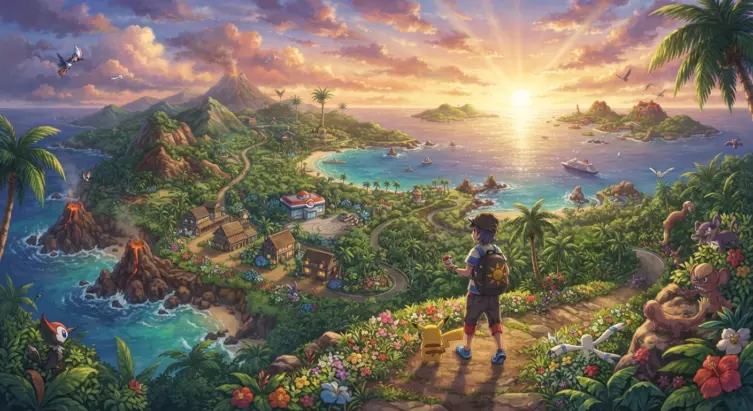
From the very first minutes, Alola won us over with its unique atmosphere. Inspired by Hawaii, this region offers varied and colorful landscapes, far removed from the well-trodden paths of previous generations. The Pokémon designs, with their Alolan Forms and the introduction of Ultra Beasts, brought an undeniable breath of fresh air. We fondly remember discovering each island, its distinct biomes, and the upbeat music accompanying them. It was a genuine change of scenery, an invitation to explore visually.
However, with hindsight, this exploration proves more guided than we initially imagined. The game holds our hand for far too many hours, chaining together cutscenes and dialogue that restrict our freedom. The paths are often narrow, and the sense of an open world is almost nonexistent—a flaw that becomes even more obvious when compared with more recent games in the franchise. The areas, while attractive, lack the interactivity and secrets that encourage thorough exploration. Alola is beautiful, but its layout forces us to follow the marked path a little too closely, which can frustrate explorers at heart. For a comparison with an earlier generation, feel free to read our article on Pokémon X/Y in 2026: Essential Nostalgia or an Old RPG to Forget?. In 2026, the creature collector genre is also evolving with Aniimo and Twining, a creature-control mechanic that accompanies real-time battles.
Gameplay: Z-Moves, Trials, and a Disrupted Pace
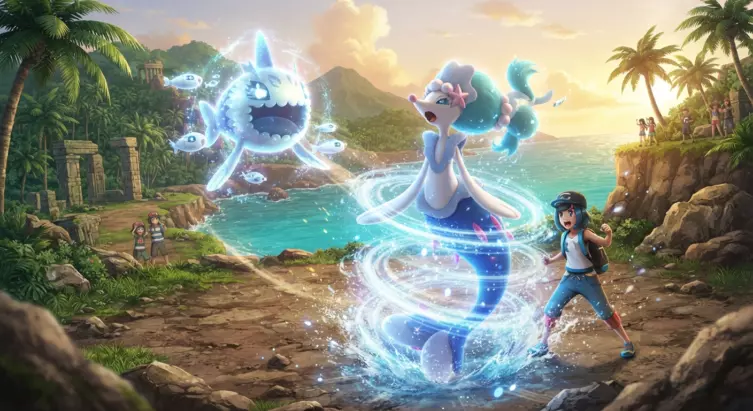
Sun and Moon's major innovation was its trial system, which replaced traditional Gyms. This approach, in which we battle Totem Pokémon and solve small challenges, was an excellent idea on paper. Z-Moves—powerful attacks that can be used once per battle—added a welcome strategic dimension, capable of turning around a battle that had gone badly. The Poké Ride system, which put an end to the chore of using HMs, was also a major improvement for the adventure's flow. These innovations proved that Game Freak was not afraid to shake up its own conventions.
Despite these good intentions, the game's pace suffers from a few problems. The trials, although refreshing at first, can become repetitive, and the lack of truly challenging trainer battles with complex strategies is sometimes noticeable. In addition, the technical performance on Nintendo 3DS is a weak point that has not aged well. During double battles, or even some particularly spectacular Z-Moves, the frame rate can drop significantly, especially on the original 3DS; the New Nintendo 3DS generally offers greater stability, without completely eliminating the game's limitations. In 2026, this detail painfully reminds us of the era's hardware limitations and can make the experience less enjoyable for players accustomed to higher standards. For more details on the original release, you can consult our period article on Game.fr.
Story and Characters: A More Personal Journey?
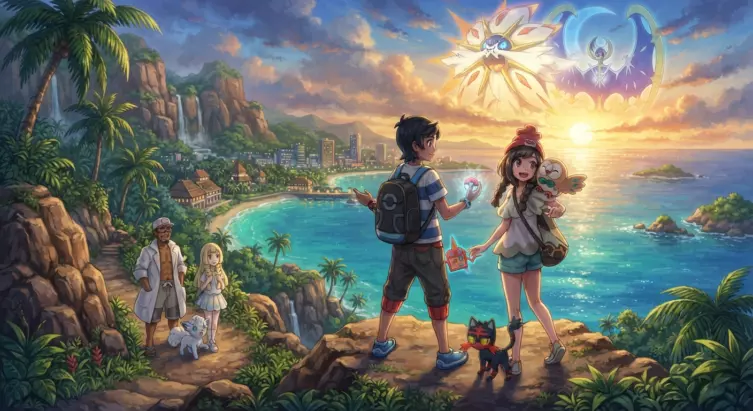
One of Pokémon Sun and Moon's undeniable strengths is its story, which is more mature and personal than usual. The plot centered on Lillie, Cosmog, and the Ultra Beasts brings an emotional depth rarely seen in the series. The characters are endearing, with clear motivations and well-developed narrative arcs. We genuinely feel invested in their quest, far beyond simply catching Pokémon. It is a coming-of-age journey that leaves a mark and, even after ten years, retains all its narrative power.
However, Team Skull's role, while entertaining thanks to its offbeat nature, remains somewhat below that of the great villainous teams we have encountered. Their motivations are sometimes unclear, and their threat is not always taken seriously. In addition, the length of certain narrative sequences, particularly at the beginning of the game, can dampen the desire to return for another playthrough. The main quest, which will occupy approximately 30 to 35 hours for standard players—much longer for completionists—could have benefited from a somewhat faster pace at times. Even so, the story remains a central pillar of the experience, and it is what keeps us moving forward.
Strengths and Weaknesses
What we liked
- Alola's atmosphere and design — a complete change of scenery and a genuine personality.
- Z-Moves and the trial system — a successful attempt to refresh the gameplay.
- The story and characters — more mature storytelling and moving relationships.
- Alolan Forms and Ultra Beasts — welcome creativity in the creature roster.
What we liked less
- Unstable frame rate on 3DS — slowdowns that detract from the experience in 2026.
- The adventure's linear, guided structure — little freedom to explore, especially at the beginning.
- The sometimes slow pace — numerous cutscenes and dialogue sequences interrupt the action.
- The absence of certain features appreciated in previous generations, such as secret bases.
Verdict
In 2026, Pokémon Sun and Moon is no longer the revolutionary game it claimed to be at launch, but it remains a solid and memorable Pokémon experience. While the 3DS's technical limitations and a certain degree of guidance may discourage modern players, the richness of its world, the depth of its story, and its bold innovations still make it worth playing. It is a game for series fans who appreciate more developed storytelling and are willing to forgive a few drawn-out sections and dated technical performance.
If you want to relive a Pokémon adventure with soul, and you still own a working Nintendo 3DS, Alola awaits with its sunny beaches and mysteries. It is an interesting snapshot of the franchise's evolution, and an important milestone before the move to Switch. It may not be perfect, but its charm still works. You can learn more about the game on the official Pokémon website or on Serebii.net for technical details and the Pokédex.
Why this score?
- + World and identity: Alola remains one of the series' most memorable regions, with a strong visual personality and several standout ideas.
- + Story: The plot, more intimate and emotional than average, still supports a rediscovery in 2026.
- - Technical performance: The 3DS's hardware limitations, especially on the original model, weigh more heavily today than they did at launch.
- - Structure: The guided design, lengthy dialogue sequences, and occasionally broken pace keep the game from reaching the franchise's heights.