
Wimbledon is the tournament tennis still regards as its most solemn mirror. Virtua Tennis, meanwhile, remains the game that best transformed that elegance into immediate fun. One does not copy the other, but both share the same promise: to make players feel the speed, positioning and tension of a rally without drowning them in technical complexity.
8.5/10
Genre: Sports / Arcade
Legacy: Immense
Realism: Stylized, but accurate in its sensations
Fun: Immediate
Key takeaways
- Wimbledon remains the most symbolically loaded tournament in world tennis.
- The All England Club has used 100% perennial ryegrass since 2001.
- Virtua Tennis made its mark in arcades in 1999 before arriving on Dreamcast.
- SEGA’s game does not perfectly simulate reality, but it conveys the feel of tennis better than many others.
- The link between Wimbledon and Virtua Tennis is cultural and imaginary, not official.
Why Wimbledon remains tennis’s greatest myth
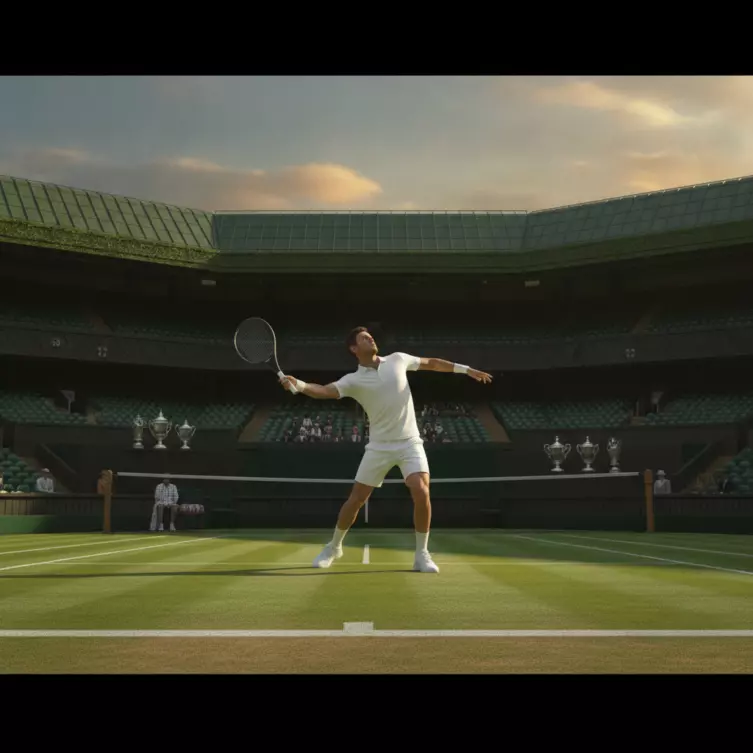
Wimbledon is not just another Grand Slam. It is the tournament that most powerfully embodies tradition: the all-white outfits, visual restraint and presentation that lend tennis an almost ceremonial gravity.
Its grass plays a direct role in that status. Since 2001, the All England Club has used a blend made up of 100% perennial ryegrass to improve the surface’s durability under the demands of modern tennis.
The surface nevertheless remains alive, wears down over the fortnight and continues to fuel debate about the tournament’s actual speed. This blend of elegance, codes and uncertainty makes Wimbledon less a simple event than a mental landscape of tennis.
Why Virtua Tennis remains a benchmark
First released in arcades in 1999 before its notable port to Dreamcast, Virtua Tennis established a truth that many sports games still overlook: a great game does not need to be complicated to be deep.
Its strength did not come from an obsession with simulation, but from timing. Well positioned, you controlled the rally; late to the ball, you suffered. This simple logic gave players a rare sensation: physically understanding the point without needing a layer of overly visible systems.
The console version also broadened the package with a career mode and mini-games that became cult favorites. This was when Virtua Tennis stopped being merely an excellent arcade port and became a true Dreamcast benchmark.
Where Wimbledon and Virtua Tennis meet
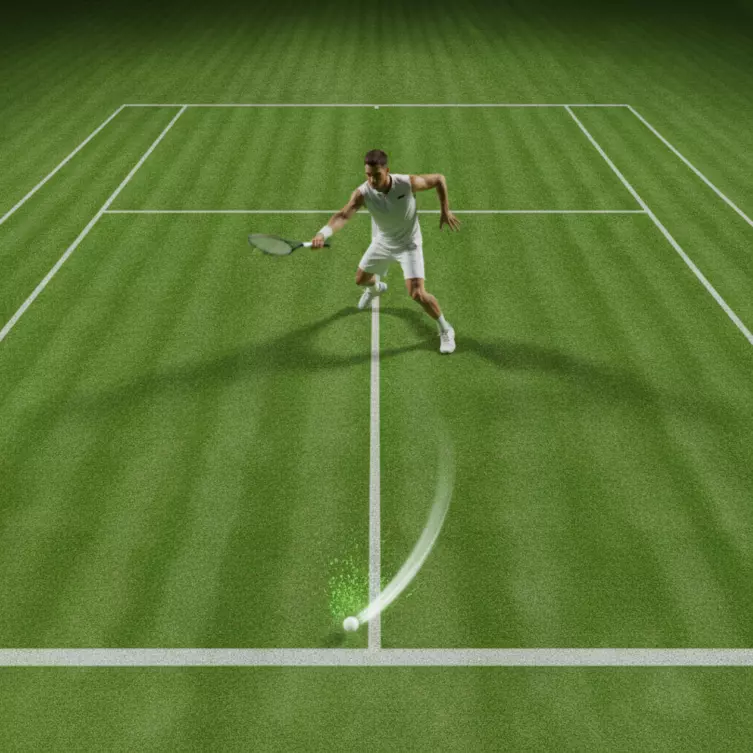
The link between Wimbledon and Virtua Tennis is not a matter of an official license. It is more interesting than that: it lies in a shared idea of clarity. At Wimbledon, everything seems clear-cut—the lines, the movements, the silences and the errors that are punished immediately. In Virtua Tennis, that clarity becomes gameplay.
SEGA’s game does not recreate Centre Court, but it captures something close to it: the value of positioning, speed of decision-making and the importance of rhythm. Where many simulations seek to reproduce tennis as seen on television, Virtua Tennis first seeks to reproduce a feeling. That is why it has aged better than many games that were more realistic on paper.
Where the game cannot match reality
We should not ask it to deliver what it never promised. Real Wimbledon is also about wear, mental pressure and changes in the surface. The modern tournament cannot be reduced to a nostalgic image of serve-and-volley.
Virtua Tennis deliberately leaves that aside. Its surface remains clear, consistent and almost ideal. That is a limitation if you expect a complete simulation; it is a strength if you want a concentrated version of the pleasure of tennis.
| Criterion | Virtua Tennis | TopSpin 2K25 | Real Wimbledon |
|---|---|---|---|
| Approach | Immediate arcade | Modern simulation | Real competition |
| Controls | Very accessible | More demanding | Physical and technical |
| Surface | Clear and stable | More detailed | Alive and evolving |
| Feel | Excellent | More analytical | Inimitable |
TopSpin 2K25 now occupies the modern benchmark spot for a more simulation-focused approach, with playable pros, new modes and an ambition closer to the televised presentation of contemporary tennis.
Verdict
Wimbledon remains tennis’s symbolic pinnacle. Virtua Tennis, meanwhile, remains one of its best video game translations—not because it copies the tournament, but because it understands what makes the sport exciting to watch and play: positioning, anticipation and momentum.
SEGA’s game is not an exact version of grass-court tennis. It is a streamlined, energetic and still brilliant version of it. That is likely why it remains more alive today than many more ambitious simulations.
Gameplay
9.5/10
Faithfulness to the spirit of tennis
8.5/10
Longevity
7.5/10
Game.fr’s verdict
Virtua Tennis does not recreate Wimbledon down to the last detail. It does something better on another court: it captures the momentum of tennis and turns it into pure gameplay. For many, that is still the very definition of an arcade classic.
FAQ
Why is Wimbledon played on grass?
Because Wimbledon remains the direct heir to original lawn tennis. The tournament has retained this surface as a powerful historical and identity marker.
Does Virtua Tennis have an official Wimbledon license?
No. The connection between the two mainly comes from players’ imagination, the aesthetic of grass-court tennis and the prestige associated with the sport.
Can you still play Virtua Tennis today?
Yes, on original hardware or through suitable preservation solutions. Most importantly, its gameplay remains remarkably clear today.
Which modern tennis game is more simulation-focused?
TopSpin 2K25 now occupies a more simulation-oriented position, with a more technical approach closer to the TV presentation of modern tennis.