The Sinking City 2 turns its back on investigation to dive headfirst into pure survival horror, and not everyone is happy about it. Gone are the clues to cross-reference through Arkham's streets: now come limited ammunition, corpses that rise again and constant Resident Evil-style tension. Frogwares is embracing a risky gamble. Here is our full review, complete with mechanics and verdict.
What you need to know:
- The first game focused on investigation and open-world exploration
- The sequel would adopt a radically different genre: third-person survival horror
- Investigation would no longer be the game's central mechanic
- This change has deeply divided the community
The major horror shift dividing opinion
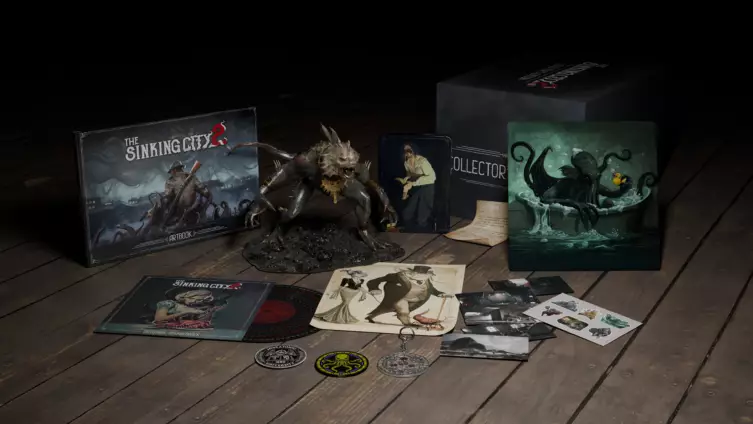
Remember the first Sinking City
In 2019, the first Sinking City put us in the shoes of a private detective. We searched Oakmont, cross-referenced clues and drew our own conclusions. Its Lovecraftian atmosphere provided the backdrop for a genuine open-world investigation game.
It was imperfect, certainly, but its identity was clear. Deduction took priority over action, and that was precisely what won over its audience.
A deliberate change of direction
For the sequel, the direction would change completely. Gone is the cerebral detective; in its place comes third-person survival horror, following in the footsteps of the genre's biggest names. Fear and survival would become the heart of the experience.
Investigation, meanwhile, would take a back seat. This raises an important question: can a franchise abandon its DNA without betraying it?
A community split in two
On one side are purists mourning the disappearance of investigation gameplay. On the other are those who believe the Lovecraftian universe finally deserved a proper horror treatment. The debate is raging, and honestly, both sides have strong arguments.
Goodbye investigation, hello survival: Frogwares' past faces the future
To understand the scale of this shock, we need to understand where Frogwares comes from. The Ukrainian studio built a strong reputation on detective games, particularly through its Sherlock Holmes adaptations. Deduction, observation and interrogation were its DNA.
A heavy legacy
The first The Sinking City embodied that philosophy. Fans embraced it precisely because of this cerebral approach to Lovecraftian horror. Seeing the sequel move toward survival horror feels like a racing studio swapping steering wheels for shotguns.
Why such a radical shift?
Several possibilities could explain this bold choice:
- Expanding the audience: survival horror reaches a much broader audience than pure investigation.
- Freeing the Lovecraftian universe: Lovecraft's creatures naturally lend themselves to tension and combat.
- Creative renewal: after years of deduction mechanics, the studio may be looking for a new direction.
A franchise identity at stake
The real risk is that The Sinking City loses what made it unique. The market is already full of Lovecraftian survival horror games. An investigation game set in a decaying cosmic universe occupied an almost exclusive niche.
Frogwares is therefore taking a major risk. If the gamble succeeds, the studio will prove it can leave its comfort zone. If it fails, it will have sacrificed its identity to chase an overcrowded genre. The rest of this guide examines what we concretely know about the gameplay.
Betrayal or necessary evolution? The debate shaking up fans
Since the horror shift in Sinking City 2 was announced, the community has been split in two. And believe me, discussions on the forums are heated. Purists accuse the game of abandoning its roots, while optimists see a chance to unlock the license's full Lovecraftian potential.
The disappointed camp: "Our detective game was stolen from us"
For longtime fans, the series' DNA was deduction. Solving cases without quest markers and connecting clues yourself made the experience unique. Abandoning that formula means losing what set the game apart.
- Loss of identity: the cerebral detective game was the studio's signature.
- A saturated market: action horror already has several established giants.
- A sense of betrayal: loyal players feel pushed aside.
The optimistic camp: "Horror was the promise from the beginning"
The counterargument is simple: Lovecraft is fundamentally about fear. The first episode touched on horror without ever becoming truly terrifying. A committed survival horror game could finally bring that cosmic anxiety to the controller. The renewal would therefore be a logical evolution, not a betrayal.
The real culprit: our expectations
Let's be honest for a moment. A sequel is never judged solely for what it is, but for what we hoped it would be. Disappointed fans expected an improved version of the original Sinking City. Others wanted a fresh experience. The final game can never satisfy both groups completely.
To understand: this phenomenon is nothing new. Every radical formula change in an established franchise causes this kind of split. The final reception will depend above all on execution, not the concept itself.
When Lovecraft meets Resident Evil: The new combat mechanics
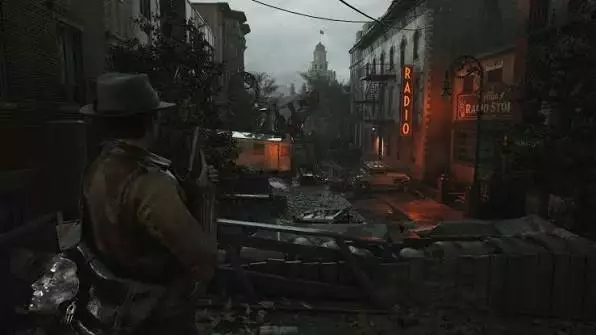
Let's be frank: combat was the franchise's Achilles' heel in the first game. It was sluggish, imprecise and frustrating. For Sinking City 2, the developers appear to have heard the criticism. The gunplay would be completely reworked to deliver the feel of a true survival horror game.
A weighty, impactful feel at last
Gone are the weak shots that pass through enemies without consequence. Each bullet should now have weight, recoil and visible impact. Creatures would react to shots, stagger and absorb damage. That is exactly what was missing to create tension.
This philosophy directly recalls the genre's pillars, especially the recent Resident Evil remakes, now the benchmark for horror gunplay. Aiming for a head while under pressure is an art in itself.
Every round counts
Survival horror rests on a simple equation: scarcity creates fear. The expected fundamentals include:
- Limited ammunition: every missed shot comes at a cost
- Tactical choices: fighting or fleeing becomes a genuine dilemma
- Inventory management: prioritizing resources under pressure
This deliberate shift transforms the franchise's DNA. We move from contemplative investigation to visceral survival. It is a risky gamble, but potentially a rewarding one if the execution follows.
One major question remains: how will action and horror be balanced? Too much ammunition and fear disappears. Too little and frustration takes over. The developers are walking a tightrope.
Tense inventory and labyrinthine level design: A tribute to the classics
That brings us to the tightrope Frogwares appears ready to walk. Sinking City 2 would use a deliberately restrictive inventory. Every slot would matter, and every collected item would represent a choice.
A limited inventory that says something
This is a survival horror principle as old as the genre itself: constraints create fear. When you cannot carry everything, you prioritize, hesitate and stress. This philosophy would sit at the heart of the sequel if its stated intentions are confirmed.
In practice, it changes the way you play:
- Prioritize healing items or ammunition before each exploration
- Accept that some resources must be left behind
- Plan your outings like genuine expeditions
Old-school backtracking, and that is a good thing
The level design would follow the genre's monuments, led by Silent Hill and Resident Evil: interconnected areas, locked doors and shortcuts to unlock. Backtracking would not be a flaw, but a deliberate mechanic.
My advice as a genre veteran: memorize the locations. Keep track of the locked door, the flooded passage and the strange symbol on the wall. Returning with the right item creates a satisfaction that corridor-based games have forgotten.
We still need to see whether the execution matches the ambition. A poorly designed labyrinth quickly becomes a chore. But if Frogwares draws intelligently from its illustrious models, this could become a cornerstone of the promised horror experience.
Flooded Arkham: A Lovecraftian atmosphere reinvented for modern horror
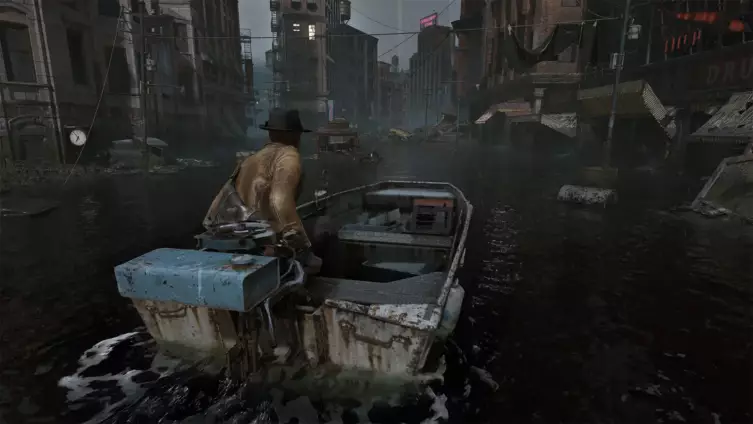
A city consumed by water is the perfect playground for horror. Sinking City 2 would bring players back to Arkham, the mythical city of Lovecraft's work. Frankly, the horror potential of this flooded city is enormous.
Its atmospheric potential is chilling even to contemplate.
Water as a character in its own right
The flood is not merely scenery. It turns every street into a potential trap and every building into a soaked tomb. What the water conceals becomes more frightening than what it reveals. That is precisely the lever Frogwares appears ready to pull.
Lovecraft's myths serving the gameplay
The Lovecraftian universe rests on a simple principle: the unknown destroys reason. In survival horror, that would mean elusive creatures and constant tension. The studio would focus more on direct horror than pure investigation.
- Constant oppression: the aquatic environment limits visibility and escape routes.
- Mythological bestiary: abominations from Lovecraft's writings fuel the threat.
- Heroic vulnerability: the player endures the horror rather than mastering it.
Against today's genre standards
Modern survival horror leaders have established certain conventions: resource management, unpredictable enemies and anxiety-inducing sound design. Sinking City 2 will have to compete on that ground while preserving its Lovecraftian identity. Its advantage? Few competitors truly exploit this mythology.
Expert advice: in a Lovecraftian atmospheric game, play with headphones in the dark. Sound design carries 50% of the terror, and television speakers will make you miss the essentials.
If the execution delivers, Arkham could become one of the most memorable horror settings of recent years. We still need to see how combat fits into this atmosphere: that is precisely what comes next.
Frogwares under the bombs: The heroic development of The Sinking City 2
It is impossible to discuss Sinking City 2 without mentioning the circumstances of its creation. Frogwares is a studio based in Kyiv, Ukraine. The game was therefore developed during a war, in conditions experienced by very few studios around the world.
Creating a game while the sirens scream
In practical terms, that means power cuts, air-raid alerts and teams that are sometimes scattered. The studio has repeatedly discussed these difficulties since 2022. Every milestone achieved represents far more than a simple production step.
According to the studio's communications, the team would have adapted its working methods to maintain progress. The precise details remain internal, but the result speaks for itself: the project is moving forward.
When reality feeds fiction
There is something troublingly ironic about it all. A studio living through a real catastrophe is developing a horror game about a collapsing city. It is difficult to believe that experience does not seep into Arkham's oppressive atmosphere.
- Resilience: the studio has never cancelled the project despite the conflict
- Authenticity: a team that knows fear every day creates anxiety differently
- Symbol: every Frogwares release has become an act of cultural resistance
This context does not excuse potential flaws, let's be clear. But it commands respect and gives the project a rare human dimension. Now let's see whether the content holds up.
The studio's "best work": A meaningful promise
Frogwares would present The Sinking City 2 as its best work to date. Coming from a studio that has been developing games for twenty years, this is not a throwaway marketing line. It is a public commitment, and that changes everything.
A double-edged communication strategy
When a studio claims to be delivering its creative peak, it sets the bar itself. Players will judge the game against that promise. For a Ukrainian studio working in extreme conditions, the statement has particular resonance: despite everything, nothing was sacrificed in terms of quality. It is courageous, but risky.
What this promise concretely implies
- Credibility at stake: an average Sinking City 2 would cause more damage than cautious silence.
- Raised expectations: fans of the first game expect a genuine leap forward, not a lazy sequel.
- Internal pressure: every launch bug will be scrutinized twice as harshly.
The weight of the sacrifices
Developing through power cuts and alerts, then announcing your best game, is almost a declaration of resistance. But beware the emotional trap: sympathy must not replace critical analysis. The game must stand on its own with a controller in hand.
If the result lives up to the promise, it will become a powerful argument. Otherwise, it will turn against the studio. The verdict comes at launch, and not before.
Surviving Oakmont: An analysis of essential mechanics
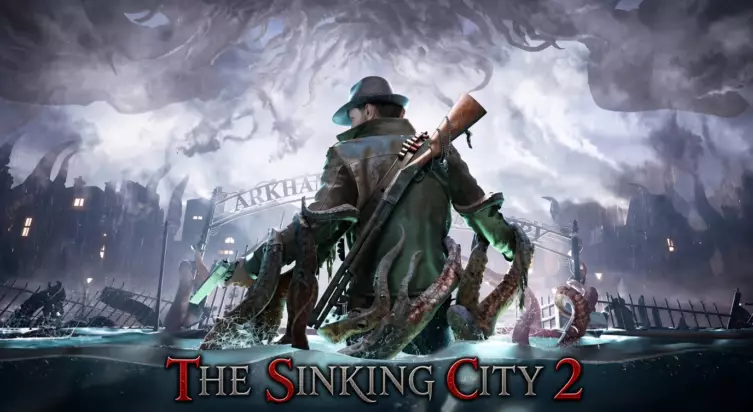
Now we get serious. In Sinking City 2, sympathy for the studio will not save you from a stupid death. This title should not hold your hand, and that is a good thing.
An unforgiving learning curve
Let's be clear: the first few hours may sting. The series has always embraced an old-school philosophy, without markers everywhere or constant assistance. If the sequel preserves that legacy, prepare to struggle before you shine.
That is not a design flaw, but a choice. Every failure should teach you something. Those who quit after an hour will miss the point.
Why mastering every mechanic changes everything
Ignoring these systems would be fatal. We expect to see the following dynamics:
- Observe before acting: charging in blindly is the best way to end up underwater.
- Manage your resources: Lovecraftian horror rarely comes with abundant ammunition.
- Accept the slow pace: the deliberately heavy rhythm is part of the experience.
What awaits in the following sections
Important clarification: the sequel's exact mechanics remain only partially confirmed at this stage. We are therefore relying on available official information and the franchise's DNA. Any unverified element will be presented conditionally.
The next sections examine the systems one by one, with practical advice for survival. Hold on tight: things are about to get rough.
The worm mechanic: The anxiety of resurrection
Let's discuss the mechanic driving everyone crazy: worms. In this new Sinking City formula, killing a creature is no longer enough. If you leave a corpse lying around, worms can revive it. Believe me, being ambushed by an enemy you thought was dead really hurts.
The resurrection cycle: understand before acting
The principle is simple but vicious. A creature falls, worms emerge, and if you ignore them, the body gets back up. You are forced into another fight with less ammunition. The game punishes haste, not aggression.
Identifying risky corpses
Not every body will necessarily rise. Look out for:
- Movement on the ground: a corpse twitching or writhing is dangerous.
- Visible worms: the creatures emerge from the body and signal imminent resurrection.
- Strategic position: an enemy fallen behind you or along your escape route deserves a second check.
The anti-return method: simply crush them
The most reliable solution is also the most direct: crush the worms as soon as they appear. Approach the corpse and eliminate them physically before they finish their filthy work. It is free, quick and saves precious bullets.
Make it a habit: enemy down, step over the body, crush the worms. This routine will become your best insurance policy in flooded Arkham. The following sections explain how to optimize your resources for the long haul.
Identifying threats: The tactical potential of encounters
Destroying the threat at its source is shaping up to be crucial. Knowing which bodies to watch is even better. In Sinking City 2, the game will not hold your hand here, which is where many players will be caught out.
Visual clues to look for
Not all corpses are equal. Take time to examine the environment after every encounter and inspect the bodies before moving on. Watch for:
- Suspicious movement: a body that twitches or contracts is never a good sign.
- Visible worms: these writhing parasites appear on or around the corpse.
- Sound cues: listen carefully; organic noises often reveal an ongoing infestation.
Quick reactions are your only real defense
Timing is everything. The longer you wait to deal with a suspicious corpse, the greater the resurrection risk. Never finish a fight by leaving the area without checking: that is the best way to be surrounded when you return.
The cost of an ignored corpse
An untreated body is a bonus enemy waiting to haunt you. That means wasted ammunition, unnecessary healing items and increased pressure in already hostile areas.
Over time, these mistakes pile up and damage your resource management. Make post-combat checks as natural as reloading your weapon. Your ammunition stockpile and your nerves will thank you.
Optimizing your inventory: Every bullet counts in horror
In a survival horror game like Sinking City 2, the inventory will presumably be more than a simple backpack. It is your lifeline. Poor management leaves you facing an abomination with three bullets and no healing item. Here is how to avoid that disaster.
Priority order: ammunition, healing, tools
Not everything in your pockets has equal value. The golden rule is obvious: whatever keeps you alive comes first.
- Ammunition: absolute priority. Without it, every encounter becomes a chase.
- Healing: always keep at least one recovery item, even in a "safe" area.
- Tools and progression items: useful, but expendable when space is tight.
When should you use rare resources?
The genre's classic trap is hoarding your best resources until the end credits. Wrong! An unused rare resource is a wasted resource.
My personal rule: if an encounter costs more than half your health, bring out the heavy artillery. Dying with a full inventory means losing twice.
Storage and save points: your best allies
Carrying your entire stock will be risky. If the game offers storage spaces, use them as strategic caches. Deposit surplus supplies before dangerous sections.
The same logic applies to saves: save systematically after successfully sorting your inventory. Nothing is more frustrating than replaying twenty minutes of looting after a foolish death. In Sinking City's oppressive universe, caution is not optional; it is a survival mechanic.
Creature weak points: Advanced combat strategies
Charging into the fray looks like a very bad idea. In Sinking City 2, every encounter should be approached as a tactical puzzle. Ammunition remains scarce, so every bullet must count. Here is how to turn panic into an advantage.
Learn to read attack patterns
Observe before firing. Each creature would follow identifiable attack routines: a frontal charge, a side-step or a recovery phase. Strike during that vulnerability window.
- Observation phase: retreat and let the monster complete its cycle once.
- Opening: aim just after a missed attack, when the creature repositions.
- Never stay still: constant strafing remains your best insurance policy.
Aim carefully and save everything
Emptying a magazine into a mass of flesh is pure waste. Targeting sensitive areas could bring threats down with half as much ammunition. In short, one precise shot is worth three panic shots. Take time to adjust your aim, even under pressure.
The environment is your best weapon
The setting is not merely a horror backdrop; it is a tool. Use narrow passages to force creatures into single file. Flooded areas often slow movement, allowing you to maintain your distance.
To understand: the resource economy discussed above becomes meaningful here. A player who manages their inventory and exploits weak points can cross a hostile area while spending three times less than average. Combat and survival are one and the same.
Remember the golden rule: if a fight seems unwinnable, fleeing is a legitimate strategy. Some threats simply do not deserve your bullets.
Psychological horror: Beyond jump scares, Lovecraft's madness
Fleeing from a monster is one thing. Fleeing from your own mind is another. That is precisely where Sinking City 2 seems ready to strike. Frogwares has always claimed Lovecraft's legacy, where the real threat is not the creature but what it reveals about our insignificance.
Mental health as a resource
The studio would be considering a mental-health system that weighs on every decision. The more you expose yourself to the unknowable, the more your perception of the world would deteriorate. However, the precise details of this mechanic still require official confirmation.
- Prolonged exposure: remaining in the presence of horror would carry a real psychological cost
- Altered perception: what you see would no longer always be reliable
- Limited recovery: regaining your composure would require sacrifices
Visions and hallucinations: Constant doubt
The first game already used visions to blur the line between reality and delirium. Its sequel would push that idea further. Was that corridor really there? Did that NPC actually speak to you? The game would cultivate this doubt continuously.
To understand: in Lovecraft, madness is never an abrupt game over. It is a slow erosion. A good Lovecraftian game does not make you jump; it makes you question your memories of the previous session.
A creeping madness, never shouted
Forget repeated jump scares. The stated ambition would be to create a diffuse unease through oppressive soundscapes, architecture that seems slightly wrong and events that cannot be verified. My advice as a genre veteran: play with headphones in the dark. If the studio keeps its promise, your brain will become the main playing field.
Why The Sinking City 2 matters for the future of survival horror
Beyond the specific case of Sinking City, this sequel raises a question that goes far beyond Frogwares. Can survival horror reinvent itself without betraying its roots? My short answer is yes, and this game could demonstrate it.
A model for reinventing a franchise
Changing a franchise's DNA midway through its life is a gamble few studios dare to take. Most prefer a proven formula, even if it eventually tires their community. Here, we are seeing an intentional risk that could serve as a roadmap for others.
If the gamble works, the message to the industry will be clear: a franchise is not a creative prison.
To understand: a "franchise reinvention" means retaining a license's universe and identity while transforming its core gameplay mechanics. It is an extremely difficult balancing act.
Potential influence on future horror games
Publishers always watch bold gambles before approving their own projects. Success here could encourage other medium-sized studios to leave the beaten path. Conversely, failure could reinforce the industry's current caution.
- Validation for mixing horror with creative risk
- Encouragement for independent and mid-sized studios
- Greater variety in the face of blockbuster productions
Proof that the genre can still surprise us
Between endless remakes and carefully calibrated sequels, horror can sometimes go around in circles. A title that challenges its own conventions is exactly the shock treatment we need. As a horror fan, I would much rather see a failed gamble than a soulless copy.
Our final verdict on The Sinking City 2: A macabre rebirth
So, betrayal or stroke of genius? After examining the game from every angle, my verdict clearly leans toward the latter. The Sinking City 2 embraces its horror shift with rare conviction. And that deserves respect.
What works
- A confident identity: the game no longer tries to please everyone, and that is its strength.
- A controlled Lovecraftian atmosphere: the oppression is constant without relying on cheap jump scares.
- A courageous creative gamble: shaking up its formula instead of recycling it is rare enough to deserve praise.
The shadows on the wall
Let's be honest: not everything is perfect in this new Sinking City formula. The change of direction will inevitably leave some fans of the first game behind. Those who came for pure investigation will need to adjust their expectations.
Some compromises linked to this repositioning could also divide players. The game appears to favor tension over complete freedom, a choice that will not appeal to everyone.
Who is this game for?
This new Sinking City primarily targets fans of atmospheric horror. Lovecraft fans will find a suitably nightmarish playground. Players allergic to constant tension, meanwhile, should look elsewhere.
In short: it is a successful but demanding macabre rebirth. A game that chooses its audience rather than courting everyone. In today's landscape, that kind of audacity is worth its weight in gold.
Your questions about The Sinking City 2: Clear answers
Before leaving you to dive back into Arkham's troubled waters, let's take stock. Here are the questions most often asked about Sinking City 2, with straightforward answers.
Is the game a direct sequel to the first The Sinking City?
- Not in the strictest sense. Frogwares is starting from a largely standalone narrative foundation, with a deliberate shift toward survival horror. You can therefore jump in without playing the first episode. Those familiar with the Lovecraftian universe will nevertheless recognize its landmarks.
Are there still investigation elements in The Sinking City 2?
- Yes, but they are weighted differently. Investigation remains present, but takes a back seat to combat and resource management. You still investigate, but that is no longer all you do. This is the sequel's major philosophical change.
What is the estimated length of the game?
- No official playtime has been announced so far. According to the community's early estimates, the game should offer a substantial adventure in line with modern survival horror. We will update this page as soon as Frogwares makes the figure official.
Is the game accessible to survival horror newcomers?
- Honestly, it is a demanding game that embraces constant tension. Beginners can try it, but prepare to count your ammunition and grit your teeth. If you are looking for a relaxing stroll, look elsewhere.
Continue on the same subject
Overall verdict: Sinking City 2 is a risky gamble that could redefine the franchise. Stay tuned to game.fr for our guides. What do you think: betrayal or stroke of genius? Tell us in the comments!
Written by Filo for game.fr