
The link between video games and health is at the heart of current concerns, balancing therapeutic advances, ADHD treatment and vigilance regarding addiction risks. Long criticized and accused of promoting violence or isolation, video games are undergoing a major shift in how the scientific community views them. Today, they are no longer discussed solely as entertainment, but also as “Digital Therapeutics” (DTx) approved by health authorities, some of which are prescribed to children to improve attention. Between the myth of a miracle cure and the reality of addiction risks, what is the real impact of this activity in 2026? We analyzed the latest clinical studies to provide an objective assessment of this complex subject, taking into account the most recent data on neural plasticity and psychological balance.
8.5/10
- Use:
- Prevention & rehabilitation
- Target audience:
- Ages 7 to 77
- Effectiveness:
- Proven (with moderation)
- Risk:
- Moderate (sedentary behavior and eye strain)
Key takeaways
Mental health
The use of specific software and immersive virtual reality experiences can drastically reduce symptoms of post-traumatic stress and generalized anxiety in many patients.Cognition
Regular play of action games and FPS titles durably improves selective attention and brain plasticity, making it easier to process complex visual information quickly.Medicine
“Serious Games” are now integrated into hospitals to support motor rehabilitation after an accident and improve chronic pain management without systematic reliance on medication.Limitations
The therapeutic benefit ends where excess begins. Prolonged sedentary behavior and sleep disorders remain the main issues to watch to maintain healthy everyday gaming habits.Video games: A medicine like any other?
For decades, public discourse was dominated by a binary view: the medium was either a harmless toy or a social poison. In 2026, this view is completely outdated. The latest studies published on August 13, 2025, indicate that video games are no longer considered solely a public health problem. Science has reached its conclusion: video games are a neutral tool whose impact on human physiology depends strictly on how they are used and moderated. We are witnessing the emergence of “health” games, software designed with neuroscientists to treat specific conditions such as ADHD or the early stages of Alzheimer’s disease.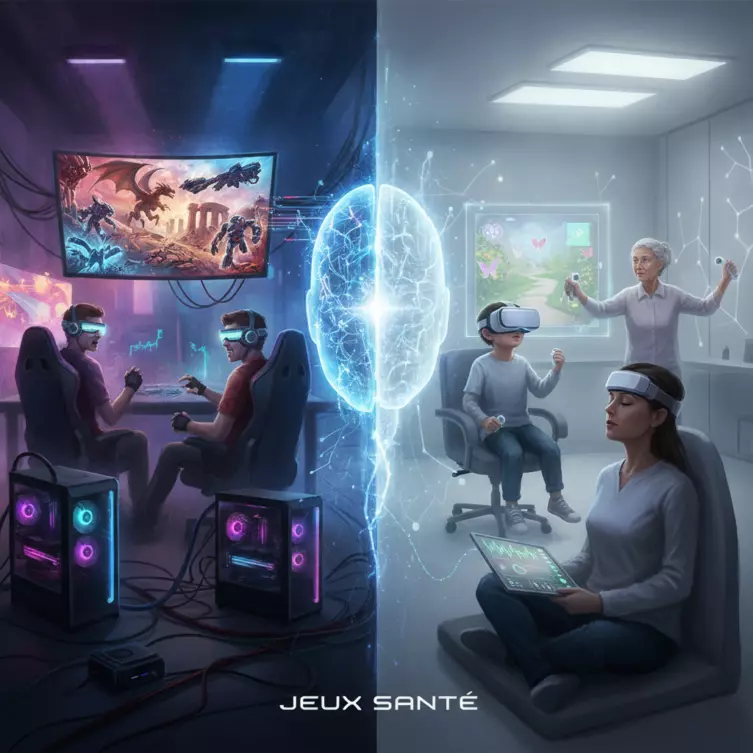 It is crucial to distinguish recreational gaming, Serious Games and supervised clinical use. The immersion offered by virtual reality is no longer merely a gimmick for discovering immersive virtual worlds, but a powerful tool for fooling the brain and reducing the perception of pain during demanding nursing procedures. This shift toward medical recognition is supported by factual data showing that, far from systematically making young people “addicted” or violent, these tools can become valuable allies for mental balance. Researchers emphasize that the positive effects on the brain can now be measured through magnetic resonance imaging, revealing increased connectivity in areas associated with problem-solving.
“Health” games are no longer limited to neurodegenerative disorders: several clinical trials are now testing video games adapted for children and teenagers with ADHD, with modest but significant effects on attention and certain symptoms.
medecinepratique
The best-known example is EndeavorRx, the first therapeutic video game authorized by the FDA to treat attention disorders in children aged 8 to 12.
sciencesetavenir
This new era is establishing video games as a serious therapeutic complement. Specialized clinics use virtual environments to simulate everyday situations, helping stroke patients regain functional independence more quickly. The secret lies in emotional engagement: where a conventional physical therapy exercise may seem tedious, a game turns effort into a rewarding quest, releasing dopamine that helps embed new motor skills. The gamification of healthcare is therefore becoming a pillar of modern medicine.
Mental health: Gaming as an emotional shield
One of the fields showing the most convincing results is emotional regulation. Studies dated November 10, 2025, explore whether gaming is simple entertainment or a trap leading to addiction, concluding that it is primarily a balancing tool when properly controlled. The psychological dimension of gaming is now documented by researchers at the University of Oxford, who demonstrated that playing Tetris immediately after a traumatic event could reduce the occurrence of flashbacks. This visuospatial task saturates working memory, preventing traumatic images from becoming fixed in the brain.In 2020, the FDA authorized EndeavorRX for market launch, making it the first prescription video game for treating ADHD in children. This is no longer science fiction, but concrete digital pharmacology that durably modifies attention circuits.Beyond serious disorders, video games act as an effective regulator of everyday stress. So-called “cozy” games promote the production of dopamine and serotonin, providing a necessary cognitive break in a hyperconnected world. Contrary to the common idea of isolation, MMOs such as EverQuest 2 encourage social connection, which is essential for combating depression among people who are geographically isolated or have limited mobility. The sense of belonging to a guild or virtual community provides real psychological support, capable of breaking the vicious cycle of urban loneliness. Beyond stress and anxiety, researchers are examining the role of video games in certain neurodevelopmental disorders such as ADHD. “Gamified” digital interventions show a modest but real therapeutic effect on inattentive symptoms, especially when supervised and integrated into conventional medical care. medscape The cathartic aspect of gaming should not be overlooked either. By allowing players to express frustration or channel excessive energy in a safe, virtual setting, gaming helps regulate mood. Psychologists increasingly observe that gaming sessions shared by parents and children can become valuable spaces for dialogue, strengthening family bonds while teaching younger players about responsible digital consumption. The challenge is to turn gaming into a means of personal development rather than merely an escape from everyday reality.
Cognitive functions: Exercising your brain with a controller
If you play fast-paced action games, you may unknowingly develop above-average selective attention skills. The cognitive benefits of video games and health can be measured through medical imaging. A 2025 study published in Nature confirms that regular players process visual information 20% faster than non-players. This increased brain plasticity allows for better adaptation to changing environments and faster decision-making under pressure—skills that transfer directly to many professional fields.| Game genre | Ability stimulated | Real-world benefit |
|---|---|---|
| Action / FPS | Visual attention | Increased responsiveness (driving, emergencies) |
| Strategy (RTS) | Working memory | Better planning and multitasking |
| Puzzle / Brain games | Cognitive flexibility | Slower age-related cognitive decline |
Video games and ADHD: Managing attention without replacing therapy
Recent studies describe therapeutic video games as a gateway to more traditional ADHD treatments rather than a solution in themselves. They help some children train their attention circuits, but require strict screen-time limits to avoid a vicious cycle in which visual overstimulation worsens concentration difficulties in everyday life. Cognitive training through video games is also being studied as a safeguard against brain aging. Among seniors, playing strategy or management games helps maintain executive functions and episodic memory. By constantly stimulating curiosity and the search for solutions, video games create a cognitive reserve that could, according to some hypotheses, delay the onset of symptoms associated with certain forms of dementia. It is genuine mental exercise—accessible and entertaining—that is redefining how we care for our brains throughout life.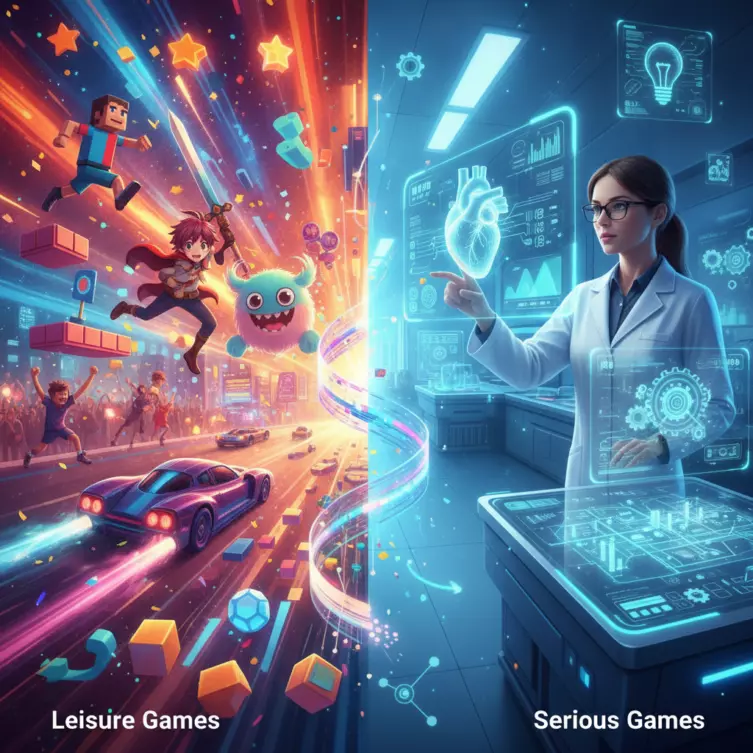
Rehabilitation: When games replace physical therapy
This is undoubtedly the sector’s most spectacular application. Using gaming technologies in physical rehabilitation through exergames is revolutionizing post-stroke rehabilitation. By making exercise fun, patients forget the sometimes painful repetition of therapeutic movements. Systems such as the Rehabilitation Gaming System promote increased neuroplasticity through immediate visual feedback, encouraging patients to exceed their perceived limits while having fun. In chronic pain management, virtual reality acts as a powerful sensory distraction. By immersing patients in a soothing virtual world, the brain receives fewer pain signals because it is too busy processing the immersive digital environment. Clinical results show pain reductions of up to 35% without the usual side effects of heavy medication, offering a serious alternative for palliative care and burn units. This non-invasive approach is gaining ground in the most innovative hospitals worldwide. Motion sensors also allow accurate monitoring of patient progress. Physical therapists can analyze data collected during gaming sessions to adjust the difficulty of exercises in real time. This personalized care, combined with the motivating aspects of scores and virtual rewards, significantly improves treatment adherence. Patients are no longer passive participants in their rehabilitation; they become the main actors in their recovery within a universe that rewards every small accomplishment.The downside: Addiction and sedentary behavior
However, gaming has limitations that must not be overlooked if we are to maintain a balanced view. The WHO officially recognized “Gaming Disorder” as a condition, although it affects only a tiny minority of players, estimated at between 1% and 3%. For the general public, the greater danger lies in sedentary behavior. Sitting for many hours a day in front of a screen, even to stimulate the brain, remains harmful to the cardiovascular system. This shows that the relationship between digital leisure and physical well-being carries real risks unless it is balanced with regular physical activity and a well-designed workstation.The blue light emitted by screens inhibits the secretion of melatonin, the sleep hormone. Playing late at night reduces the quality of deep sleep, which can cancel out the cognitive benefits gained during a gaming session and lead to chronic fatigue.It is therefore essential to balance daily gaming to protect your health. An informed player should pay attention to ergonomics and their overall lifestyle. If you invest in a high-performance gaming setup, do not forget to include a quality ergonomic chair and plan active breaks every hour. These interruptions stimulate blood circulation, rest your eyes by encouraging you to look into the distance and prevent muscle tension in the neck and wrists. Another point to watch is diet and hydration. Total immersion in a game can make players forget their body’s basic needs, leading to excessive consumption of sugary drinks or processed snacks. For video games to remain an ally of your health, they must fit into a healthy lifestyle. Drinking water regularly and choosing balanced meals away from screens are simple habits that make a real long-term difference. A player’s well-being depends on their ability to remain in control of their time and physiological needs.
Review of recent studies (2024–2025)
The year 2025 marks a turning point in the scientific understanding of the medium. On August 13, 2025, a major study revealed that video games should no longer be viewed solely through the lens of addiction. Instead, they act as catalysts for brain plasticity when played thoughtfully. This finding is reinforced by publications from November 10, 2025, which present gaming as a tool for mental balance rather than a trap. The key lies in awareness of one’s own habits: gaming becomes harmful only when it replaces vital needs, but proves useful for stress management when integrated harmoniously into one’s schedule. In addition, research published in January 2024 helped dispel persistent myths about social development. Researchers demonstrated that cognitive and social benefits greatly outweigh potential risks, provided that moderate gaming is encouraged. These studies highlight video games as an important vehicle for social development, facilitating collaboration and empathy through shared goals. In 2026, medical recommendations are moving toward a “balanced digital diet” rather than abstinence, recognizing the intrinsic value of this form of interactive culture.- Proven improvement in brain plasticity and visual reflexes.
- A highly accessible tool for managing everyday stress and anxiety.
- An effective non-medication alternative for managing certain types of pain.
- Maintaining social connections and developing collaborative skills.
- Real risk of sedentary behavior and chronic postural problems.
- Negative impact on sleep cycles when playing late at night.
- Parental supervision is necessary to prevent addictive behavior among young players.




Social myths and realities: An overlooked impact
The myths surrounding gaming must be dispelled to understand the medium’s true social impact. According to data from January 2024, moderate gaming actually promotes the development of social and collaborative skills. Far from the image of a solitary player in the dark, modern gaming is a deeply communal activity in which cooperation is often the key to success. These virtual interactions can translate into greater social ease in the physical world, particularly for people with social anxiety or autism spectrum disorders. When practiced in moderation, video games provide cognitive and social benefits that were once overlooked by the general public. They create bridges between generations and help seniors maintain stimulating mental activity, offering them a way to stay connected with their grandchildren. The key is to integrate gaming as a personal development tool rather than an escape from reality. Educational programs that use games also show better information retention and increased student engagement, proving that enjoyment is a powerful driver of learning. Online gaming platforms have become genuine digital agoras where ideas are exchanged and international friendships are formed. This exposure to the wider world contributes to civic education and tolerance by introducing players to different cultures and viewpoints. Contrary to popular belief, gaming can strengthen empathy, particularly through narrative games that place players in the shoes of characters with complex life experiences. Video games thus become a laboratory for social experimentation, where players learn to cooperate toward a shared goal.