Dragon Age Veilguard: BioWare’s Epic Adventure Revealed
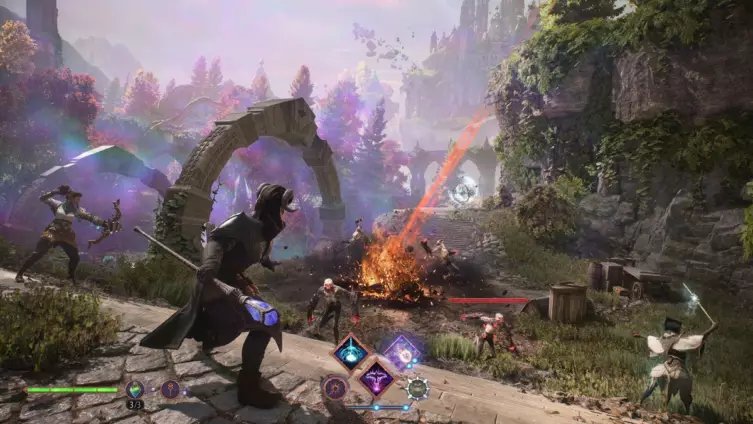
Dragon Age Veilguard takes a clear new direction: BioWare is pushing the series toward a real-time action RPG that feels faster and easier to read with a controller in hand. The message is clear: less old-school tactical pausing, more immediate decisions at the heart of combat.
- The combat system is now much more focused on real-time action.
- The ability wheel lets you trigger skills and coordinate your companions.
- The game moves away from Origins’ highly tactical approach and Inquisition’s compromise.
- The zones combine guided exploration with more linear missions.
Dragon Age: The Veilguard – In Brief
| Release date | October 31, 2024 |
|---|---|
| Platforms | PC, PS5, Xbox Series X|S |
| Developer | BioWare |
| Genre | Action RPG / Single-player |
| Hero | Rook (and 7 companions) |
Gameplay redirected toward action
The biggest change in Dragon Age Veilguard is its desire to put players back at the center of the impact. Combat is no longer designed as a distant management of the battlefield: the pace is more direct, with greater emphasis on positioning, timing and chaining abilities.
Faster-paced real-time combat
The real-time combat system inevitably changes the feel of the game. Where the older installments often invited players to analyze, plan and then execute, this formula pushes them to react more quickly. For longtime fans, it is a genuine turning point.
This choice energizes the adventure, especially when encounters become easier to read. The challenge remains clear: preserve the group-based RPG identity without turning the game into a simple action title in disguise.
The ability wheel retains a tactical touch
The ability wheel preserves some degree of strategic control. It lets you choose abilities and coordinate companions during the action. That is essential, because the series cannot completely abandon its team-based DNA.
Expert tip: pay close attention to the fluidity between direct action and issuing orders to companions. That is where this new direction either truly works or breaks the pace.
Origins, Inquisition and this new direction
Dragon Age: Origins relied more heavily on a tactical approach, with a genuine understanding of each role. Inquisition was already looking for a compromise between broad exploration and more accessible combat. Dragon Age Veilguard takes this evolution much further.
Zones balancing exploration and guided missions
The zone structure combines guided exploration with more linear missions. This format strengthens the narrative pace while still leaving spaces to search. If well balanced, it creates a tighter, less diluted adventure.
Story and setting: who is Rook and what does Solas want?
With Dragon Age Veilguard, BioWare starts from a clear foundation: a new protagonist, Rook, facing a threat that is already deeply established in the lore. Good news for newcomers: this choice provides an entry point without requiring them to know the entire series by heart.
Rook, the new face of the adventure
Rook represents the fresh perspective of this adventure. The appeal is obvious: putting players at the center of a world already loaded with history without overwhelming them with the weight of the previous games.
For fans, the real question lies elsewhere. We need to see whether Rook truly stands on their own, or mainly serves as a go-between for the major figures of the past.
Solas, the Dread Wolf, at the heart of the conflict
Solas, also known as the Dread Wolf, occupies a central place in the conflict. He is the major narrative element, the one that Dragon Age: Inquisition players were inevitably waiting to see.
Inquisition’s ending had clearly placed him back at the center of the tensions. Dragon Age Veilguard must therefore embrace that legacy: not reduce Solas to a simple villain, but make use of his political, magical and personal importance within the setting.
To understand the setup: if you are new to the series, remember this above all else: Rook represents the new point of view, while Solas carries the direct consequences of the previous major chapter.
The Tevinter Imperium as a narrative playground
The adventure takes place partly in the Tevinter Imperium, a major setting in the series’ lore. This choice is not insignificant: it shifts the conflict toward a region that has long been mentioned and occupies a central place in the Dragon Age imagination.
The 7 companions at the heart of the adventure
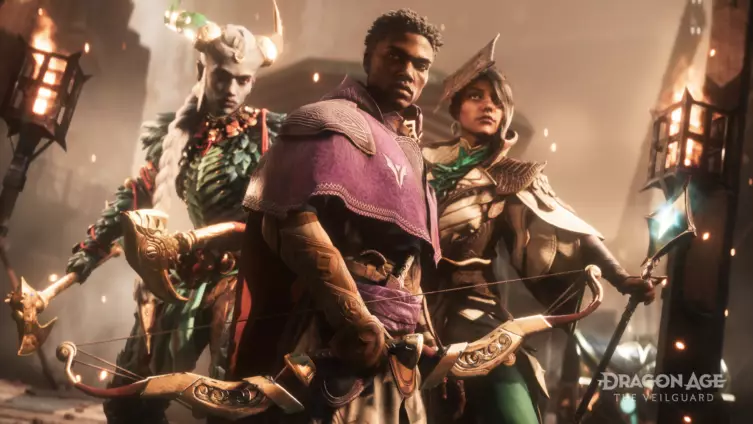
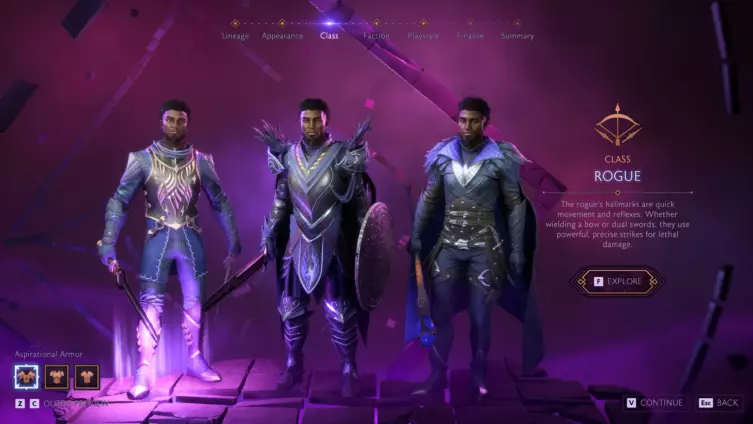
The real driving force behind Dragon Age Veilguard will not be Solas or Tevinter alone: it will be the team surrounding Rook. BioWare is clearly putting companions back at the center of the game, with a cast of seven allies. And naturally, fans of narrative RPGs are paying close attention.
A cast designed to carry the story
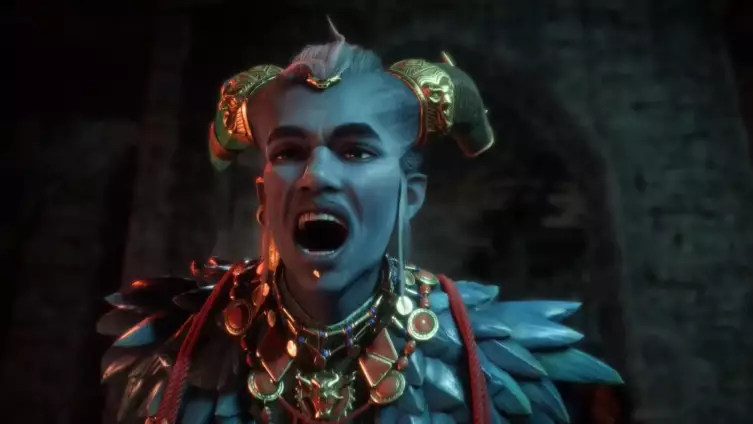
The group consists of seven companions: Harding, Neve, Emmrich, Bellara, Davrin, Lucanis and Taash. The appeal is not simply to stack different character types, but to create tensions, affinities and complementary strengths around Rook.
Relationships, romances and team choices
Relationships and romances remain an expected pillar of the experience. In Dragon Age, a companion is never just a pawn who attacks beside you. They are a voice, a potential conflict, a loyalty to build—and sometimes a story that breaks your heart.
To understand the setup: the system’s appeal depends as much on dialogue as on team composition. Choosing who accompanies Rook should influence the narrative pace, interactions and how you approach your builds.
Synergy and build customization
Team synergy looks set to be a major feature. With seven companions, BioWare can push the combinations between different profiles, abilities and playstyles. The fun comes from this internal chemistry: finding the duo that complements Rook, then adjusting your build around it.
Expert tip: do not choose your companions solely for their presumed effectiveness. In a BioWare RPG, the best party is often the one that creates the best tensions.
Varric Tethras, a return that speaks to fans
Another point that hits home is the return of Varric Tethras. His presence directly connects this new adventure to the franchise’s legacy without taking the spotlight away from Rook. Seeing such a major figure again in Dragon Age Veilguard immediately sets the tone.
Release date, platforms and the future
For the launch, BioWare made things clear: Dragon Age Veilguard was released on October 31, 2024. The game fully embraces the current generation and leaves older consoles behind.
What has been confirmed
- Release date: October 31, 2024.
- Platforms: PC, PlayStation 5 and Xbox Series X|S.
- Unavailable versions: no release on PS4 or Xbox One.
- Multiplayer: no multiplayer mode has been announced; the experience is designed for single-player.
What remains to be watched
The main points to follow concern the game’s evolution after release: patches, balancing, possible content announcements or inclusion in subscription offerings.
This pure single-player approach is welcome. After years in which many RPGs tried to check every box, seeing BioWare commit to a player-focused adventure remains a strong signal.
A concise conclusion
The direction is clear: Dragon Age Veilguard targets current-generation hardware, leaves the old generation behind and puts everything into a single-player adventure. With hindsight, the question is whether this move toward action will strengthen the series’ identity over time or further divide longtime fans.
Continue with the same topic: keep an eye on our upcoming RPG news, because the smallest official detail can change the temperature around the game.
FAQ
- When was Dragon Age Veilguard released?
- The game was released on October 31, 2024.
- Which platforms is the game available on?
- The game is available on PC, PlayStation 5 and Xbox Series X|S.
- Was Dragon Age Veilguard released on PS4 and Xbox One?
- No, there is no PS4 or Xbox One version.
- Is there a multiplayer mode?
- No, the game is presented as a purely single-player experience.
Written by Filo for game.fr