Aniimo is regularly described as a mix of Pokémon and Palworld. The comparison is useful for quickly placing the game, but it soon becomes reductive once you look closely at how it actually plays.
Quick answer: Aniimo shares creature collection and evolution with Pokémon, and an open world plus companion-based exploration with Palworld. But its main difference is Twining: the player can directly take the form of an Aniimo and use its abilities in combat or in the environment.
To learn more about this mechanic, see our complete Aniimo guide.
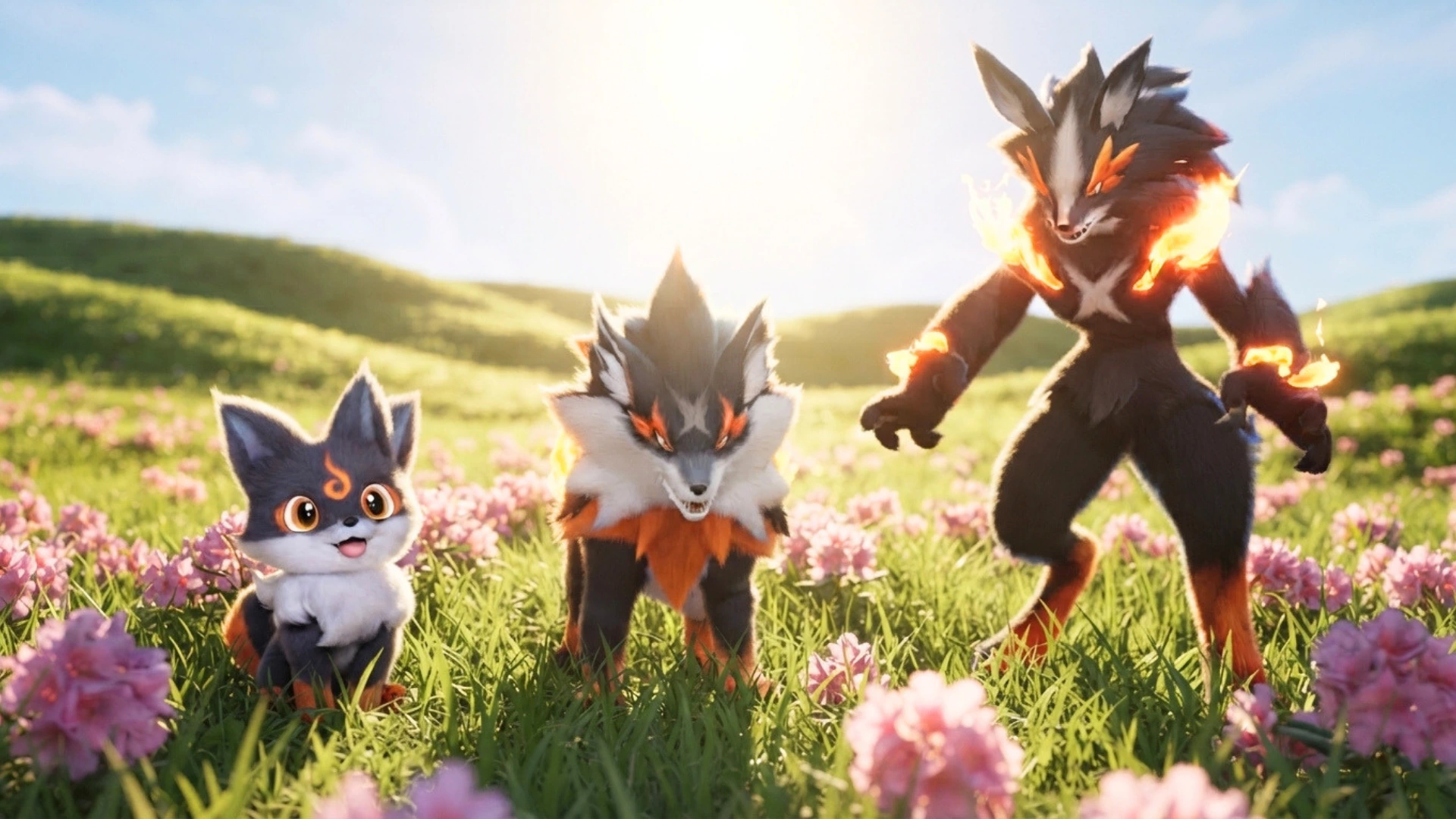
Aniimo makes exploration and creature abilities two core pillars of its open world. Credit: Pawprint Studio / Xbox Wire.
Aniimo vs Pokémon vs Palworld: comparison table
Criterion
Aniimo
Pokémon Scarlet / Violet
Palworld
Creature capture
Yes
Yes
Yes
Combat
Real-time + Twining
Mainly turn-based
Real-time
Direct creature control
Yes, through Twining
Not in the traditional core gameplay loop
Limited direct use depending on Pals and mounts
Open world
Yes
Yes
Yes
Survival
Not central
No
Yes
Base building
Homeland
No
Yes, very important
Automation
Limited
No
Yes
Multiplayer
Co-op, PvP, PvPvE
Exploration, trading and battles
Co-op / multiplayer
Business model
Free-to-play
Premium
Premium
Signature mechanic
Twining
Types, training, Pokémon battles
Survival, production and Pal labor
1. All three games feature creature capture, but not with the same logic
All three titles revolve around discovering creatures in their respective worlds, but capture does not play exactly the same role in each game.
Pokémon remains centered on the traditional idea of building a team, training partners and sending them into battle. In Pokémon Scarlet and Violet, Nintendo presents Paldea as a vast world where players can catch, battle and train Pokémon at their own pace.
Palworld adds a much stronger survival and production focus. Pals are not only fighters: they are also used to build, farm, generate electricity, work in factories and automate certain tasks.
Aniimo uses capture as a way to expand both the team and the player's exploration options. Finding a new creature can make it possible to reach an area that was previously inaccessible.
To prepare for your first captures and exploration, also see our 50 tips for getting started in Aniimo.
2. Twining is Aniimo's biggest difference
This is where Aniimo most clearly stands apart from its two competitors.
Through Twining, the player merges with an Aniimo and directly takes control of it.
The creature then becomes your temporary character:
you use its attacks;
its movement;
its natural abilities;
its mobility skills;
certain environmental interactions.
An Aniimo can therefore let you glide, climb, dive or dig.
Pokémon can let players ride certain creatures or use specific abilities depending on the entry, while Palworld has Pals that serve as mounts or tools. But Aniimo builds its gameplay much more directly around the idea of becoming the creature.
Creature collection and evolution may recall Pokémon, while Aniimo focuses on real-time combat and Twining.
3. Pokémon retains a much more tactical identity
In Pokémon Scarlet and Violet, the core of combat is still based on attacks, types, abilities and team composition.
Aniimo also emphasizes elements and type matchups, but its battles take place in real time.
The player can use two approaches:
Command Mode to coordinate the team;
Twine Mode to directly control an Aniimo.
The result is much closer to an action RPG than to a traditional Pokémon RPG.
4. Palworld is much more survival-oriented
Palworld officially describes itself as an open-world survival and crafting game.
Players notably need to:
gather resources;
build structures;
organize their base;
put Pals to work;
automate production;
explore dungeons.
Aniimo does have a Homeland system with farming and building, but this activity remains secondary.
Aniimo's core is more about:
exploration → discovery → capture → Twining → progression.
Palworld places much more emphasis on:
survival → resources → production → automation → base.
5. Aniimo's Homeland is not the equivalent of Palworld's industry
Both games feature a system that lets players develop a personal space.
In Aniimo, the Homeland notably allows you to grow crops, build, place furniture and let Aniimo live on the property.
Palworld goes much further with automation.
Pocketpair officially presents Pals as being able to:
plant;
water;
harvest;
mine;
generate electricity;
work in factories.
The two systems may both visually resemble a “base,” but their role in overall progression is very different.
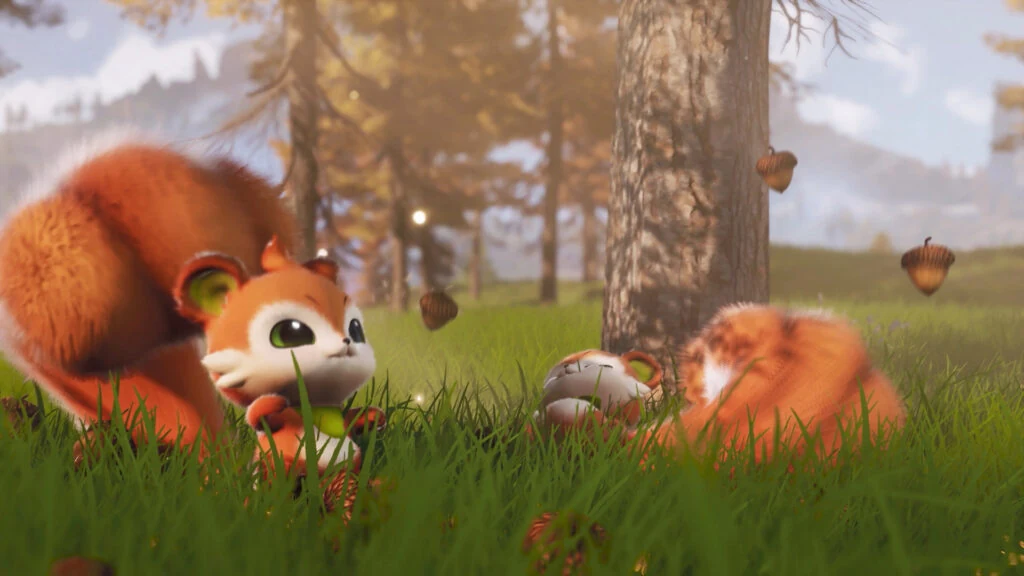
Squarrel in its forest habitat: the world of Idyll connects creatures to their environment. Credit: Pawprint Studio / Xbox Wire.
6. Aniimo makes greater use of the environment through creature abilities
One of Aniimo's most interesting ideas is using creatures' natural abilities to solve problems in the world.
Pawprint Studio notably gives the example of puzzles using:
fire;
water;
wind;
gliding;
climbing;
diving;
stealth.
The studio even explains that some puzzles can have multiple solutions depending on which Aniimo are used.
This brings creature collection closer to an exploration-ability system.
7. The three games handle the open world differently
Pokémon Scarlet and Violet lets players explore Paldea with considerable freedom and follow several storylines in the order they choose.
Palworld uses a survival sandbox structure in which the player gradually builds and organizes their activity.
Aniimo adopts an action-RPG structure with:
quests;
open areas;
events;
creatures that sometimes depend on weather or time of day;
puzzles;
multiplayer activities.
So the common point is the open world, but not the way each game uses it.
8. Aniimo's multiplayer is closer to a live-service game
Aniimo includes:
online co-op;
PvP;
cross-platform multiplayer;
Egg Heist in PvPvE;
limited-time events;
Holo-Combat Nexus.
Pokémon Scarlet and Violet, meanwhile, offers multiplayer exploration, trading, battles and raids.
Palworld is more focused on cooperative survival and a shared world.
Aniimo therefore comes closer to a live-service RPG with seasonal content.
9. The business model changes the experience significantly
Pokémon and Palworld are premium games: the player buys the game before playing.
Aniimo is free-to-play.
It includes:
premium currency;
a seasonal pass;
cosmetics;
packs;
items that can make certain progression steps easier.
This model removes the entry cost, but it also means keeping an eye on how monetization evolves over time.
We analyzed this separately in our feature Is Aniimo pay-to-win?.
10. So, is Aniimo copying Pokémon or Palworld?
No, that wording is too simplistic.
Aniimo clearly uses several familiar ideas:
creature collection;
evolution;
elemental types;
open world;
building;
multiplayer.
But these elements now belong to an entire subgenre.
The real question is what Aniimo does specifically with those influences.
Its answer is mainly Twining: the creature is not simply captured or used as a tool, it directly becomes the character under the player's control.
The creature collection has its own visual identity.
Which game should you choose based on what you want?
You mainly want...
The game that best matches that mechanic
Tactical combat and traditional creature collecting
Pokémon
Survival, building and automation
Palworld
Action RPG and direct creature control
Aniimo
Deep base building
Palworld
Twining / becoming the creature
Aniimo
Classic Pokémon experience
Pokémon
This table is not an overall ranking: each game follows a different design philosophy.
Aniimo vs Pokémon vs Palworld FAQ
Is Aniimo a Pokémon-like?
Yes, in the broad sense of being a creature collector, but its real-time combat and especially Twining give it a different gameplay loop.
Is Aniimo more similar to Palworld?
The two games share an open world and the use of creatures in the environment, but Palworld is much more focused on survival, crafting and automation.
Can you become a creature in Aniimo?
Yes. That is the principle of Twining: the player merges with the Aniimo and directly uses its abilities.
Does Aniimo have a base?
Yes. The Homeland lets players build, decorate, farm and house Aniimo.
Is Aniimo free?
Yes. Aniimo is free-to-play with in-game purchases.
Key takeaways
Aniimo clearly belongs to the same broad family as Pokémon and Palworld, but its gameplay cannot be reduced to a combination of the two.
Pokémon remains more focused on tactical combat and traditional creature collection.
Palworld takes survival, building and automation much further.
Aniimo mainly builds its identity around Twining, real-time combat and directly using creature abilities to explore.
To understand this mechanic in detail, see our complete Aniimo guide.